How fishing gear can sever an internet cable
The usual culprit is not a dramatic deep-sea accident. It is human activity near the seabed—especially fishing gear and ship anchors—catching, crushing, or dragging a cable. Trawling, in which a boat pulls a large net along the seafloor, can snag a cable and put enough force on it to break the fibers inside. An anchor dropped or dragged across the bottom can do similar damage.
The danger is greatest where cables pass through busy, relatively shallow waters. Farther offshore, cables usually lie on the seabed, but they are often buried beneath it or given extra protective armor near shore, where fishing and shipping are concentrated. Those protections reduce the risk; they cannot make a cable invulnerable to heavy equipment.
Why one break can disrupt service
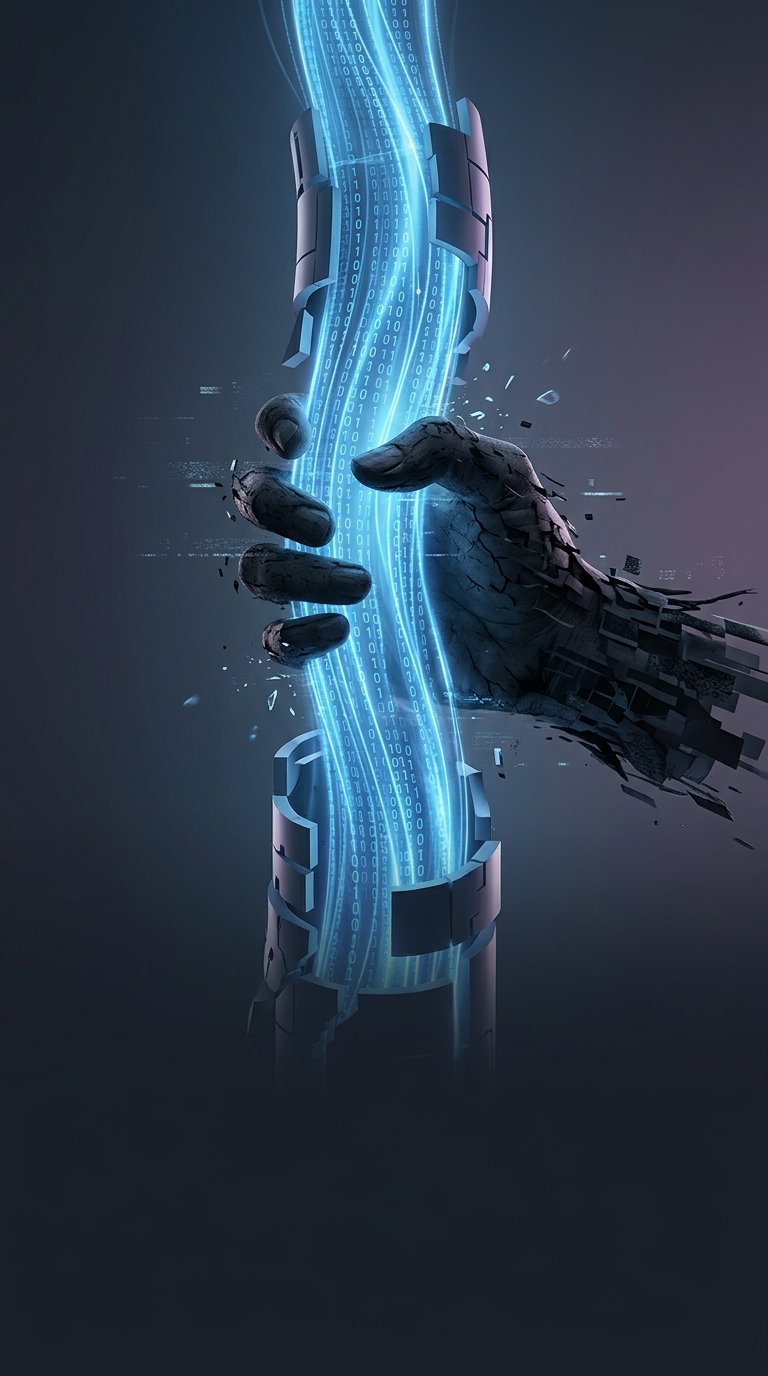
A submarine cable carries data as pulses of light through thin glass fibers. Damage to the fibers interrupts that path, so traffic may need to be rerouted through other cables. The internet is not one continuous wire, and a single break does not necessarily disconnect an entire country—but fewer available routes can mean congestion or outages for places that depend on the damaged link.
Repair crews first identify the fault’s location, then send a specialized ship to retrieve the cable from the seabed. The crew cuts out the damaged section, joins in replacement cable, and lowers the repaired line back down. A routine anchor drop or fishing pass can therefore trigger a repair operation in deep water: the vulnerable point may be close to shore, but the cable it connects to can stretch across an ocean.