The sea enters through a break in the volcano
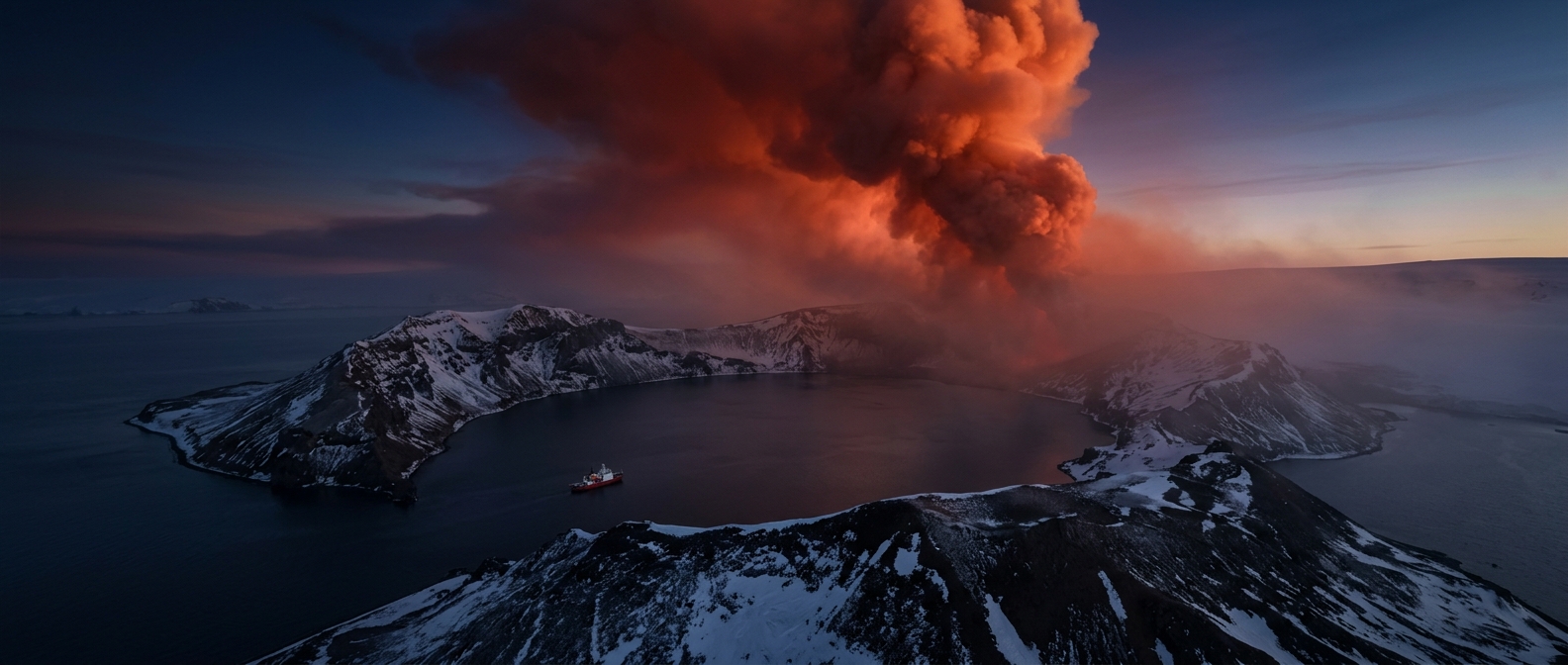
Deception Island, in Antarctica’s South Shetland Islands, is shaped like a ring with a gap. That unusual outline is the rim of a caldera: a broad volcanic depression formed when an eruption emptied part of the volcano’s magma chamber and the ground above it sank. The ocean later poured into the low basin, creating the island’s central harbor, Port Foster.
Boats reach it through Neptune’s Bellows, a narrow opening in the rim. From the water, the passage can feel less like entering a bay than slipping through a doorway cut into a volcanic wall. Once inside, vessels find a large sheltered anchorage surrounded by the island’s steep slopes.
A harbor with a volcanic floor
The calm water does not mean the volcano is dormant. Deception Island remains active, and eruptions in the late 1960s and early 1970s altered parts of its shoreline and buried facilities used by scientific stations. Heat from volcanic activity can also warm patches of beach and ground, an unexpected contrast in the Antarctic setting.
That combination shapes how the island is used: its enclosed harbor offers shelter and access, but the volcanic basin is not simply a safe natural port. The same force that made the passage and harbor possible can change the terrain. A ship entering Port Foster is sailing into the collapsed interior of an active volcano—and through the narrow breach that lets the ocean reach it.