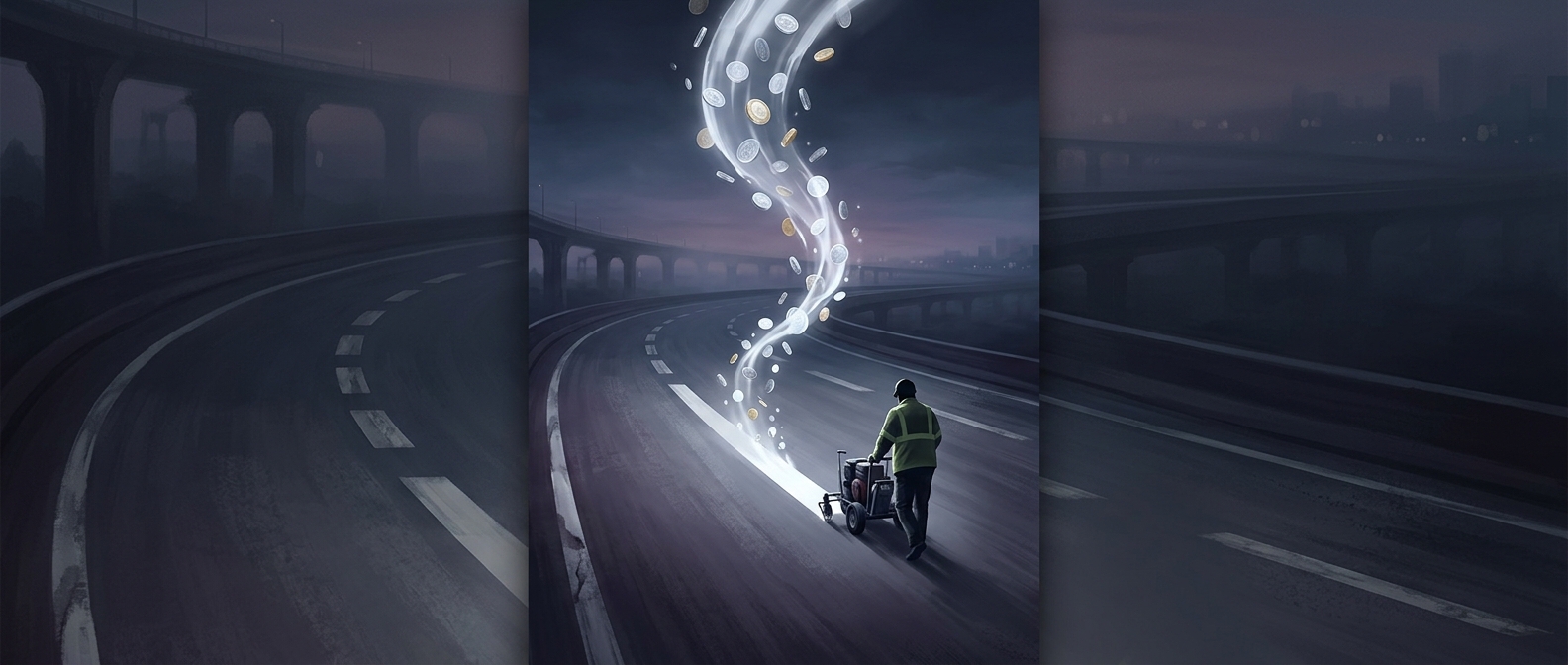
Why a Thin Stripe Becomes a Recurring Expense
A lane marking has two jobs: guide drivers and remain visible in the dark. Its bright appearance comes partly from tiny glass beads embedded in or scattered over the marking. Headlights strike the beads and some of that light is redirected toward the driver, making the stripe easier to see at night.
But the marking sits exactly where traffic repeatedly crosses or rides over it. Tires abrade the paint and can dislodge its reflective beads; weather and road maintenance add further wear. As the stripe loses material, it may remain faintly visible in daylight while becoming harder to pick out at night or in rain. The problem is not just cosmetic: unclear lane boundaries make it harder for drivers to judge where to position a vehicle.
The Cost Is in the Cycle, Not Just the Paint
Road agencies must budget for more than the material used to draw a line. Crews have to prepare the pavement, apply the marking, manage traffic around the work, and return when wear makes it ineffective. On busy roads, the interval between applications can be shorter because more tires pass over the same surface. A durable marking may cost more to install, but it can reduce how often crews need to close or narrow lanes for repainting.
That creates a practical tradeoff: the cheapest stripe per application is not necessarily the cheapest stripe over its useful life. Agencies weigh material price, expected durability, visibility, installation time, and the disruption caused by repeat work. The humble lane line is therefore a small but recurring infrastructure expense—and its true price includes every return visit needed to keep it visible.