Why a sandwich could become a cabin hazard
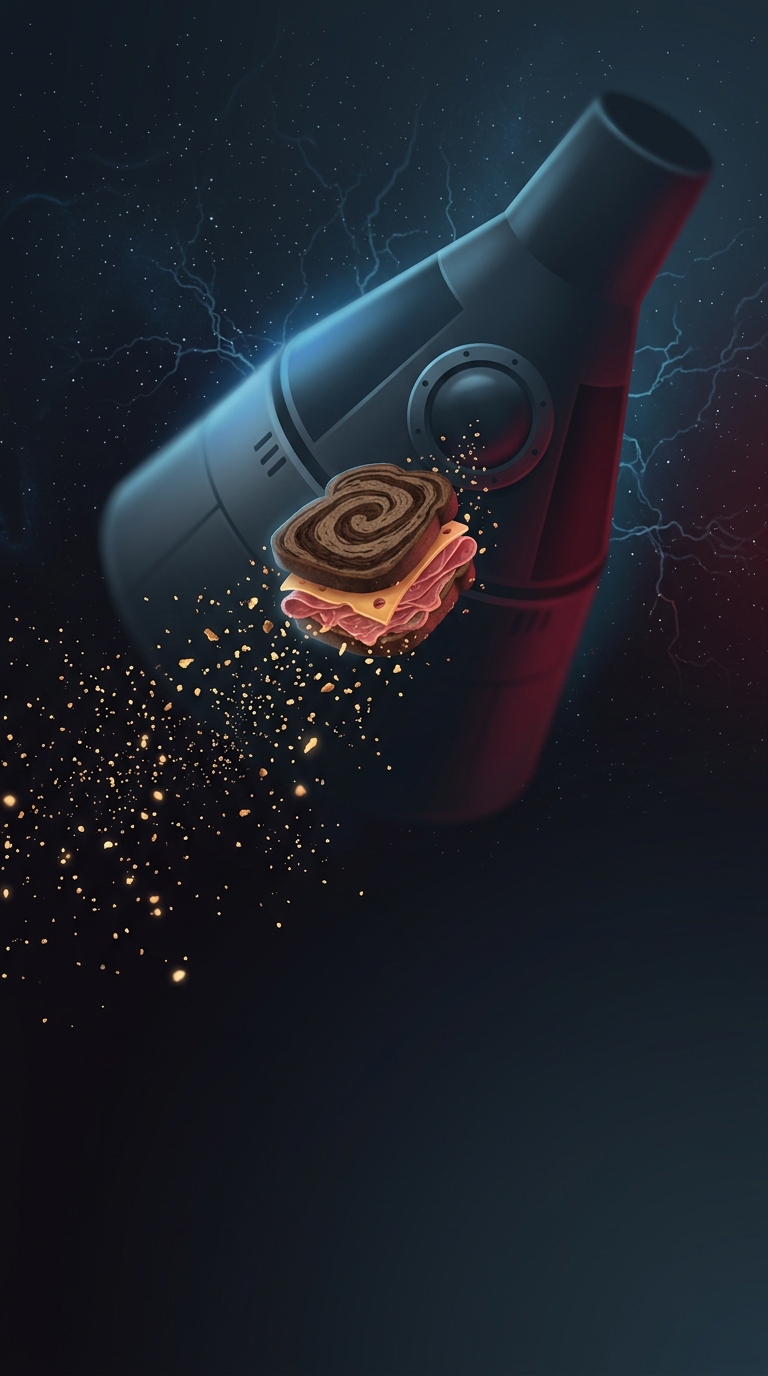
On Gemini 3, the first crewed flight of NASA’s Gemini program, astronaut John Young brought a corned beef sandwich aboard without approval and offered some to commander Gus Grissom. The problem was not that the sandwich might float away intact. It was that biting and tearing bread could release crumbs into a small cabin where nothing settled harmlessly on the floor.
In microgravity, loose bits keep drifting until they meet a surface. A crumb could reach an astronaut’s eye or nose, or lodge near a switch or other equipment. The risk was modest, but the cabin was a working machine as well as a living space: the crew needed to see clearly and operate controls without distraction.
Space food is an engineering compromise
Ordinary meals create mess through gravity: crumbs drop, spills pool, and scraps can be swept up. In orbit, food and drink must be managed so they stay where the crew can handle them. That is why early spacecraft menus favored compact, controlled portions over casual meals that shed bits or droplets.
Gemini’s cramped cabin made the tradeoff especially visible. There was little room to chase drifting debris, and a flight crew could not simply pause the mission to clean up. The sandwich’s risk came from the mismatch between a familiar Earth food and a spacecraft designed around containment.
The crew ate some of it, then stowed the rest. The episode became a memorable reminder that in space transport, even lunch has to be designed around where its smallest pieces might go.