Why a Space Pen Needs Pressure
A ballpoint pen works because ink flows from its reservoir to a tiny rotating ball at the tip. On Earth, gravity helps keep ink near the ball. In microgravity, ink does not reliably settle toward the tip, so an ordinary pen can skip even when its reservoir still contains ink. The problem is not simply that ink cannot flow in space; it is that the usual arrangement depends on gravity to help feed it.
How the Pressurized Pen Works
Paul Fisher developed a cartridge that uses compressed nitrogen to push ink toward the ball. The pressure keeps ink moving to the tip without relying on gravity, and the cartridge is sealed to limit leaks and evaporation. That makes the pen useful in other awkward conditions too, including writing at different angles and in cold environments.
The design also had to manage a basic engineering tradeoff: ink must reach the ball steadily, but not pour out uncontrollably. A pressurized reservoir and a carefully designed ballpoint tip work together to deliver ink only as the ball turns against the writing surface.
A Commercial Tool, Not a NASA Invention
The familiar story says NASA spent millions of dollars developing a space pen while Soviet cosmonauts used pencils. The actual development story is less dramatic: Fisher developed the pressurized pen with private money, and NASA and the Soviet space program later purchased it. Agencies bought a practical tool that worked in microgravity; they did not commission an extravagant replacement for pencils.
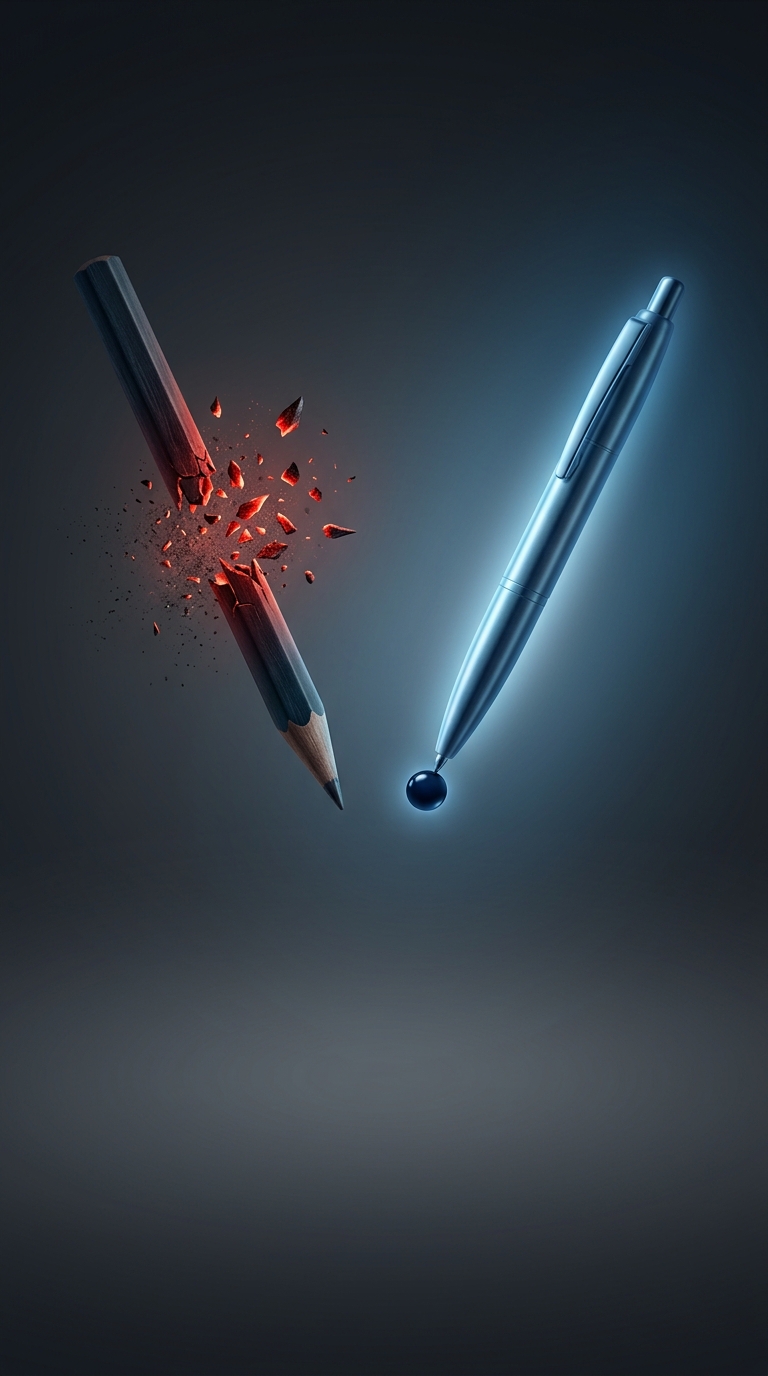
Pencils were not an ideal universal answer. Their tips can break, and loose graphite fragments can float through a spacecraft and potentially interfere with equipment. The pressurized pen offered a controlled way to write. The memorable cost of the story, in other words, belongs to the myth—not to a government-funded race to reinvent the pencil.