Why food is harder to recognize without sight
Eating is a multisensory task, not a taste-only one. Before a bite reaches the tongue, its color and shape offer clues about what it is and how it should taste. The brain combines those visual expectations with signals from smell, texture, temperature, and taste. When the clues agree, recognition feels effortless; when a familiar food looks different—or cannot be seen at all—the brain has less to work with.
What a blindfold changes
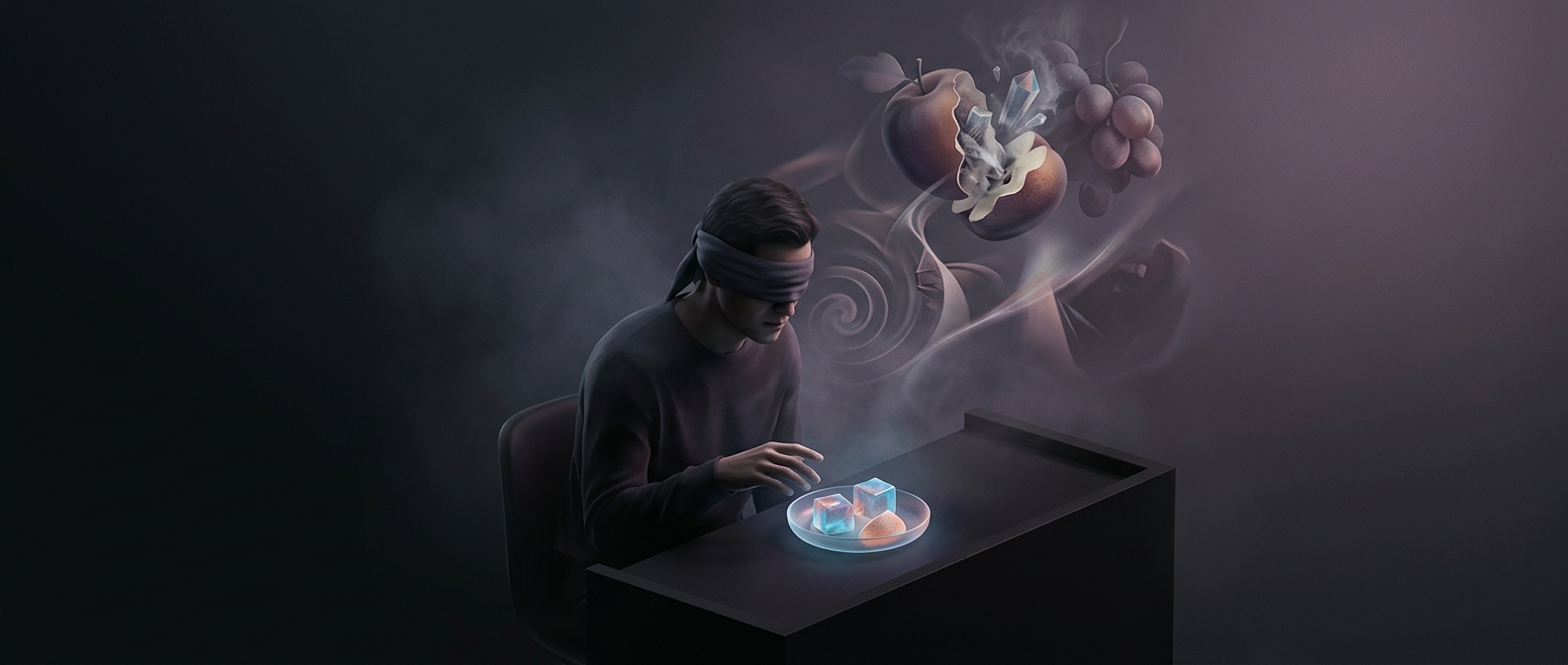
A blindfold removes the chance to inspect a bite, but it does not shut off the other senses. Smell still contributes strongly to flavor, especially when aromas travel from the mouth to the nose during chewing. The tongue detects basic tastes, while touch in the mouth registers qualities such as graininess, creaminess, and thickness.
That remaining information may not be enough to identify a food quickly. Mashed potatoes, for instance, have a mild flavor and a soft, pasty texture. Without their familiar pale appearance, a taster may focus on the texture and describe it as wet chalk. The comparison does not mean the food has changed; it shows how perception shifts when one set of clues disappears.
The expectation is part of the experience
Sight can also shape what a person expects before tasting. A food’s usual appearance helps the brain prepare for its familiar flavor and texture. Remove that preview, and the same bite can feel less recognizable or less appetizing—not because taste has stopped working, but because the brain is assembling the experience from fewer cues.
That is why a blindfolded tasting can turn an ordinary side dish into a guessing game: the mouth supplies sensations, but the eyes are no longer there to help name them.