The train would ride on air, not rails
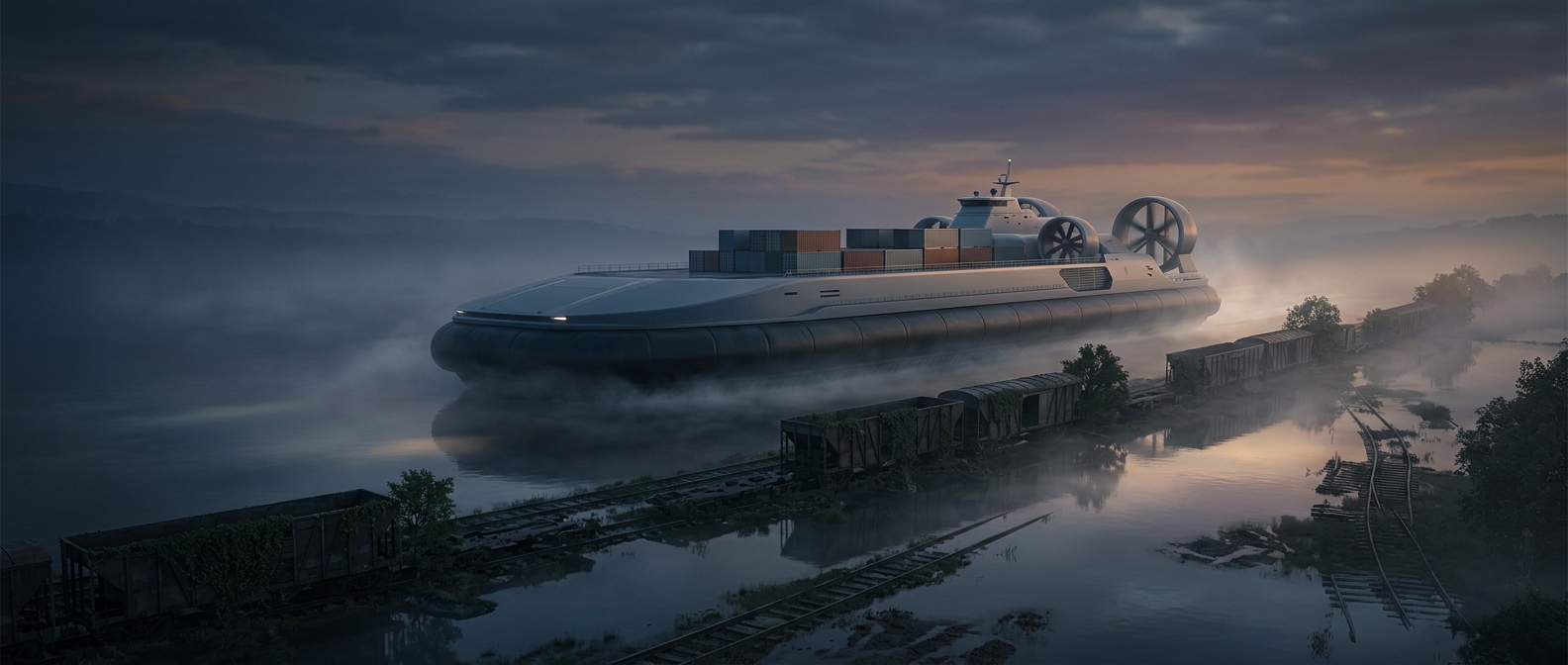
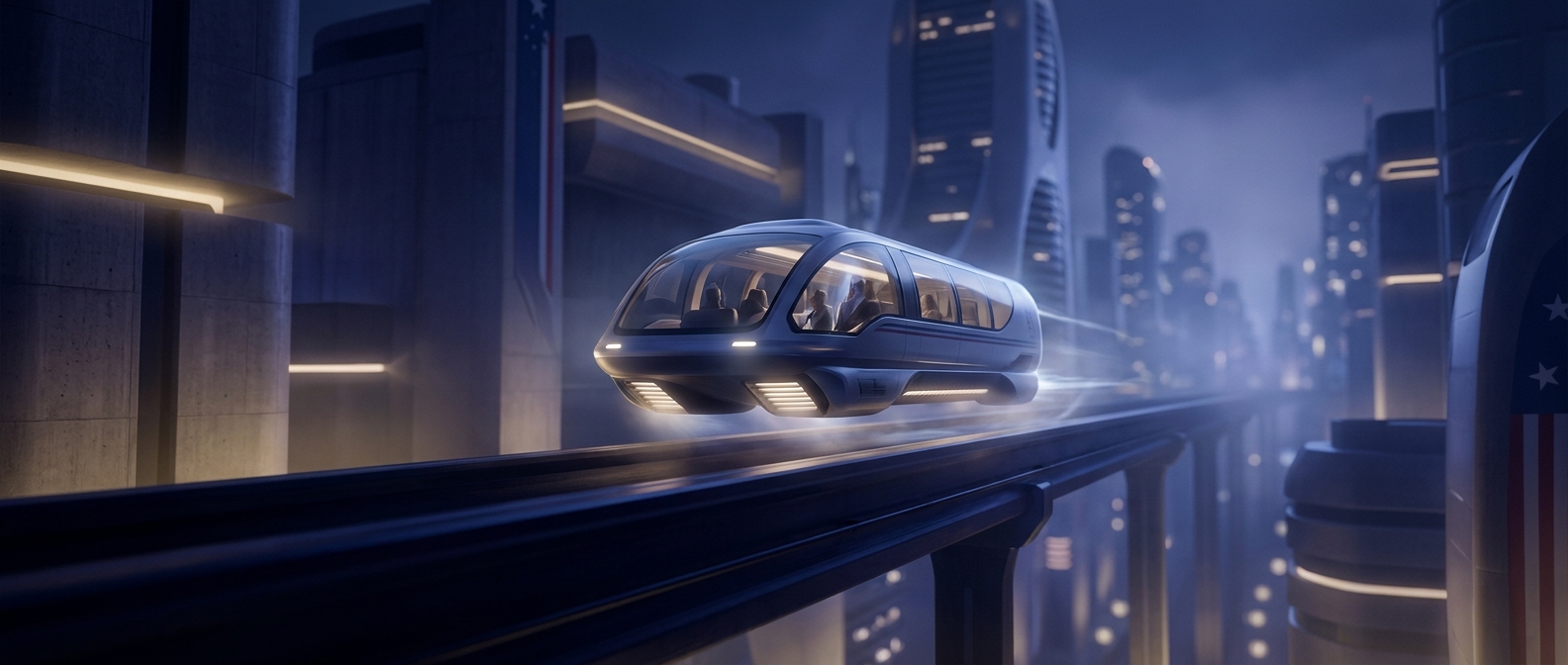
A conventional train presses its wheels against the track. That contact is useful for guidance, but it also creates rolling resistance: energy is spent deforming wheels and rails as they meet. An air-cushion train would instead force air beneath the vehicle, lifting it just clear of its guideway. The guideway would still keep the train on course, but the vehicle would no longer need wheels to carry its weight.
That is different from magnetic levitation. The lift in this concept comes from a pressurized layer of air, not magnets. The cushion has to be maintained as the vehicle moves, and the gap between train and guideway must stay controlled so the vehicle remains supported rather than striking the track.
Lift and propulsion were separate problems
Floating the train would not make it move forward. A linear motor would provide the thrust. Instead of turning a shaft and driving wheels, this kind of motor creates a traveling magnetic field along the guideway; the field pulls the vehicle forward in a straight line. In effect, it is an electric motor unrolled beside the track.
Separating lift from propulsion offered a way around the wheel-and-rail limit, but it shifted the engineering challenge. The system needed equipment to generate and manage the air cushion, a specially built guideway, and precise control of the vehicle’s position. At very high speeds, even small alignment or stability problems become consequential, while the infrastructure must work along the entire route—not just beneath a test vehicle.
Less friction, more system to build
The appeal was clear: reduce the resistance that comes from wheels rolling on rails and make much higher speeds plausible. But the train could not use ordinary tracks, and its speed depended on a coordinated system of vehicle, motor, cushion, and guideway. The striking tradeoff was that removing the wheels did not remove friction’s engineering consequences; it moved the challenge from the contact between wheel and rail into the machinery and infrastructure needed to keep a train hovering.