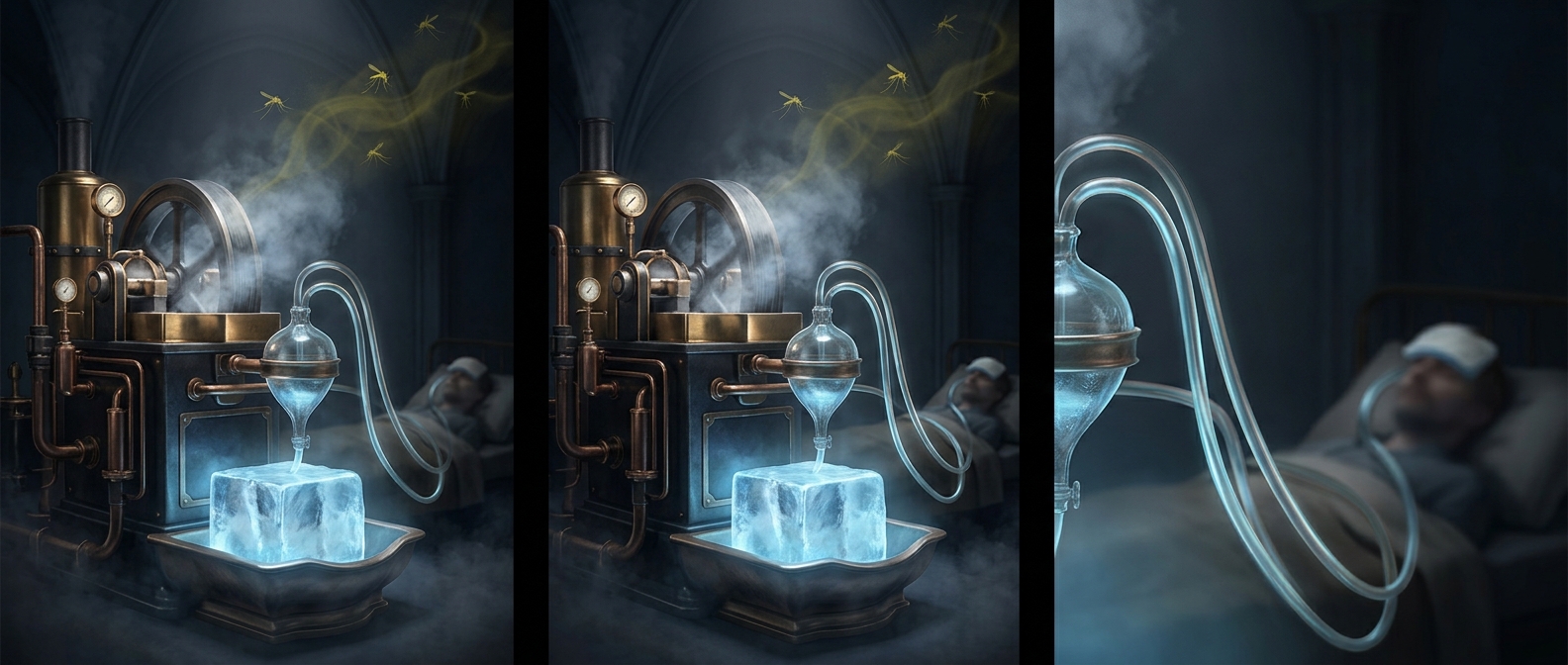
Turning Compressed Air Into Cold
Gorrie’s machine relied on a useful thermodynamic trick: air changes temperature when it is squeezed or allowed to expand. A compressor packed air into a smaller space, heating it. After the hot air shed heat to its surroundings, the machine let it expand. The expansion cooled the air, which could then chill water until it froze.
The cooling did not come from “cold” air being created from nothing. The machine moved heat: compression and cooling prepared the air, and expansion made it cold enough to draw heat from the water. Repeating that cycle made ice without waiting for winter or hauling blocks from a frozen lake.
A Medical Need Becomes an Engineering Problem
In the 1840s, physicians had few effective ways to treat yellow fever. Gorrie hoped that cooling sickrooms could ease patients’ suffering, though he did not know what caused the disease. That distinction matters: refrigeration could change a patient’s surroundings, but it could not remove the infection.
Making the machine work was only part of the challenge. It also had to be reliable and economical enough for people to use. Gorrie’s compressed-air design helped demonstrate that cold—and ice—could be produced mechanically. Later refrigeration systems used different working fluids and designs, but they pursued the same practical goal: repeatedly carrying heat away from a space or substance. His attempt to cool a fever ward helped point engineering toward a world in which ice no longer depended on the weather.