When the Patent File Burned, the Design Became Harder to Recover
A patent is more than a claim that someone invented something. Its written description and drawings are meant to spell out how the device is built and how its parts work together. For an early fire extinguisher, that paper trail could preserve details that a surviving object alone might not reveal: its internal arrangement, the way it was operated, and how it delivered its contents.
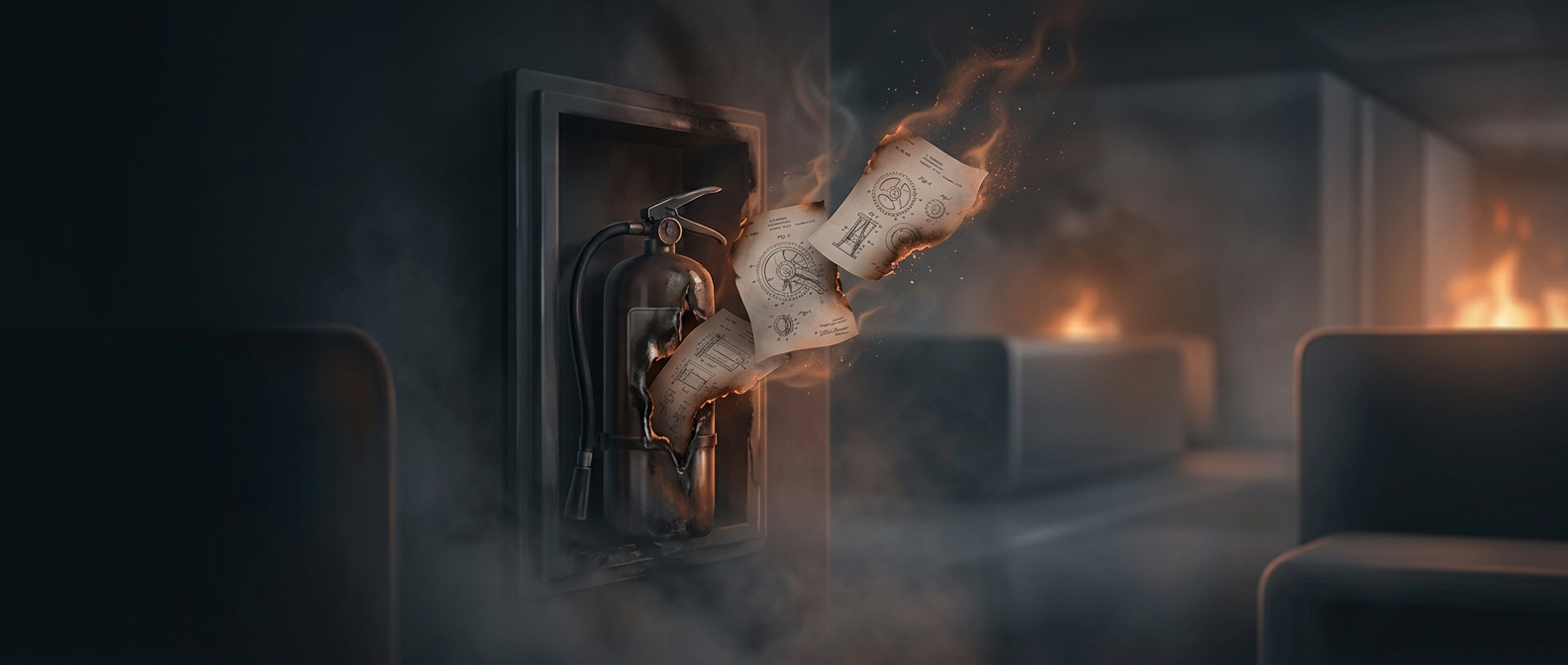
When a fire destroyed the Patent Office records and blueprints, the extinguisher itself survived—but the detailed account needed to understand or reproduce it did not. The loss separated the physical invention from the instructions that made its design legible to others.
Why Losing the Plans Mattered
A working device can show that an idea was possible. But without reliable plans, later makers may not know exactly how to recreate it, and historians may have difficulty distinguishing its original design from later versions. A patent file can serve as both a technical guide and a record of what the inventor meant to protect.
The irony is sharper than a simple accident: a fire safety invention was not destroyed by fire, but the records that explained it were. The episode shows how technological knowledge can depend on fragile paperwork as much as on the objects people build.