A name shaped by languages, not a negation
“Unalaska” can look like “un-Alaska” to an English speaker, as if the island were Alaska’s opposite or an exception to it. But the resemblance is misleading: the name is not an English phrase built from un- and Alaska. It came into English through Russian spellings of an Indigenous Unangan place-name, whose form was reshaped as outsiders recorded it in different languages.
That linguistic history helps explain the odd appearance. English readers instinctively treat the first syllable as a familiar prefix, even though it belongs to a much older name rather than meaning “not.”
An island at Alaska’s far edge
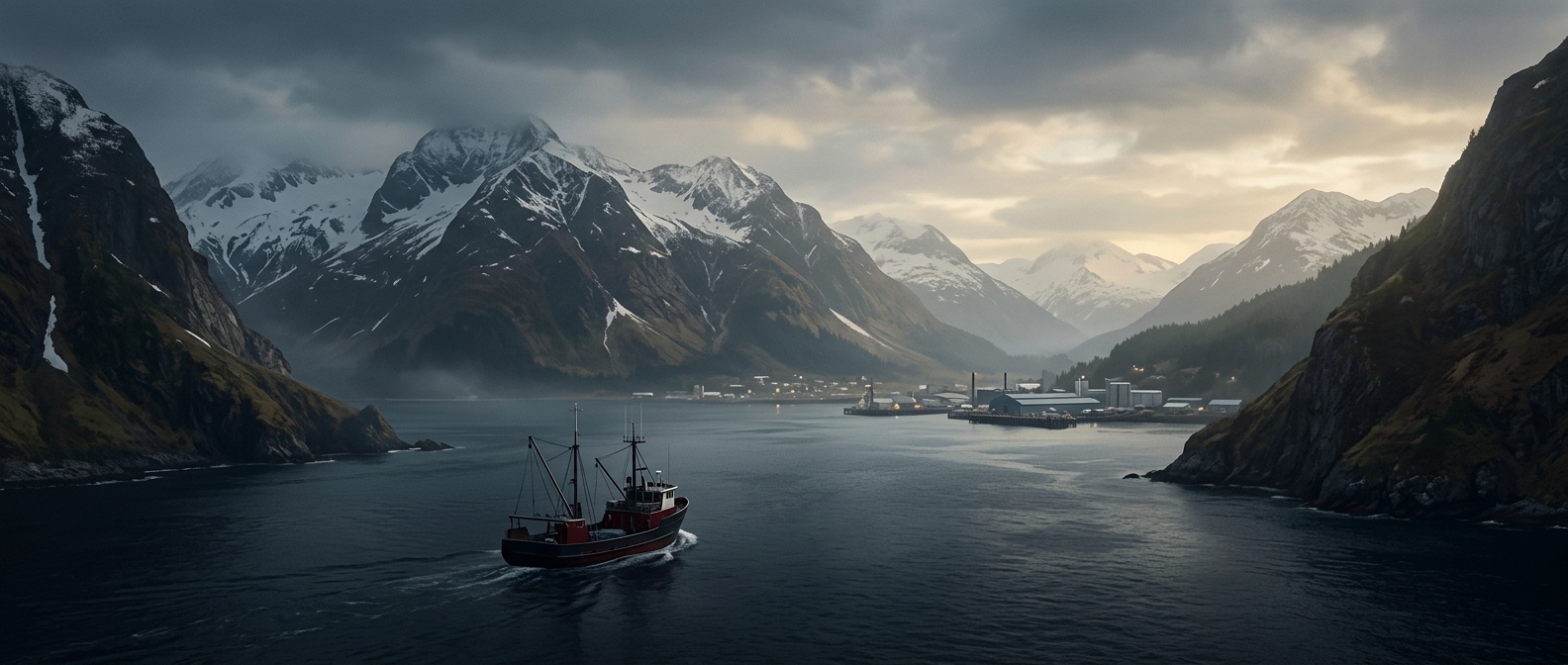
Unalaska is part of the Aleutian Islands, the long volcanic chain curving west from the Alaska Peninsula toward Asia. The island is separated from mainland Alaska by water, but it is still firmly part of the state. The city of Unalaska and the port of Dutch Harbor occupy the island, a major settlement in this remote maritime region.
Its weather reflects that setting: the North Pacific surrounds the island, bringing cold, damp conditions and frequent wind and fog. The name’s apparent contradiction is therefore a quirk of how it looks in English—not a clue that Unalaska lies outside Alaska. The island is “un-Alaska” only if you mistake a place-name for an English word.