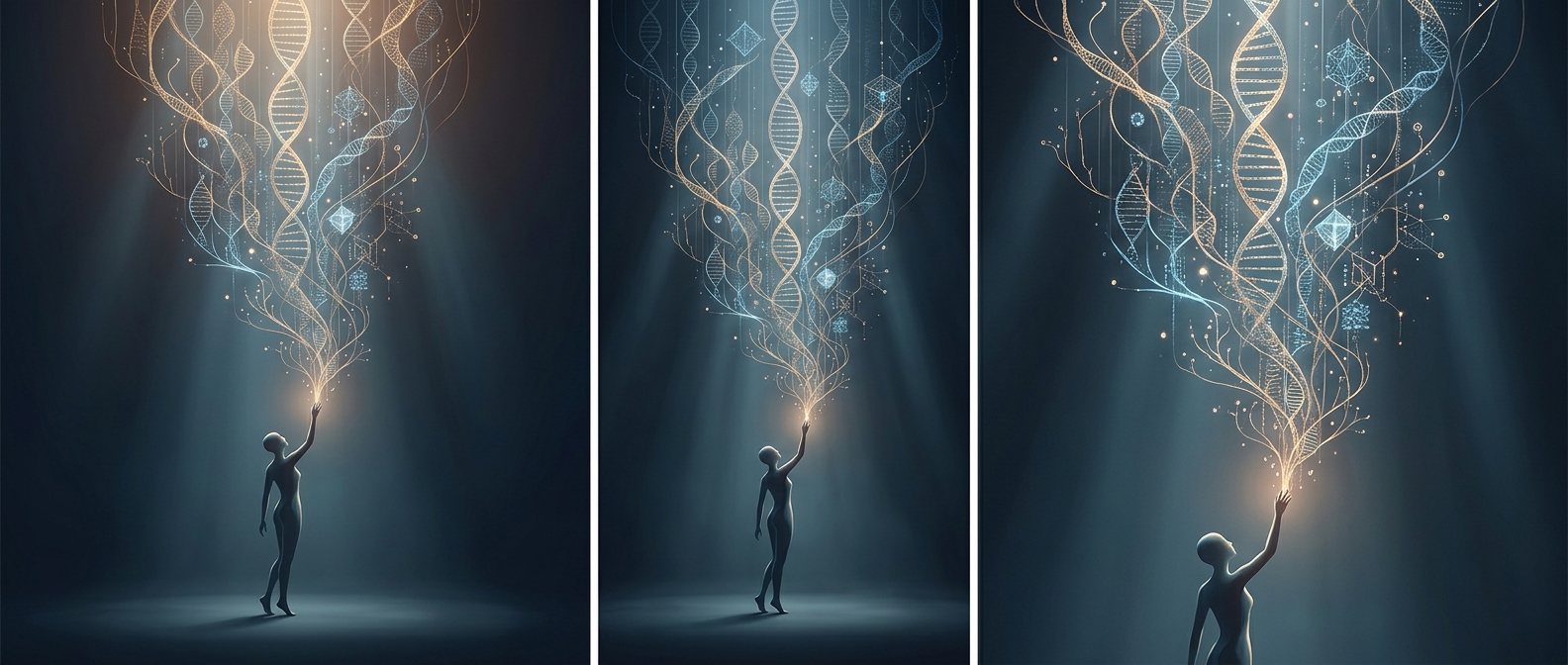
How many small signals shape height
A person’s adult height develops through a chain of influences, not a single genetic instruction. Many genetic variations affect how the body builds and maintains the growth plates—the areas of cartilage near the ends of long bones where new bone forms during childhood and adolescence. Each variation may shift growth only slightly, but their effects can add up.
Genes influence several links in that process: how growth-related hormones are produced and received, how cartilage cells multiply, and how quickly those cells mature into bone. Because these steps interact, a collection of small differences can produce a meaningful range of heights without any one variant acting as a master switch.
Growth also depends on conditions
Inherited differences set much of the body’s growth potential, but development is not a genetic calculation alone. Nutrition, overall health, and hormonal conditions can affect whether a child’s growth proceeds as expected. These influences help explain why relatives can differ in height, and why the same genetic background does not guarantee an identical outcome.
The result is a trait shaped by many inputs at once. Researchers can identify hundreds of height-associated genetic variations, yet each one typically explains only a small piece of the variation among people. Height is better understood as the combined result of many modest effects than as the command of a single “height gene.”