Why a Chariot’s Wheel Was a Better Target Than Its Driver
A chariot depended on a small number of moving parts. Its wheels carried the vehicle and let it roll; the axle held them in line while the horses pulled. Damage either part could make the whole rig hard to control. An attacker did not have to reach the driver to stop the chariot from being useful.
How Damage Could End the Run
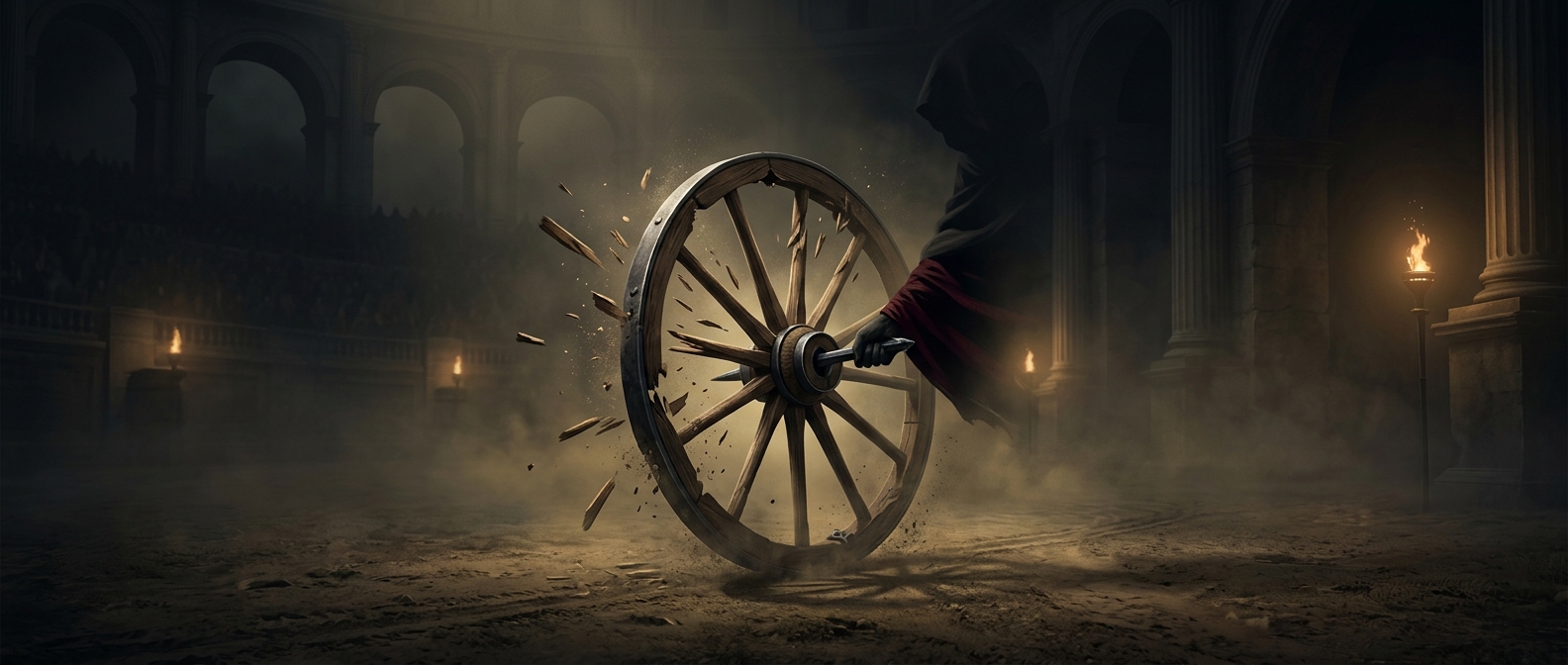
A blow to a wheel could crack its rim or spokes, the supports connecting the rim to the hub. Even damage that did not make the wheel fall apart could leave it wobbling. That uneven motion put extra strain on the axle and made the chariot harder to steer, especially while it was moving quickly. If the wheel failed outright, the vehicle could lurch or overturn, putting the driver and team at risk.
The tactic also turned the chariot’s speed against it: momentum made a damaged vehicle more dangerous and less able to recover. The horses might still be moving, but the driver could no longer count on the vehicle to carry them safely away.
Aiming at the Machine, Not the Man
A driver was a small, moving target, and attacking the wheel could disable the vehicle without first striking its crew. The wheel was not invulnerable, and hitting it in combat would be difficult; but its failure could take a chariot out of the fight in an instant. The vehicle’s escape route depended on the part most exposed to the ground—and to an opponent close enough to strike.