The parser heard more than commands
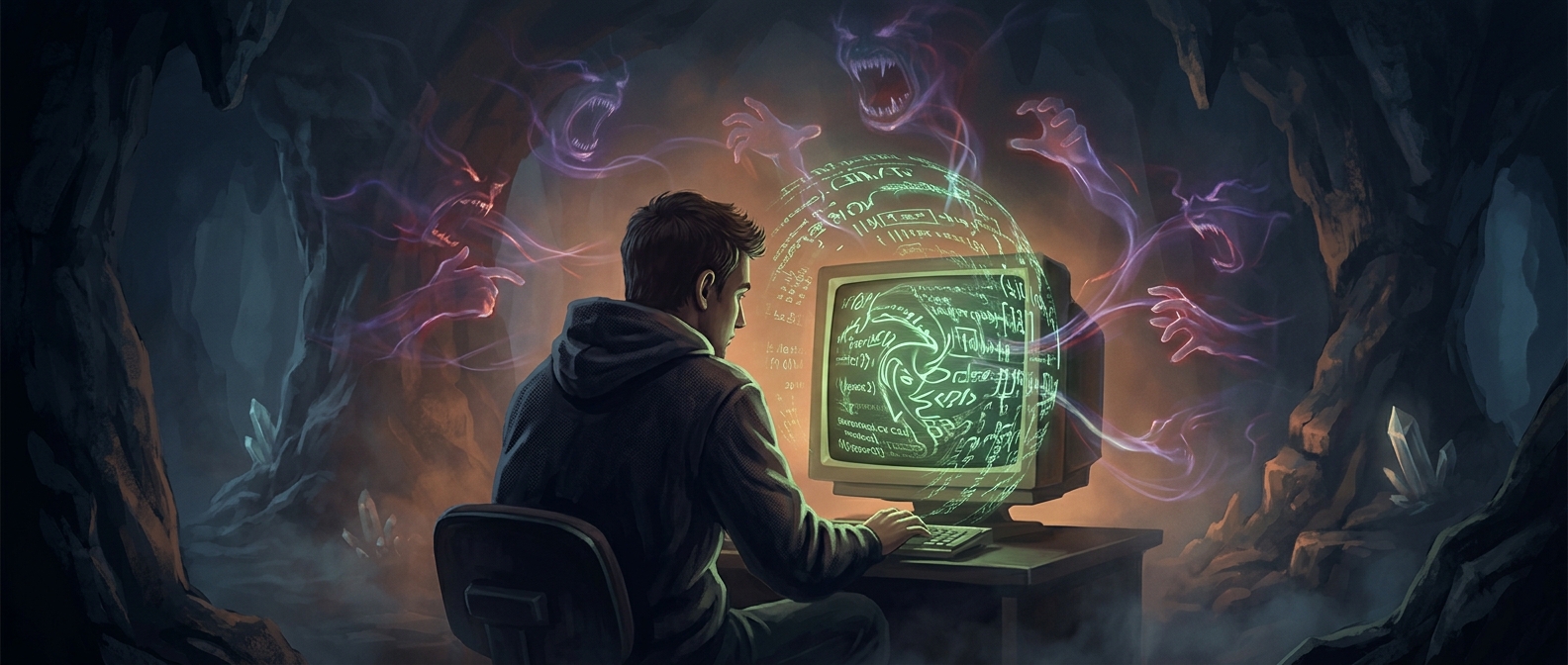
Zork was built around a text parser: a program that reads a player’s typed words and tries to match them to actions the game knows how to perform. A command such as “GO NORTH” could be translated into movement. An elaborate insult, by contrast, was not a usable game instruction—but it was still text the parser had to handle.
Rather than treat every such input as a blank failure, the game could recognize profanity and answer with a sarcastic retort. That response did not mean Zork understood the insult’s full meaning. It meant its designers had given the parser a way to recognize certain words and route them to a prepared reply.
Players helped shape the conversation
The feature grew from an unexpected pattern: some players typed insults instead of the short commands needed to explore. That behavior exposed a basic problem in conversational games. Players naturally try to address a computer as if it were a person, while the program can respond only to inputs its rules anticipate.
A snarky answer turned an invalid command into a small exchange. It also made the limits of the system less jarring: the game could acknowledge what the player typed without pretending it could act on it. The joke came from the mismatch between a player’s human-style provocation and a machine’s narrow, rule-based vocabulary.