How a technical limit became Silent Hill’s atmosphere
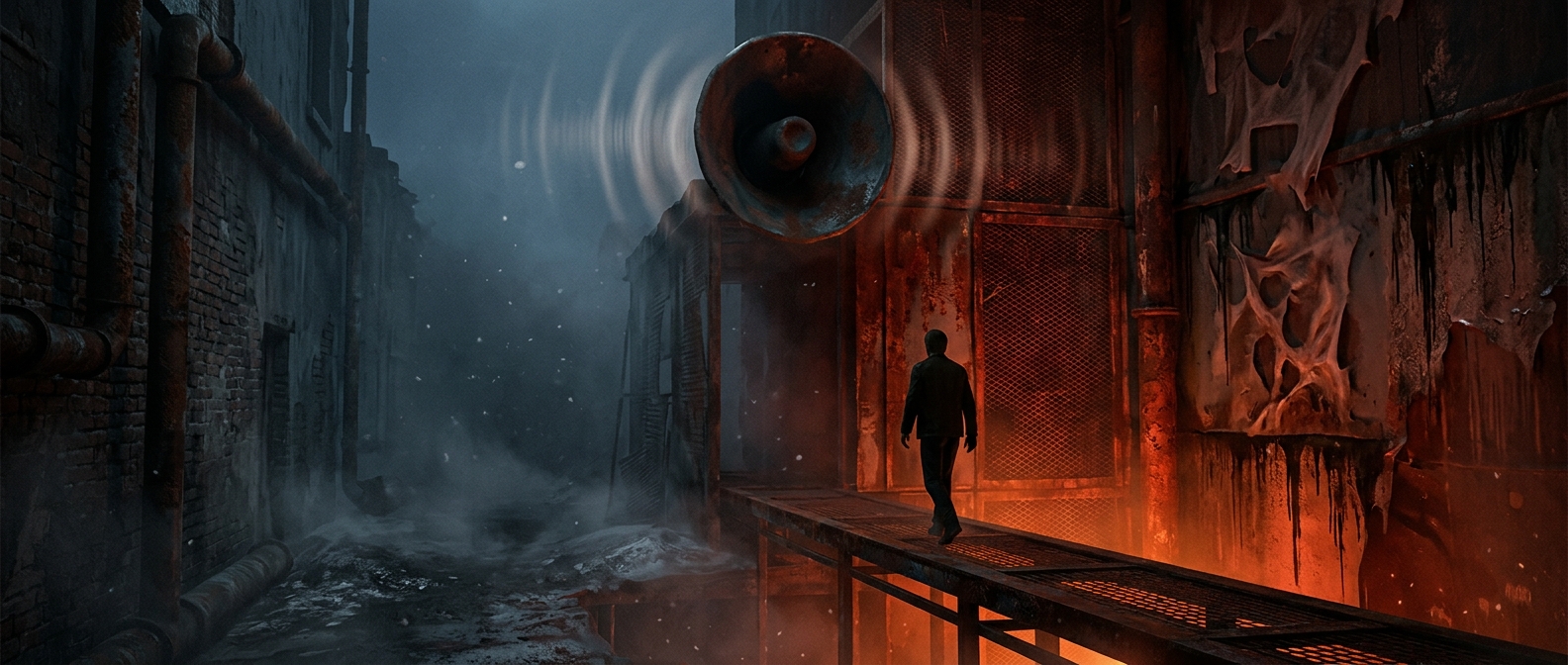
The original PlayStation could not reliably draw a full town stretching into the distance. Buildings and other scenery had to be rendered as the player approached, and showing them too late could make them suddenly pop into view. For Silent Hill, the developers used thick fog to cover that gap: distant objects could remain hidden until the game was ready to display them.
What the fog changed for players
The disguise did more than smooth over a visual limitation. It shortened sightlines, so players could not easily scan a street and know what lay ahead. A shape emerging from the haze might be a building—or a threat—and the player had less time to react. The fog therefore turned restricted visibility into a source of tension rather than merely a technical flaw.
That choice also fit the game’s setting. A town swallowed by mist feels isolated and difficult to navigate, even when the player is standing on an ordinary street. The same effect that concealed scenery helped make familiar spaces seem uncertain.
A constraint that became part of the design
On more powerful hardware, developers could render farther into the distance, but Silent Hill’s fog was not just an unwanted artifact to remove. It had shaped how players experienced movement, danger, and the town itself. A limitation of the console became a defining design tool: the world could remain unseen until the game—and the player—were close enough to face it.