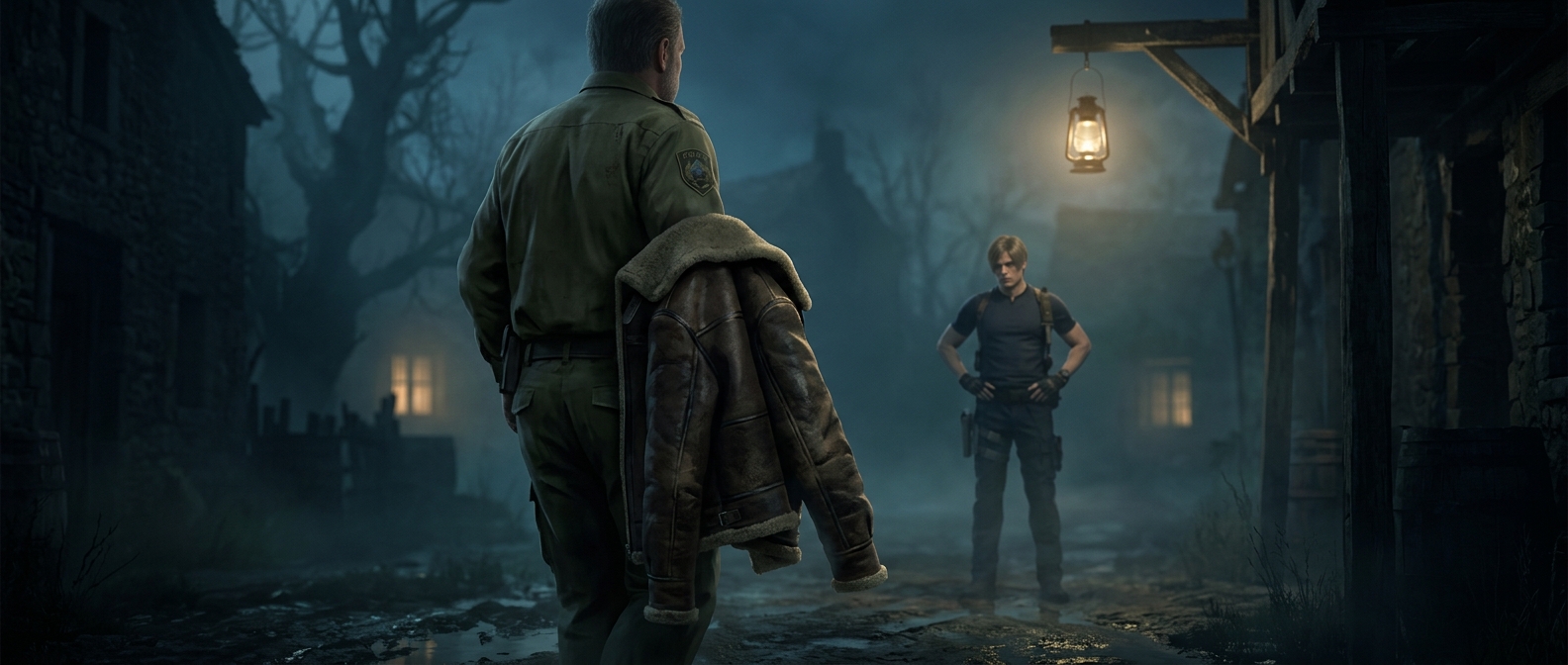
A Missing Jacket Becomes a Clue
Leon Kennedy’s jacket does not simply vanish when he loses consciousness. A local takes it, and the game later lets players spot the same distinctive garment being worn by someone else. The theft is conveyed through what the player sees rather than through a scene of someone explaining what happened.
That small visual handoff makes Leon’s capture feel more tangible. While he is helpless, another person can rummage through his belongings and claim them. When the jacket turns up again, the player can connect the two moments and infer what happened in between.
A Detail Players Can Carry Forward
The jacket also works as a recognizable visual marker: it stands out on Leon, so its later appearance on a local is easy to notice. Players who catch the change get a quiet payoff for remembering an object from earlier in the game. Those who miss it can still follow the story; the detail adds texture rather than supplying essential plot information.
It is a compact example of environmental storytelling—using objects and their placement to suggest events without stopping the action for an explanation. Leon’s jacket tells its own short story: he was vulnerable, someone took advantage of it, and the evidence is still walking around.