When a horror hero became an action hero
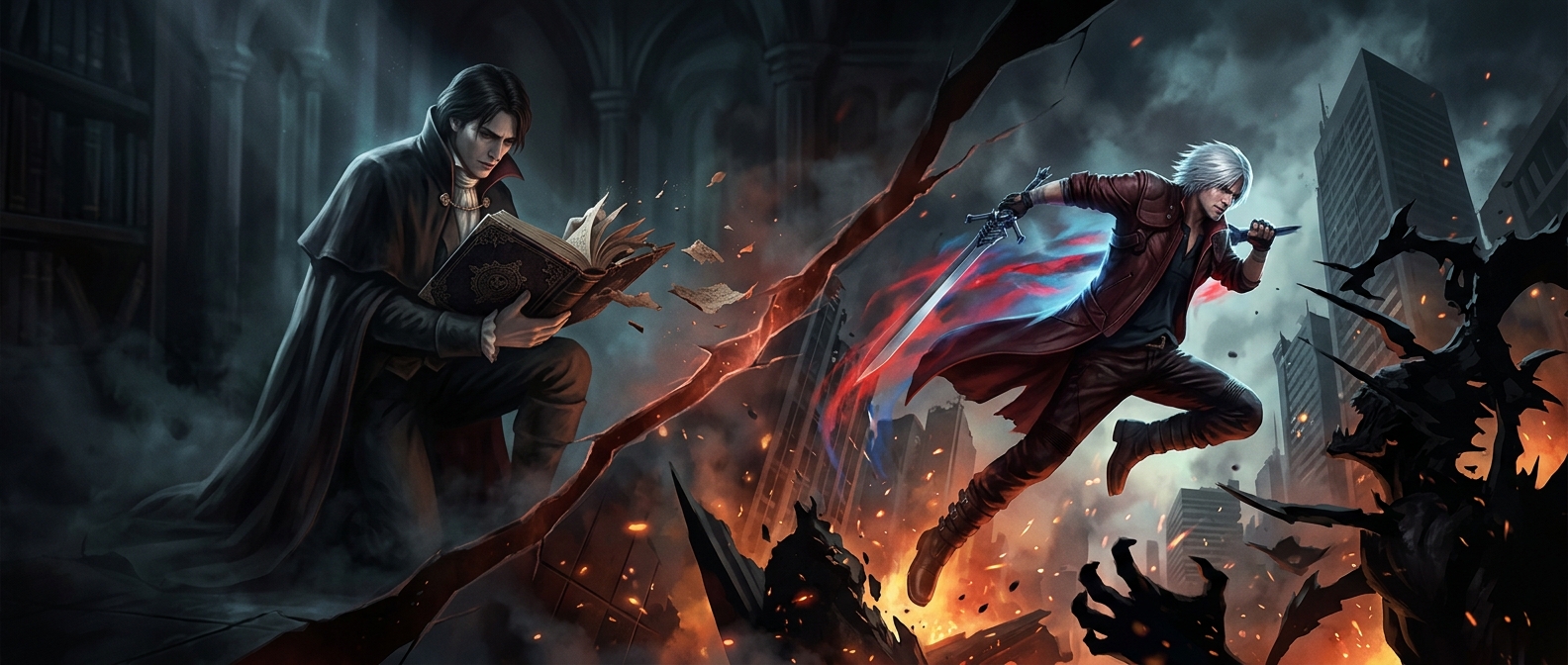
A Resident Evil prototype led by director Hideki Kamiya began to pull in a different direction. Its protagonist could wield magic, fight with a sword, and keep enemies suspended in the air by striking them repeatedly—a technique called juggling in action games. Those abilities made combat the attraction, not simply a dangerous obstacle on the way through a frightening place.
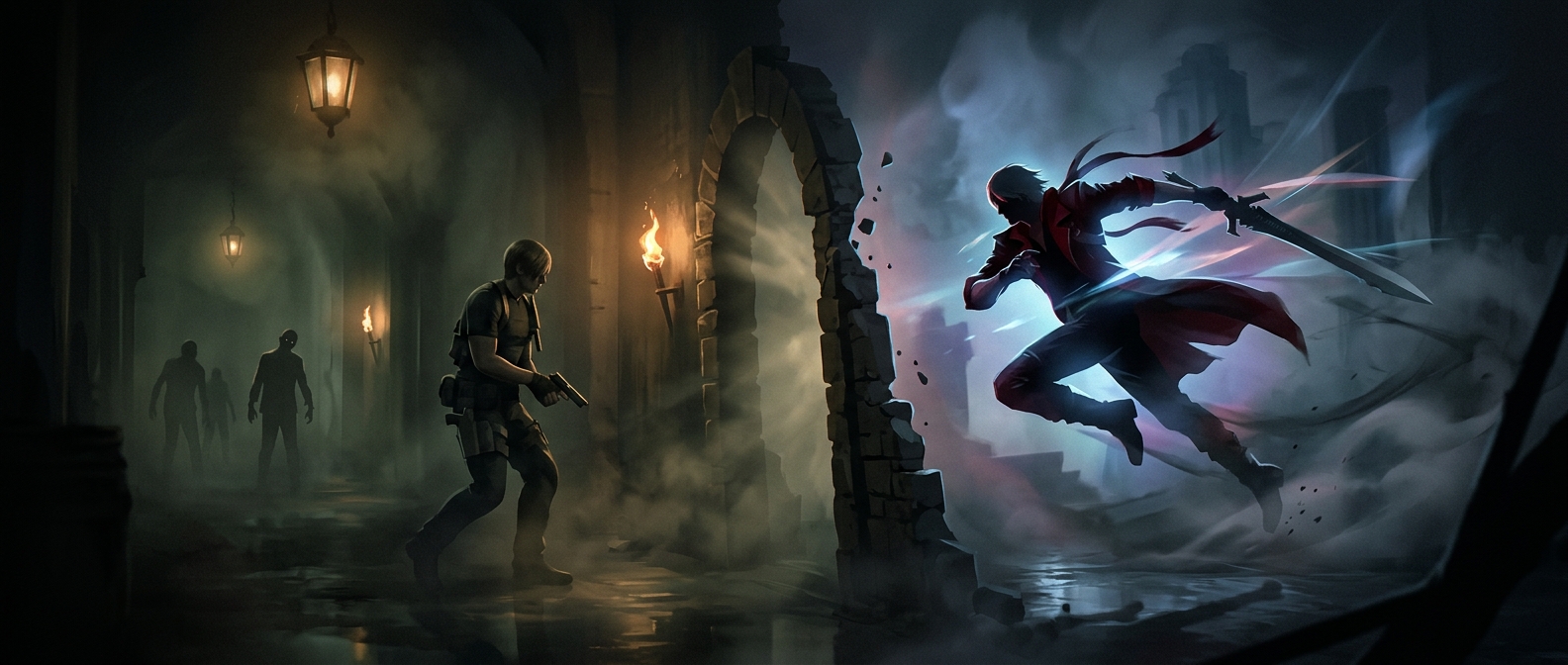
That shift mattered because survival horror depends on vulnerability. Limited resources and threatening enemies make each encounter feel costly; a hero who can launch foes into elaborate combos changes the player’s role from survivor to performer. The prototype’s strengths were becoming a poor fit for Resident Evil’s central tension.
A mismatch becomes a new game
Rather than force the increasingly showy combat into a horror series, the team developed the concept as a separate project: Devil May Cry. The change gave the game room to build around its action—letting players master attacks and string them together—without having to preserve Resident Evil’s particular balance of fear and scarcity.
The protagonist was named Dante. The result was not merely a Resident Evil character with different equipment; it was a design built around a different pleasure. In the prototype, powers that threatened to undermine horror became the reason to play. A mismatch between a game’s mechanics and its genre can be the beginning of a new genre identity.