How a nightclub becomes a rhythm game
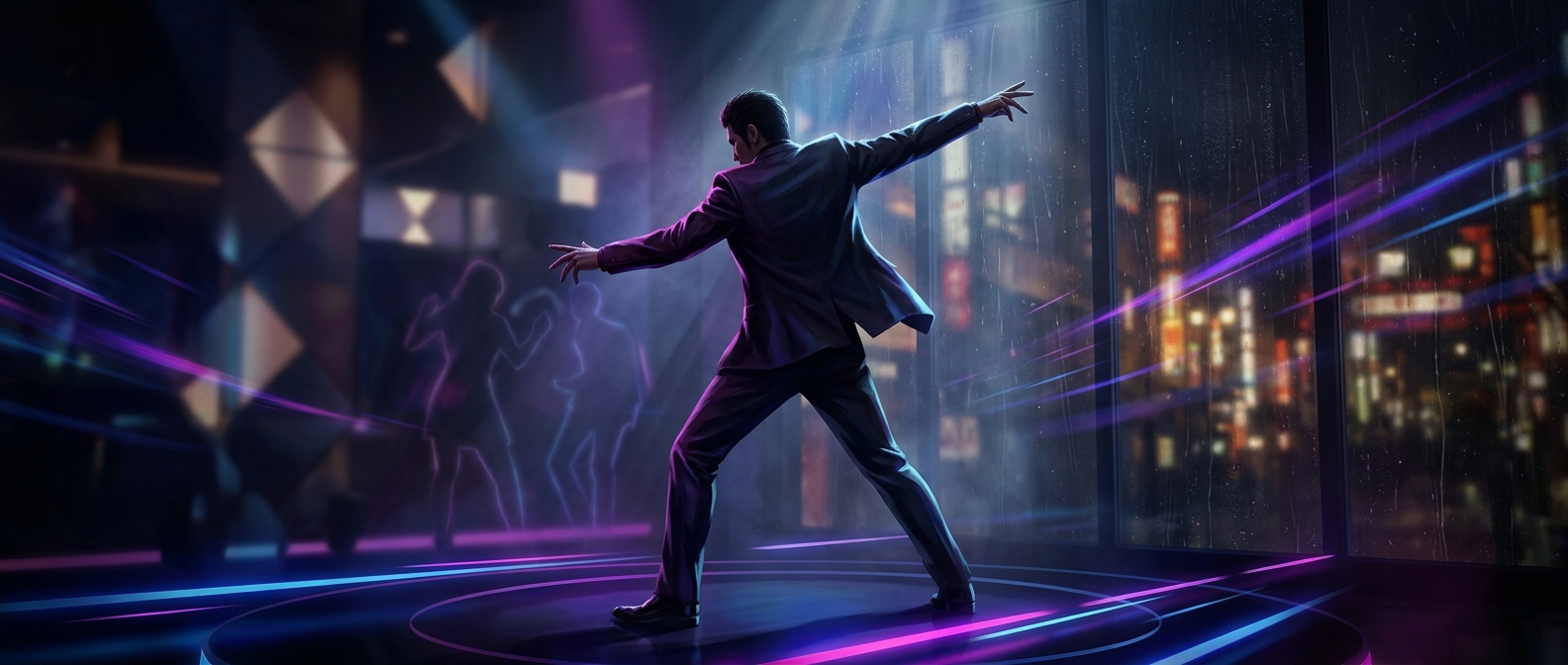
In Yakuza 0, the disco floor is more than a joke about tough guys dancing. It turns the series’ taste for abrupt tonal shifts into a playable challenge: between crime-drama scenes and street fights, the player can take Kiryu or Majima to a club and compete in a dance battle.
The minigame works like a compact rhythm test. Directional prompts move toward a target on screen; pressing the matching buttons in time keeps the routine going and builds a combo. At the end of a sequence, a well-timed pose can add to the performance. The flashy choreography is the reward for reading the beat accurately, not just decoration over a cutscene.
Why the contrast fits
The series often sets a tightly plotted underworld story against ordinary city amusements—restaurants, arcades, clubs, and other diversions. That contrast makes the characters feel like people moving through a lived-in neighborhood, rather than figures who exist only for the main plot. It also gives players a change of pace: a dance battle asks for timing and attention instead of the reflexes used in combat.
The humor comes from the mismatch between image and activity. A sharply dressed gangster who has spent the evening trading blows must now keep time under club lights, with the same seriousness the game gives his other contests. The result is both a playful detour and a small demonstration of the series’ design: its world can hold crime drama and an earnest disco routine at once.