The street becomes part of the fight
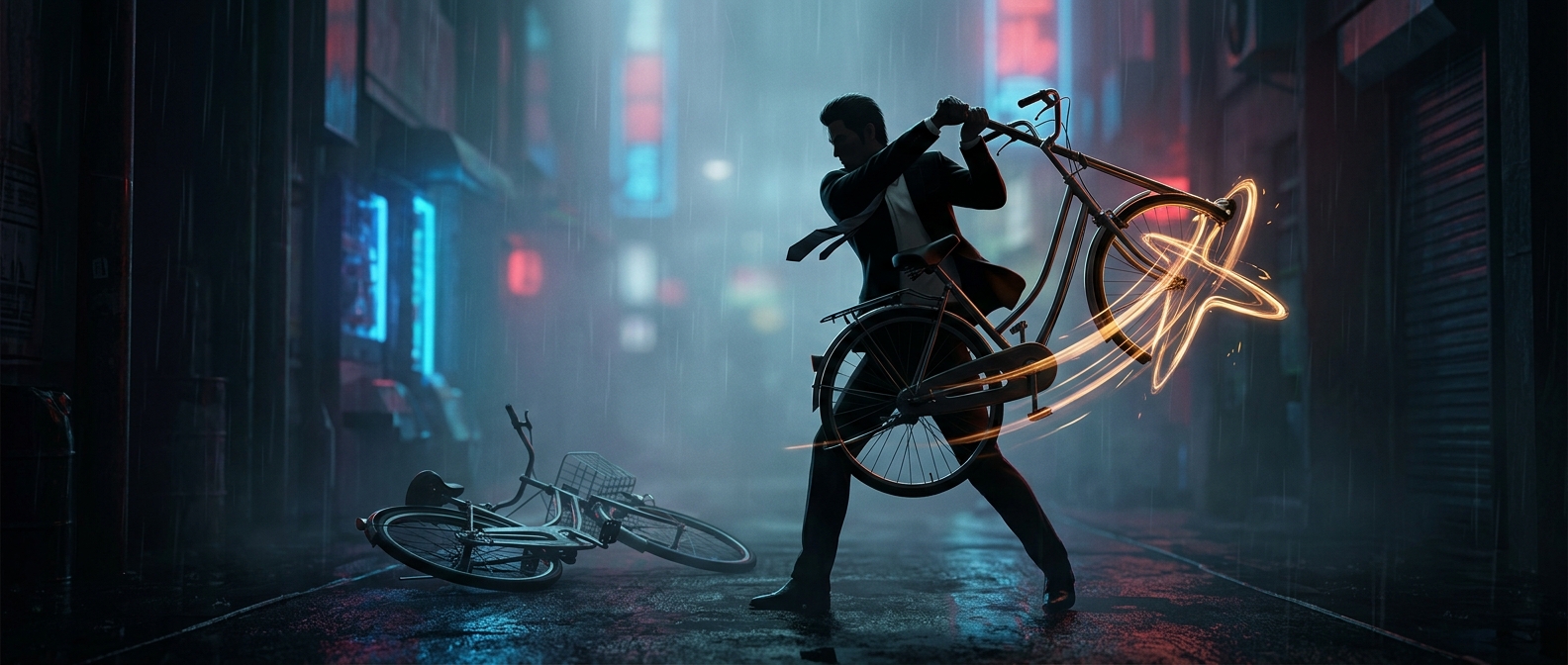
Yakuza’s brawling is built around more than punches and kicks. Nearby objects can become temporary weapons, so a fight changes with its surroundings: a character who spots a bicycle can turn an ordinary piece of street clutter into a heavy swinging club. The environment is not just scenery; it offers choices about how to attack.
That choice also changes the rhythm of combat. A bicycle takes up space and moves differently from a quick hand strike, making the attack feel broad and forceful. But the weapon is temporary: the impact can wreck the bike as well as hurt the opponent. The player gets a burst of extra power, then loses the object that made it possible.
Destruction is part of the joke
The appeal lies in the collision between an everyday object and the game’s exaggerated brawling. A bicycle is recognizable, awkward to wield, and plainly not designed for a fight. Letting a character swing one turns a routine street scuffle into a comic spectacle without requiring a new weapon or setting.
It also makes the scene feel reactive. Instead of treating every encounter as a duel in an empty arena, the game invites players to notice what is nearby and improvise. When the bike buckles under the blow, its destruction is both a visual punchline and a clear sign that the improvised advantage has been spent.