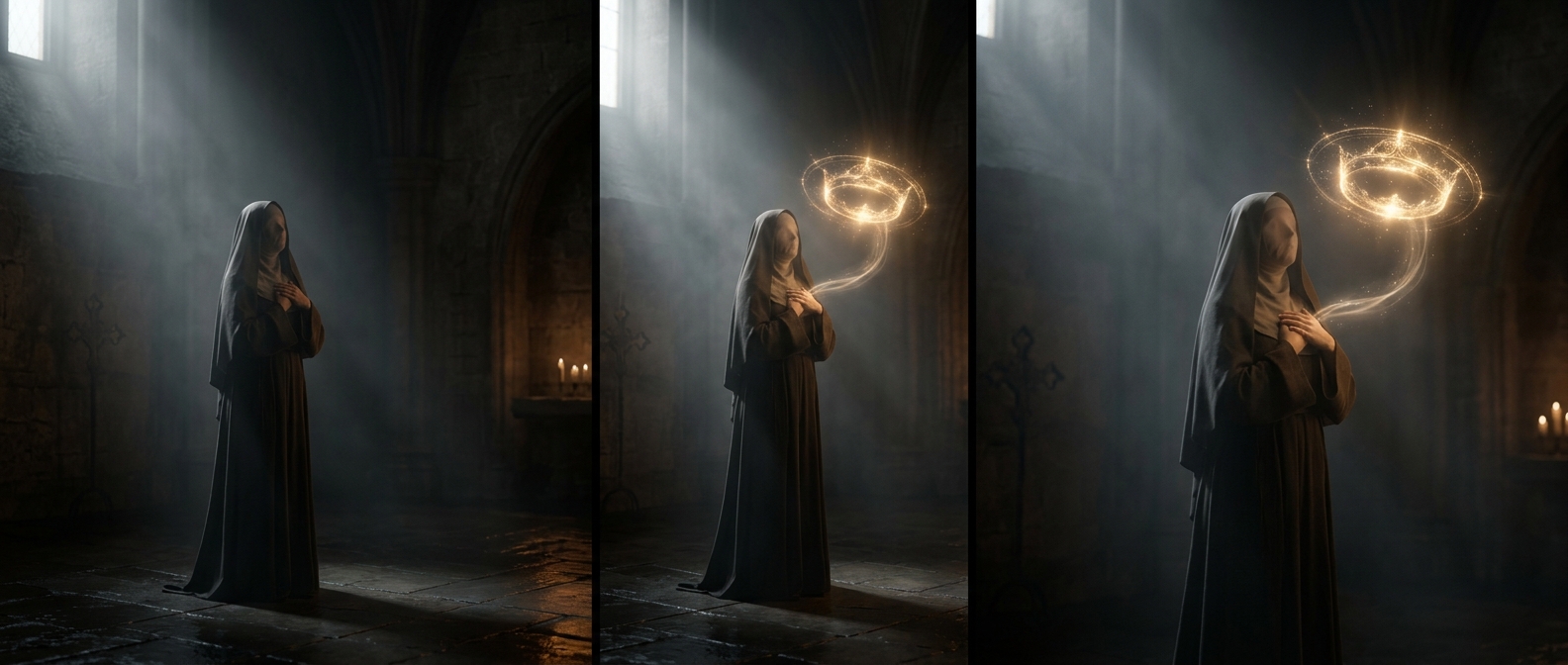
Bridal Dress Made Spiritual Vows Visible
For some Christian ascetics, a wedding ceremony could express a commitment that had no human spouse. Wearing bridal clothing and taking part in wedding-like rites, they presented their devotion as a union with Christ or another sacred figure. The marriage was symbolic: it gave a familiar, public form to an inward religious promise.
Why Use the Language of Marriage?
Christian devotional writing often described the relationship between the soul and Christ in marital terms. Marriage suggested intimacy, loyalty, and a bond meant to endure—ideas that could convey the intensity of a mystic’s religious life more vividly than an abstract vow could.
The imagery also made renunciation legible. An ascetic who chose not to marry a person could frame that choice not simply as refusing marriage, but as dedicating herself to a different kind of union. Bridal dress turned that private intention into something other people could see and recognize.
A Ritual, Not a Literal Wedding
Such ceremonies did not make the ascetic a spouse in the ordinary legal or household sense. Their meaning depended on religious symbolism: the clothing and ritual borrowed the language of marriage while redirecting it toward spiritual devotion. The striking idea is that a wedding could mark a commitment precisely because it was not a marriage to another person.