Why a Gold Decoration Can Cost So Little
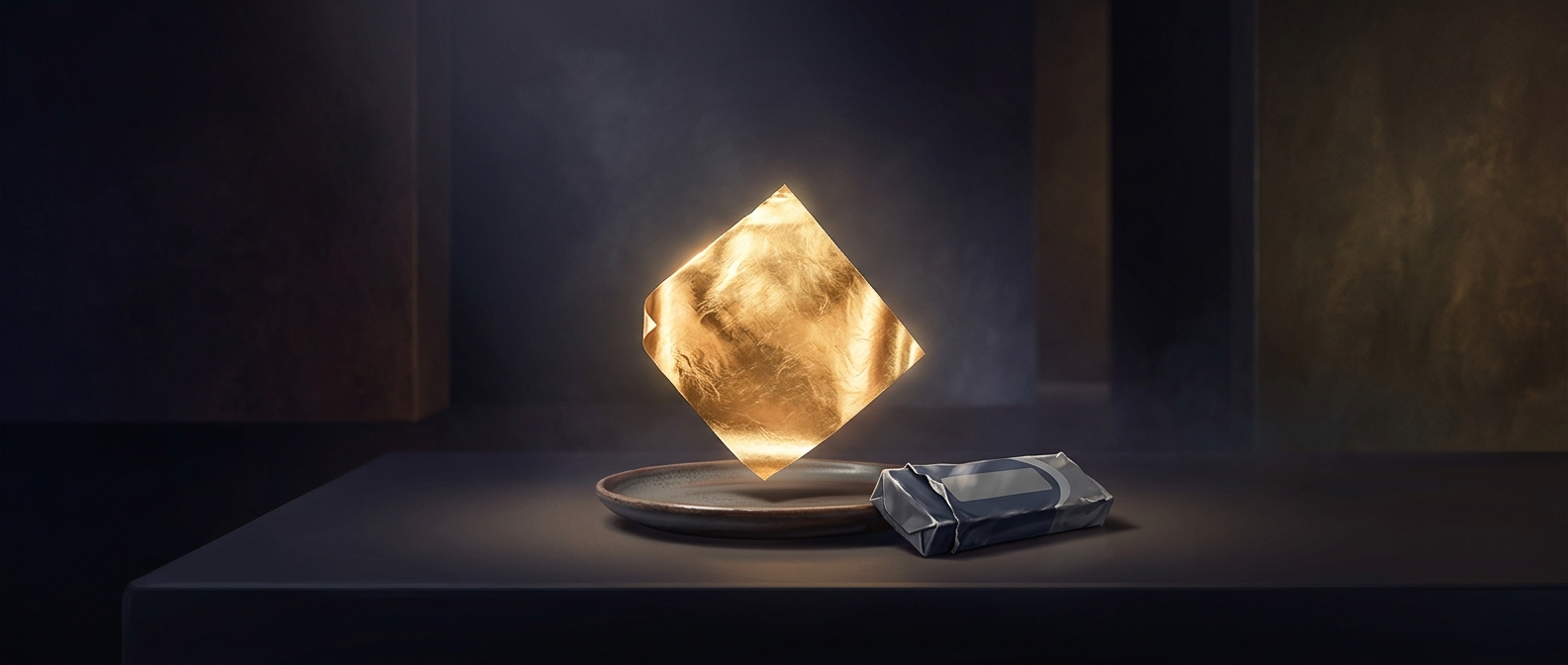
Gold is valuable by weight, but a decorative sheet contains very little of it. Gold leaf is made by repeatedly hammering gold until it spreads into an extremely thin film. That turns a small amount of metal into enough surface area to cover a dessert or drink garnish.
The price of the gold in one sheet can therefore be tiny even when gold itself is expensive. A buyer is paying for a visible flash of metal, not for a substantial piece of jewelry.
The Cost Is in the Tiny Amount, Not the Drama
For food decoration, edible gold is used mainly for appearance; it adds no meaningful serving of food. Its metallic shine makes a small amount conspicuous, so a thin patch can look extravagant while using only a sliver of material.
Processing and packaging also contribute to what a seller charges, so the metal’s value is not necessarily the whole retail price. Still, the key economic trick is scale: gold leaf sells a striking surface effect using almost no gold by weight. That is how a sheet can cost less than an ordinary piece of gum.