How a coconut crab gets through a coconut
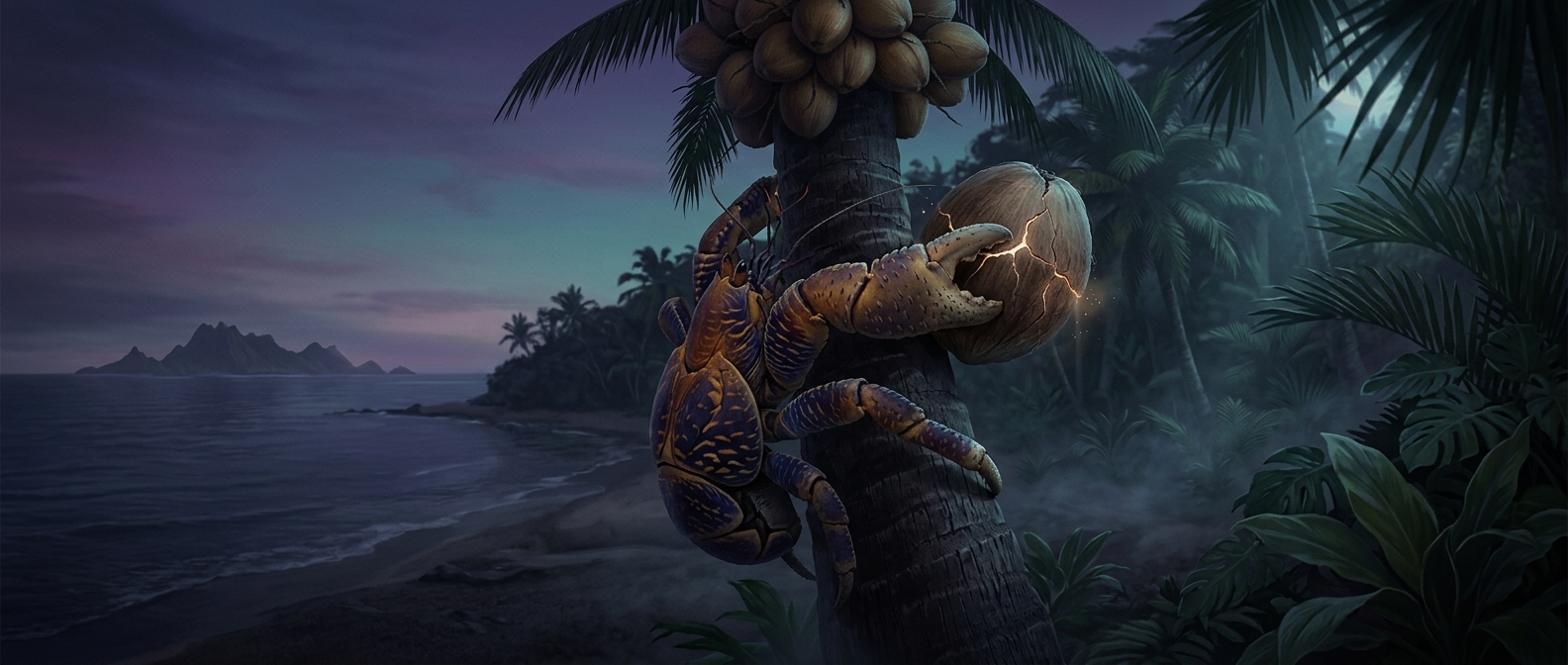
A coconut crab does not simply bite through a hard shell in one snap. Its oversized front claws are powerful tools, but the coconut’s fibrous husk is the first obstacle. The crab can peel and tear away those fibers, then work at the shell—often around its softer “eyes,” the three small pores at one end—until it can reach the nutritious flesh inside. The sequence turns brute strength into a more effective kind of food processing.
Coconuts are only part of its menu. These crabs are scavengers and opportunistic eaters, feeding on fallen fruit, seeds and animal remains as well as other available foods. Their strong claws also help them handle and carry food, which is useful on islands where resources may be scattered.
A land crab built for island nights
Found on islands across the Indian and Pacific oceans, coconut crabs spend much of their lives on land. They still need moist conditions: their breathing organs must stay damp to work. They shelter during the day and forage after dark, when cooler air and darkness help protect them from drying out and from predators.
Their ability to climb gives them access to food and shelter above the forest floor. A palm is not just a dramatic perch; it can be part of a crab’s route through its habitat. On tropical islands, the result is an animal that links the canopy and the ground—climbing for a meal, then returning to forage among fallen fruit and other scraps below.