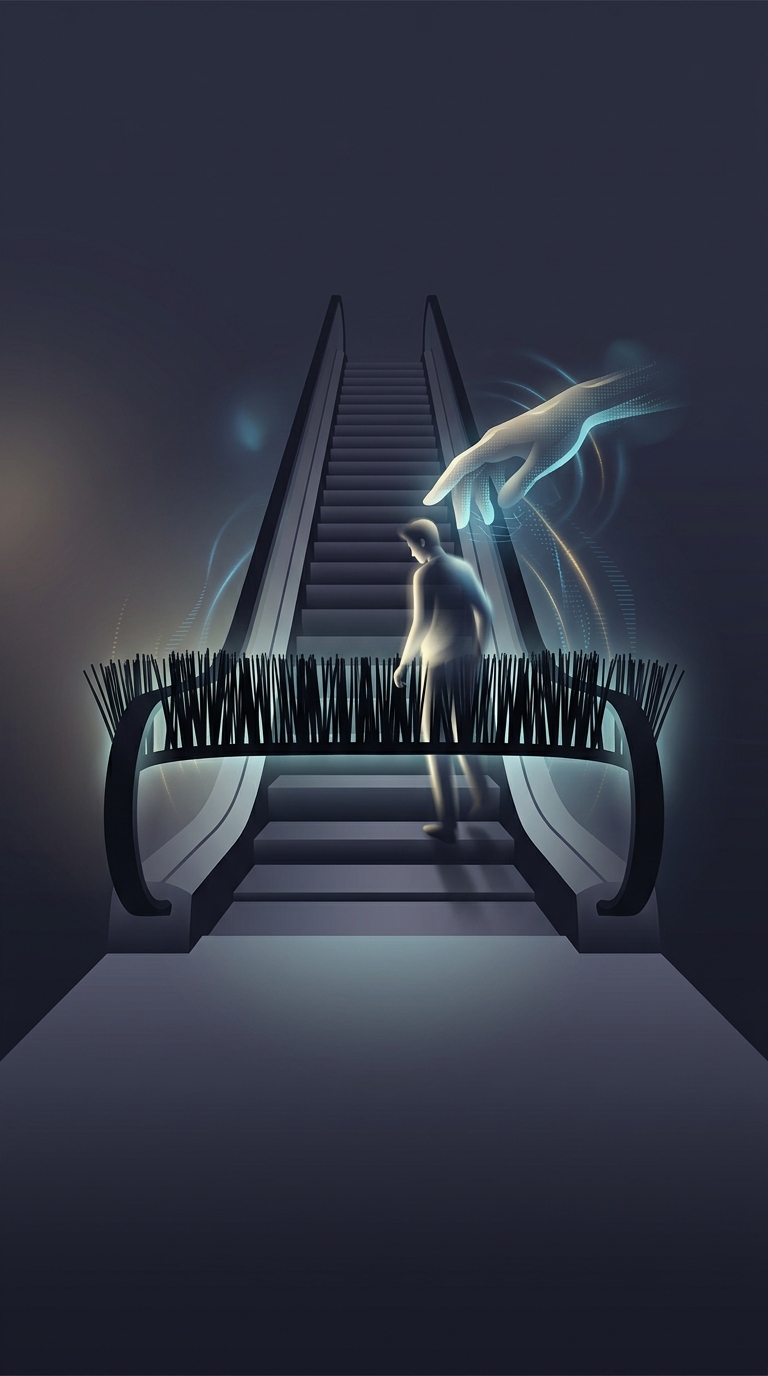
The narrow boundary beside each step
An escalator step moves past a fixed side panel, called the skirt. The space between them has to remain narrow, but it is still a place where a shoe, loose fabric, or a bag strap could become caught. If something is drawn into that moving gap, the rider may be pulled off balance or injured.
The bristles along the skirt form a soft, tactile boundary. When a shoe brushes against them, the contact gives the rider a cue to shift toward the middle of the step. The bristles can also deflect an object that is only lightly touching the edge, helping keep it away from the gap.
A warning, not a barrier
The brushes do not seal the opening or stop the escalator mechanically. They are part of a layered safety design: the moving steps, fixed skirt, and brushes work alongside the rider’s own attention. A dangling lace or bag strap can still be hazardous, especially if it reaches the step edge.
That is why the useful signal is simple: if a shoe touches the bristles, move it inward rather than treating the brush as a surface to lean against. The brush’s job is to make the risky boundary noticeable before an object reaches the machinery.