From a science-fiction computer to a household assistant
The computer aboard the original Star Trek could respond to spoken questions from anywhere on the ship. That idea helped shape Alexa’s ambition: make computing feel less like a device someone must operate and more like a service available throughout the home. The goal was not to recreate a fictional machine, but to bring a piece of its conversational convenience into an ordinary setting.
Why a voice assistant needs a wake word
A device that listens for requests must first work out when someone is talking to it. A wake word—the chosen name that signals “pay attention now”—helps separate a command from conversation, television, or other household noise. The sound of “Alexa,” especially its crisp consonants, was selected to make the name easier for speech-recognition software to pick out amid competing sounds.
That small design choice connects the grand idea of an always-available assistant to a practical engineering problem: people speak casually, rooms are noisy, and a computer needs a clear cue before it can interpret a request.
A name with two associations
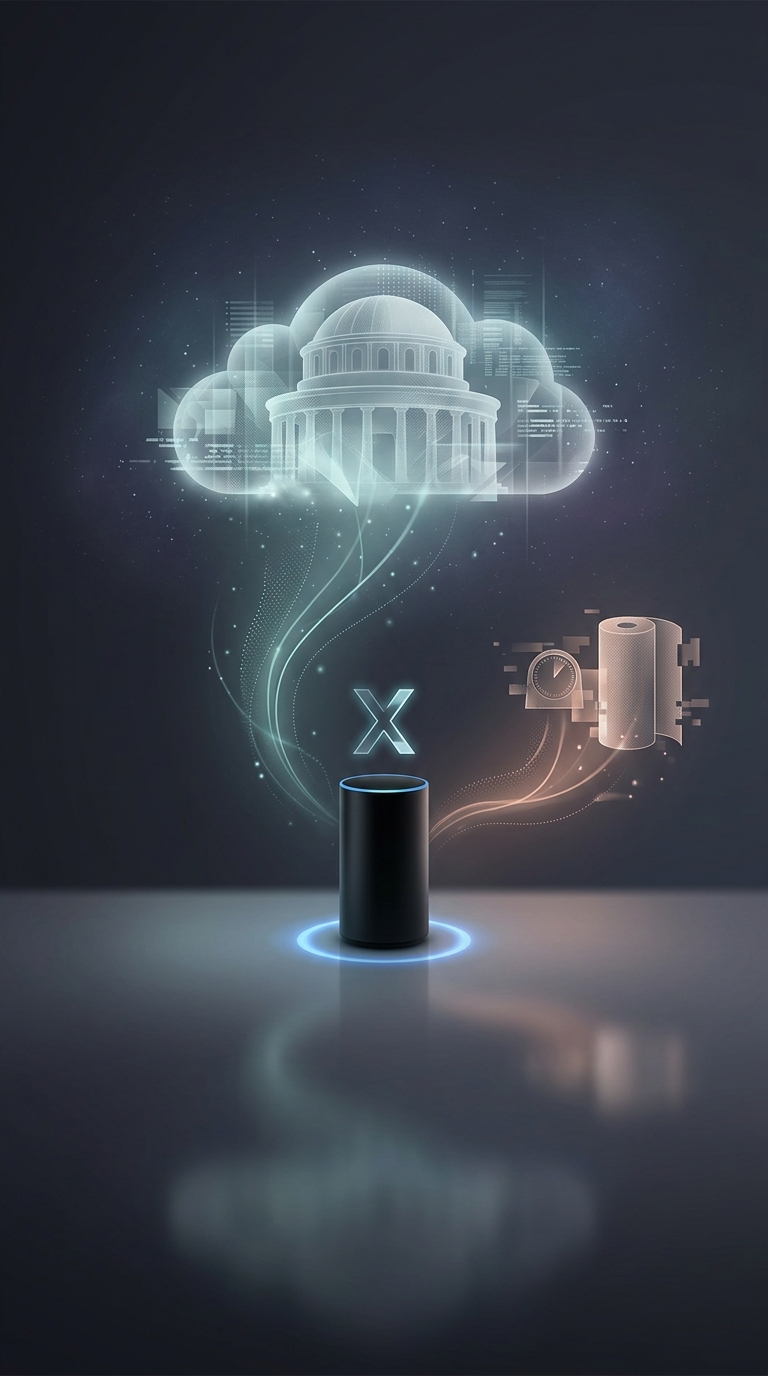
“Alexa” also nods to the Library of Alexandria, the ancient center of learning whose name evokes a vast store of knowledge. The name therefore carries both a practical function—it is a recognizable signal for the device—and a symbolic one: a voice interface meant to help people reach information without first navigating a screen or menu.
The result is a system inspired by a fictional shipboard computer but adapted to the rhythms of a home, where a short spoken name can summon digital help from across the room.