Your eyes keep moving while attention slips away
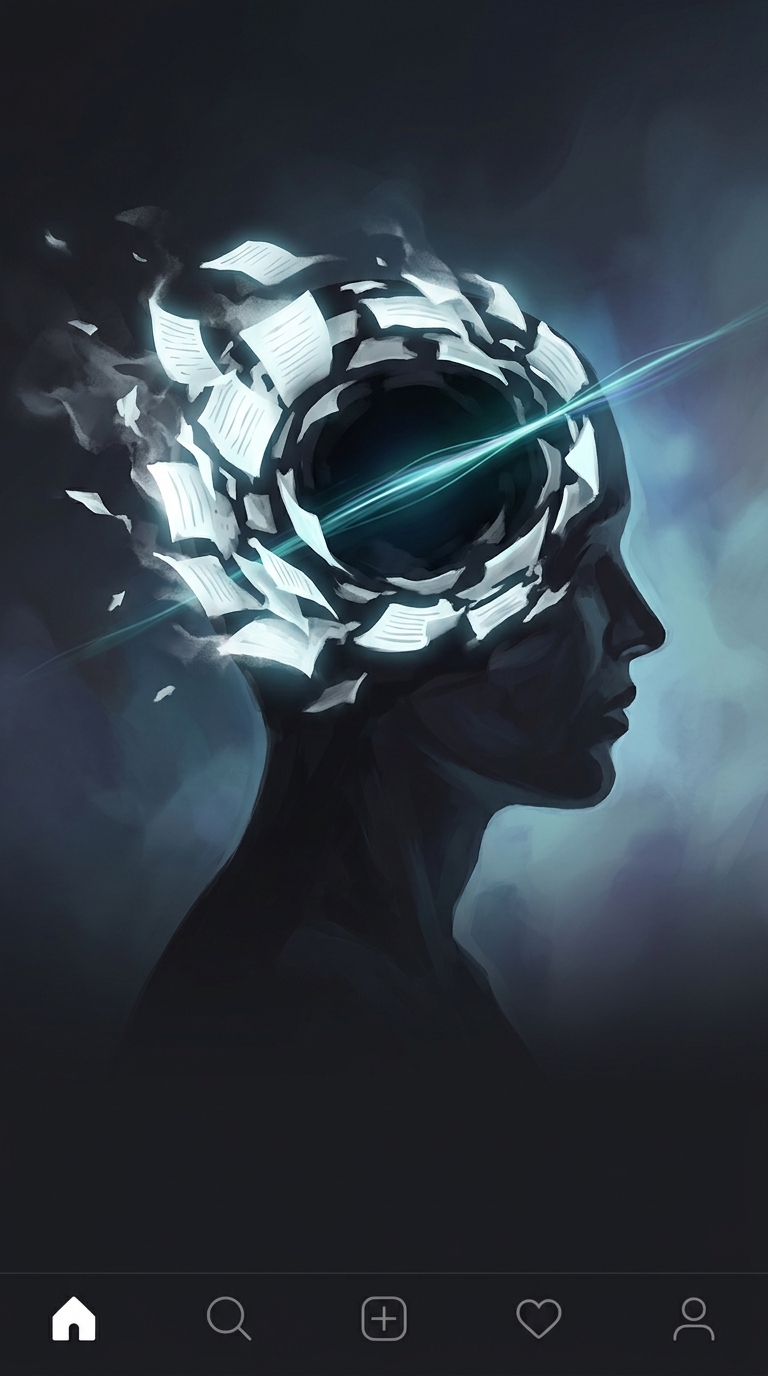
Reading is not a single operation. Your eyes take in words a few at a time, while the brain uses attention and working memory—the limited mental space for holding information briefly—to connect each phrase to the next. If your attention shifts to a worry, a plan, or an unrelated thought, your eyes may still travel across the lines. The words are seen, but they are not being assembled into a coherent account as reliably.
That is why the page can feel familiar without being understandable. You may register individual words or the rhythm of a sentence, yet fail to keep earlier ideas active long enough to link them with what comes next. Without those links, little of the passage is likely to be available later as a meaningful memory.
The sudden realization is a kind of mental error check
At some point, the text stops making sense—or you reach the end and cannot say what it was about. Your brain can compare its ongoing sense of understanding with what the passage should have produced: a connected idea, an answer, or at least a usable summary. When that expected understanding is missing, the mismatch brings the lapse into awareness.
This monitoring is imperfect. Sometimes you notice quickly; sometimes you keep reading because the sentences remain easy to pronounce and look familiar. The realization does not mean that no information entered your brain. It means the reading did not leave you with a dependable grasp of the passage.
Why rereading works
Going back gives attention another chance to stay with the words and connect them. A useful reset is to pause, identify the last idea you actually understood, and resume from there. The telltale moment is not that your eyes crossed a whole page—it is that you cannot reconstruct the thought that was supposed to carry you through it.