Why a Can of Diet Coke Fizzes More at Altitude
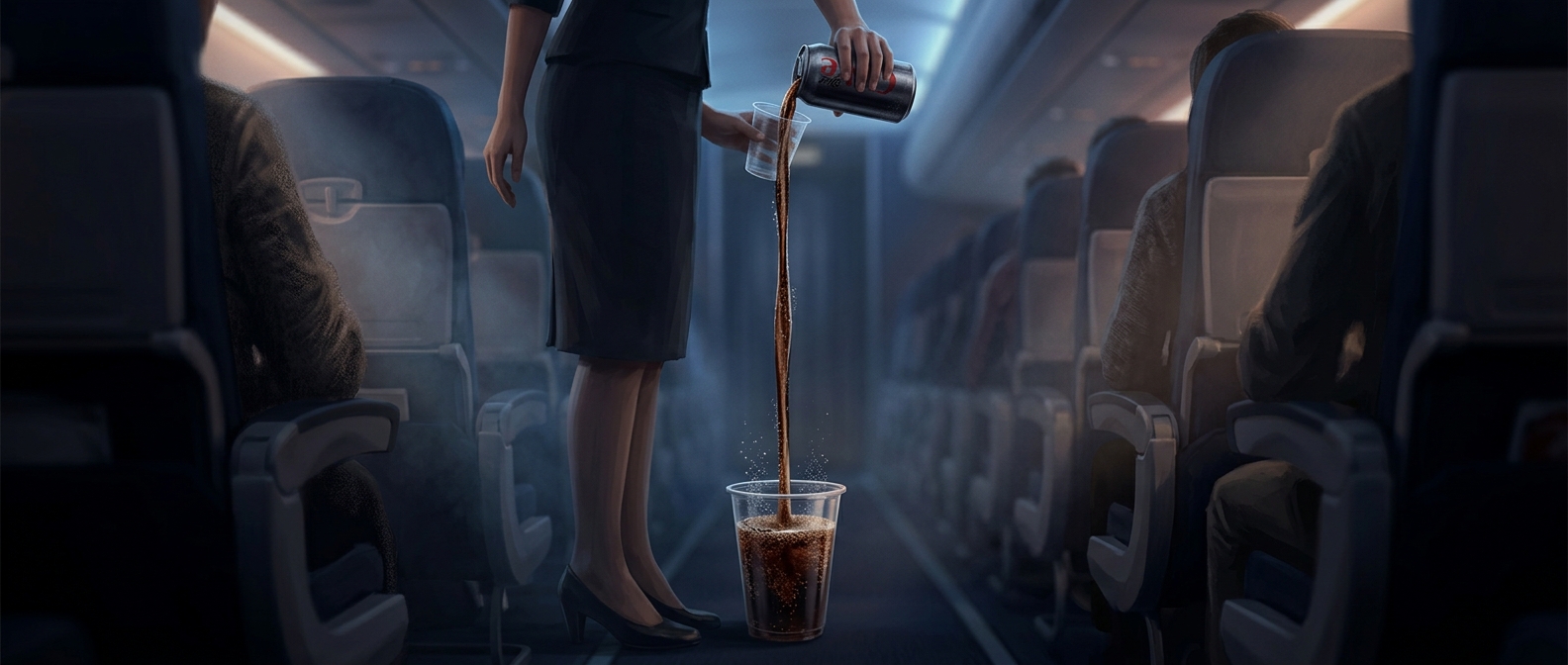
A fizzy drink is a solution with carbon dioxide dissolved under pressure. When a flight attendant opens a can, pressure drops and some of that gas starts escaping. The airplane cabin is also kept at a lower pressure than the air at sea level, so a pour begins with less pressure holding the carbon dioxide in the liquid.
The drink does not simply release all its gas at once. Tiny imperfections in the cup and turbulence from pouring give bubbles places to form. As bubbles rise, they carry more carbon dioxide out of the drink, building a head of foam.
Why Diet Coke Can Be Especially Fussy
Diet Coke’s formulation can make its foam behave differently from regular cola. Sugar makes a drink more viscous—thicker and slower-flowing—which can slow bubbles as they travel upward. A diet version lacks that sugar, so bubbles may rise and gather into foam more readily. The exact result also depends on the drink’s temperature, the cup, and how it is poured.
The cabin’s lower pressure helps set the process in motion; it is not the only cause. A warm can or a brisk pour can make the fizzier reaction worse, while a slow pour down the side of a cup gives gas a gentler escape route. That is why serving one soda in the air can take noticeably longer than pouring an ordinary drink: the attendant is managing a stream of bubbles, not just filling a cup.