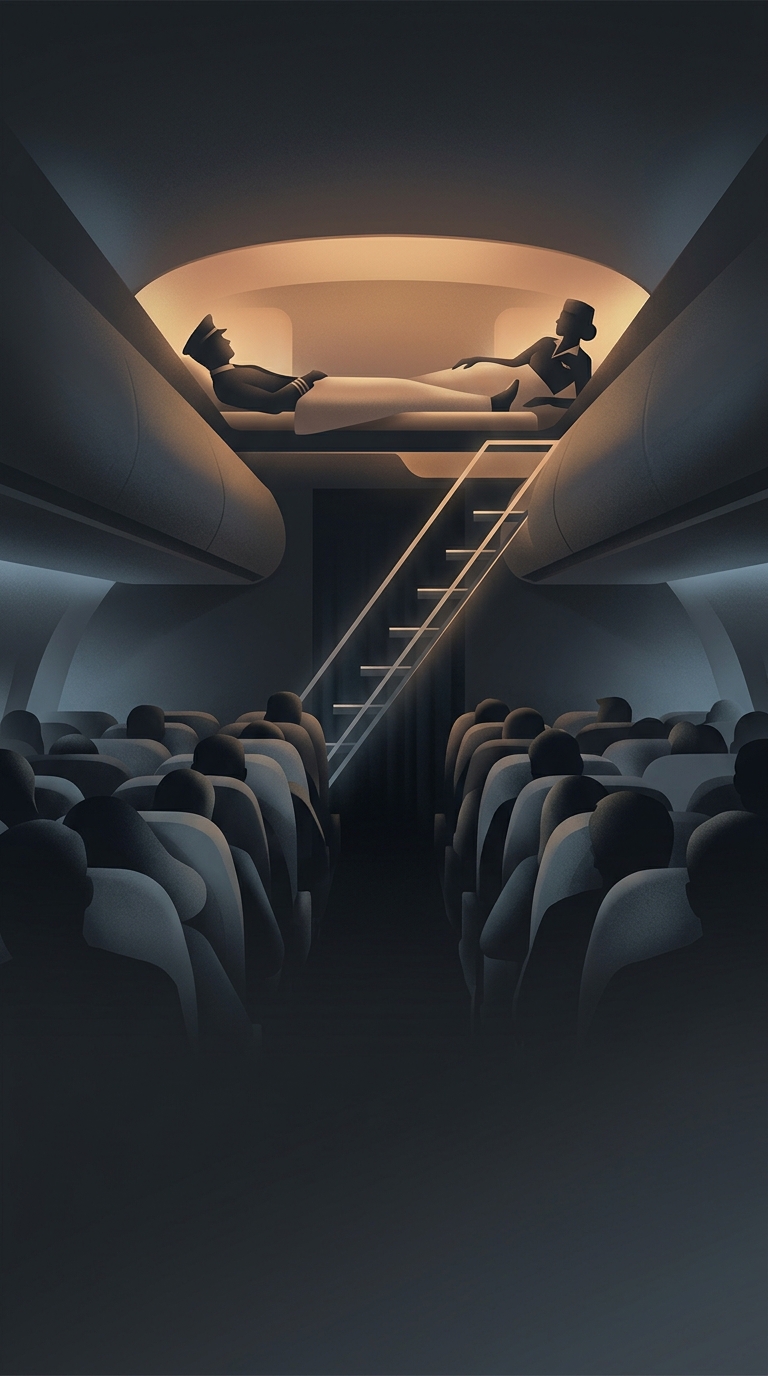
Where the crew rests on a long flight
On aircraft configured for long-haul service, crew rest areas are built into the aircraft’s interior rather than added as ordinary passenger rooms. Depending on the design, they may sit above the passenger cabin or below it, with access through a hatch and a steep ladder or compact staircase. The entrance is kept out of the way of passenger traffic, which can make the space seem almost secret.
Inside, the priority is usable sleep space, not comfort on the scale of a hotel room. Crew members may rest in narrow horizontal bunks, often separated by curtains or partitions. The compartment also needs lighting, airflow, and a way for crew to communicate with the rest of the aircraft. Exact layouts vary by aircraft and airline.
Rest is part of the flight plan
Long flights may use additional pilots and cabin crew so people can take scheduled rest periods while others remain on duty. A dedicated compartment gives off-duty crew somewhere to lie down without occupying passenger seats or leaving the aircraft’s working areas. Pilots and cabin crew may have different rest arrangements, and not every aircraft has the same kind of bunk space.
Fitting these rooms into an airliner is an engineering tradeoff: every staircase, bunk, and partition takes up space that must be planned into the cabin and aircraft structure. The result is a small, purpose-built refuge that supports crew rotation—and, in turn, helps the flight continue with rested people ready to take over.