A Pattern That Breaks Up the Evidence
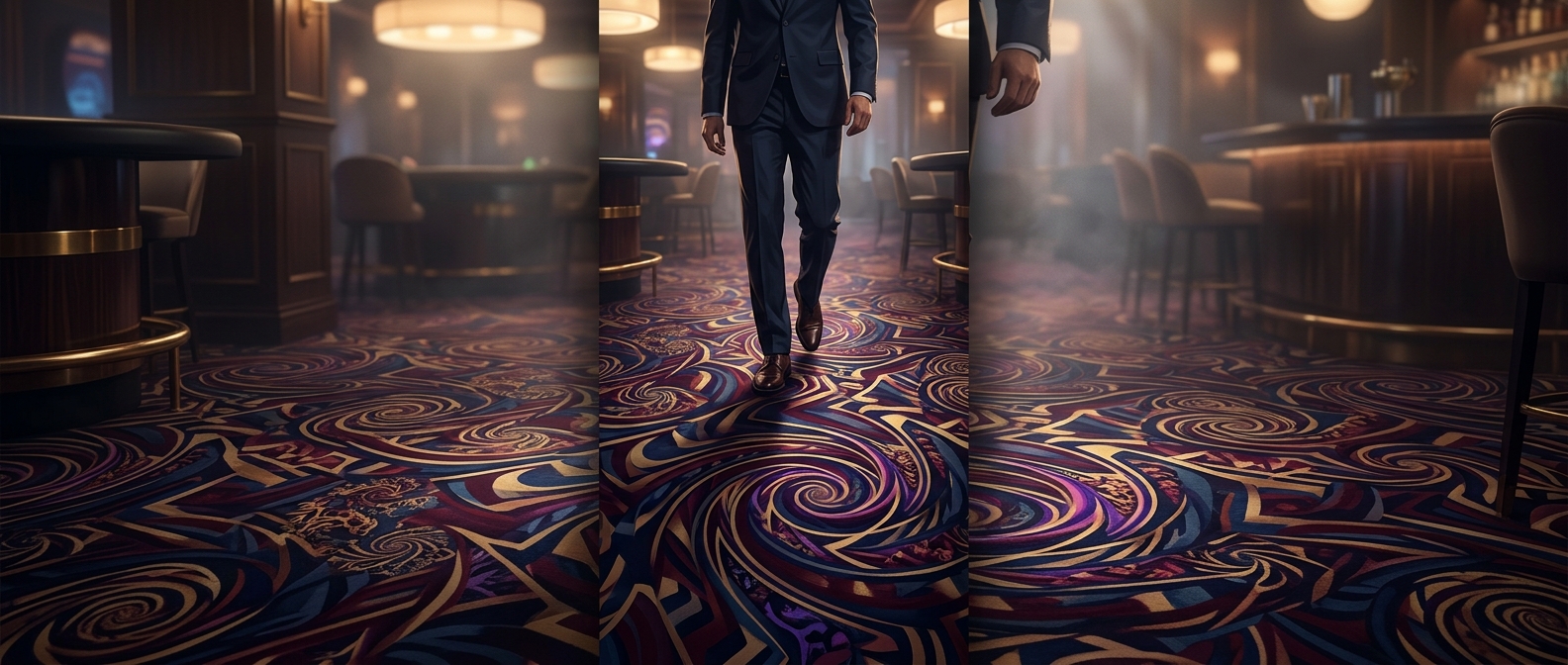
A plain carpet gives every mark a clean backdrop: a dark splash, a dropped snack, or a worn patch stands out against an even field of color. A dense design interrupts that field. Repeated shapes, shifting colors, and overlapping lines give the eye many competing details, so a small blemish is less likely to read as a distinct spot.
That is camouflage, not stain-proofing. The fibers can still absorb spills, and the carpet still needs cleaning. The pattern simply makes ordinary wear less conspicuous between cleanings—and can keep one small mark from making a large section of floor look shabby.
The Floor Has to Work, Not Just Look Dramatic
Casino floors see steady foot traffic, so carpet is a practical surface as well as a decorative one. A busy motif can make a large area feel visually unified while tolerating the scuffs and uneven wear that accumulate in heavily used spaces. It also offers designers a way to use strong color and elaborate imagery without relying on a perfectly pristine, uniform surface.
There is a tradeoff: a pattern that disguises everyday marks can also make genuine dirt harder to spot. The carpet still has to be inspected and maintained; its visual complexity only buys some breathing room. The useful trick is that the same design that makes the floor look exuberant can make its inevitable small flaws harder to pick out.