The reels are a display, not the draw
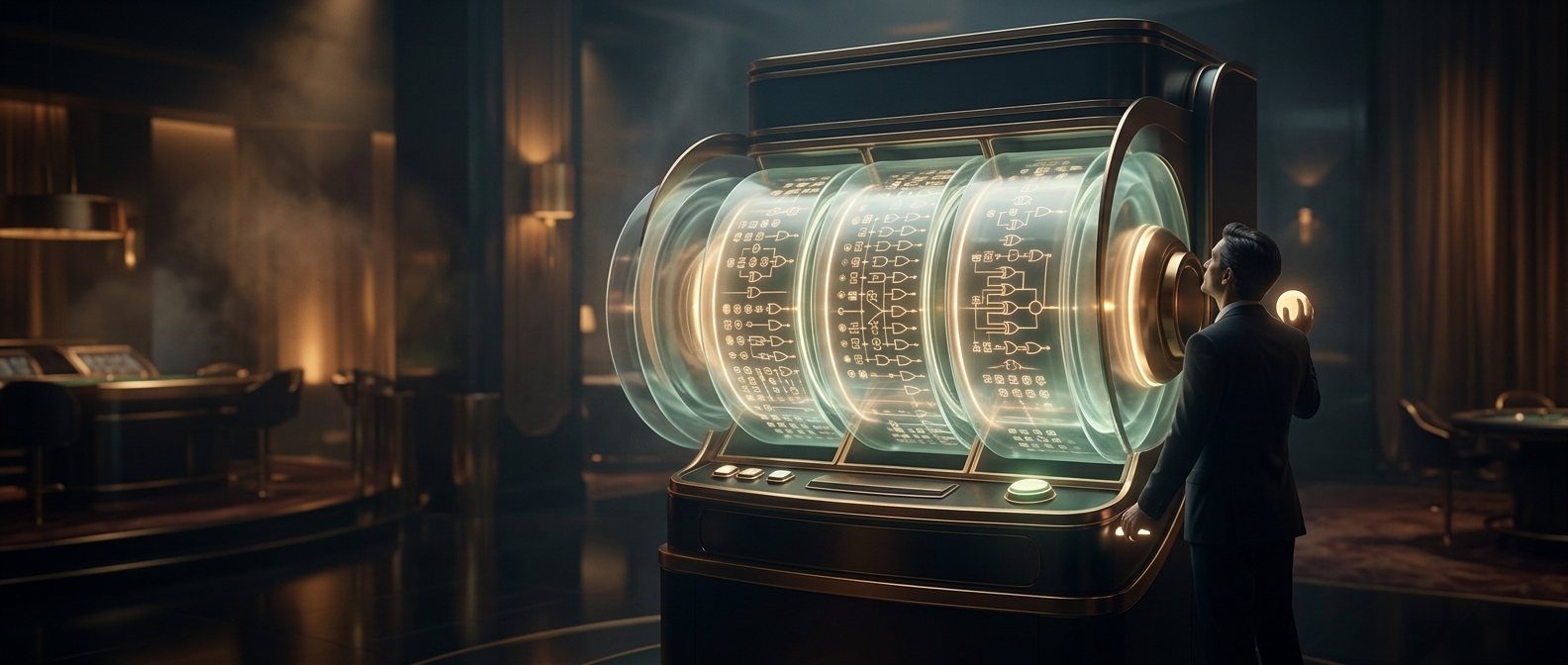
On a digital slot machine, the outcome is usually determined by a random-number generator: software that continually produces numbers and uses one to select a result when a play is made. The familiar reels then show that result. Their spin and stop make the outcome easy to see, but they do not necessarily represent a physical wheel turning through equally likely positions.
A game maps possible results to symbols and combinations. In some designs, that mapping gives different symbols different chances of appearing. A common symbol can occupy many virtual positions, while a rare one occupies fewer. The animation may show only a small set of symbols at once, even though the underlying selection is made from a larger set of possibilities.
How symbols become odds
The displayed paytable explains what combinations pay, but it does not by itself reveal how often each combination occurs. Both the symbol mapping and the payout rules matter: a jackpot symbol may be scarce, and a line of common symbols may pay much less. The machine’s overall payout behavior emerges from the probabilities of outcomes combined with their rewards.
That is why a near miss on screen can be emotionally vivid without meaning the next play is more likely to win. Each play is generally evaluated as a new outcome; the spinning display dramatizes it rather than building toward a result. The fruit is the interface; the math is in the game’s outcome rules.