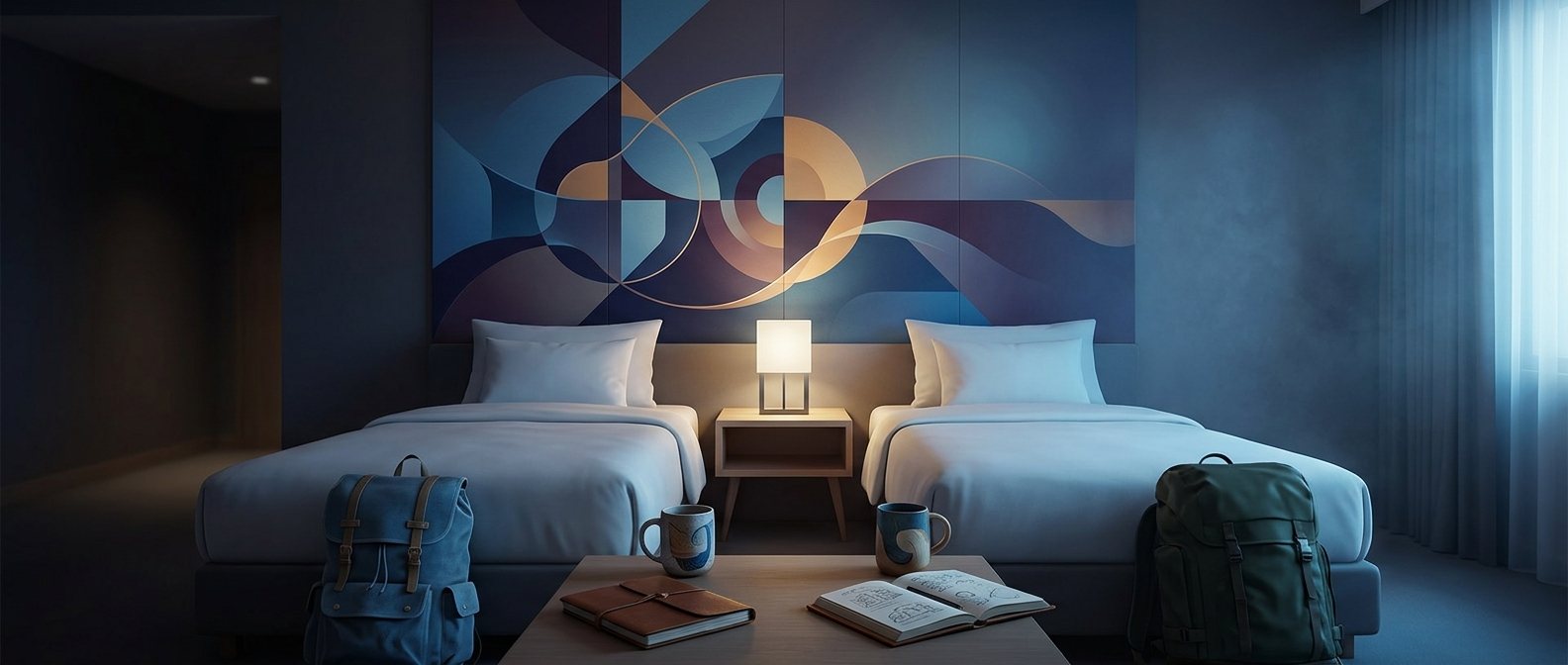
Why hotel rooms favor art that stays in the background
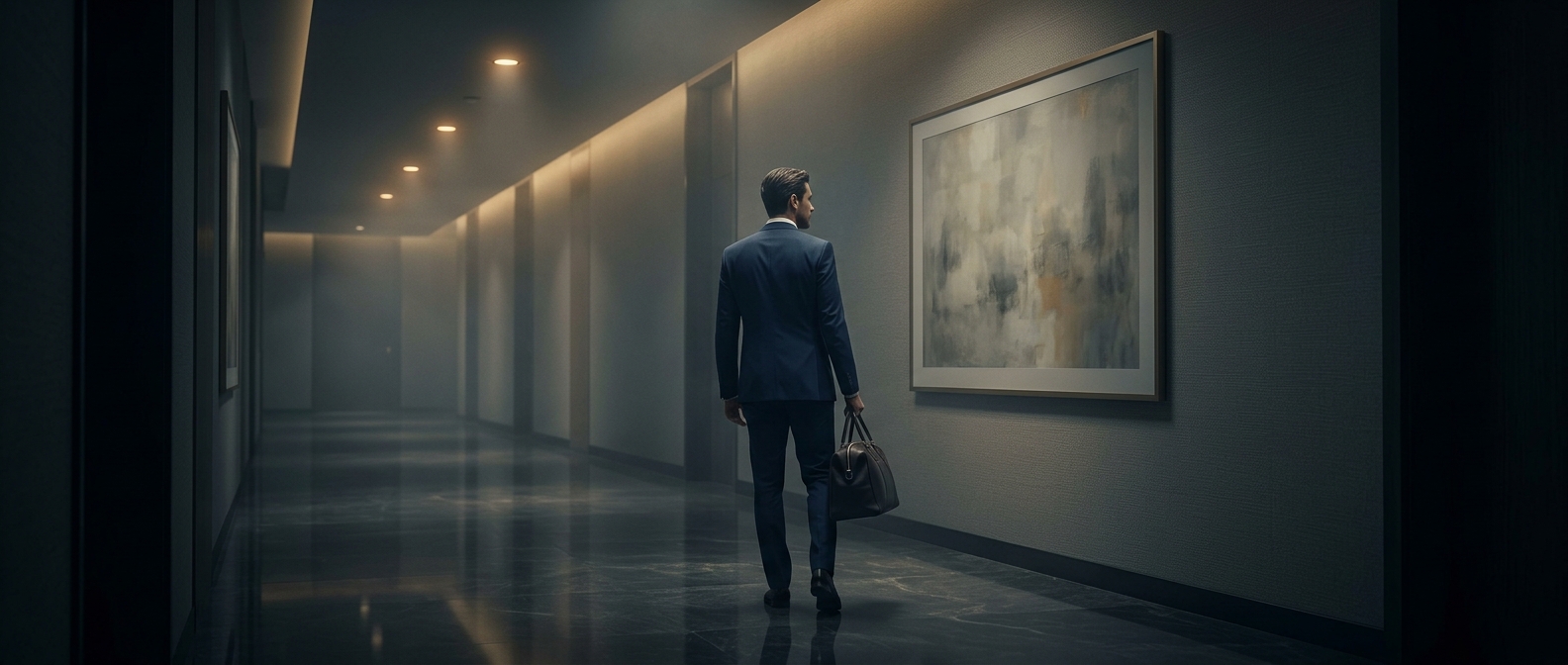
A hotel room has to feel acceptable to many people who may have little in common: families, business travelers, visitors from different countries, and guests staying for very different reasons. Art that is striking or strongly personal can delight some of them and irritate others. A quiet landscape, by contrast, is less likely to become the detail a guest complains about.
That makes hotel art a practical design decision as much as a decorative one. Buyers often need to furnish many rooms while keeping the look consistent and the choices manageable. Mass-produced prints are easy to purchase in quantity and replace if they are damaged or a room is updated. Muted colors also tend to sit comfortably beside varied furniture, carpet, and wall finishes.
The room is not meant to compete for attention
In a home, a picture may express the owner’s taste or invite close attention. In a hotel, the room usually serves another purpose: it should feel orderly and comfortable without demanding much from a tired guest. Art that recedes helps preserve that sense of neutrality. It can make a bare wall feel finished while letting the bed, lighting, and view remain more important.
The tradeoff is familiarity. When the safest choice is repeated across rooms and properties, the art can become almost invisible—not because it has no function, but because its function is to avoid taking over. A guest may forget the landscape, yet still register the room as calm and complete.