Why hotel lobbies invite a pause
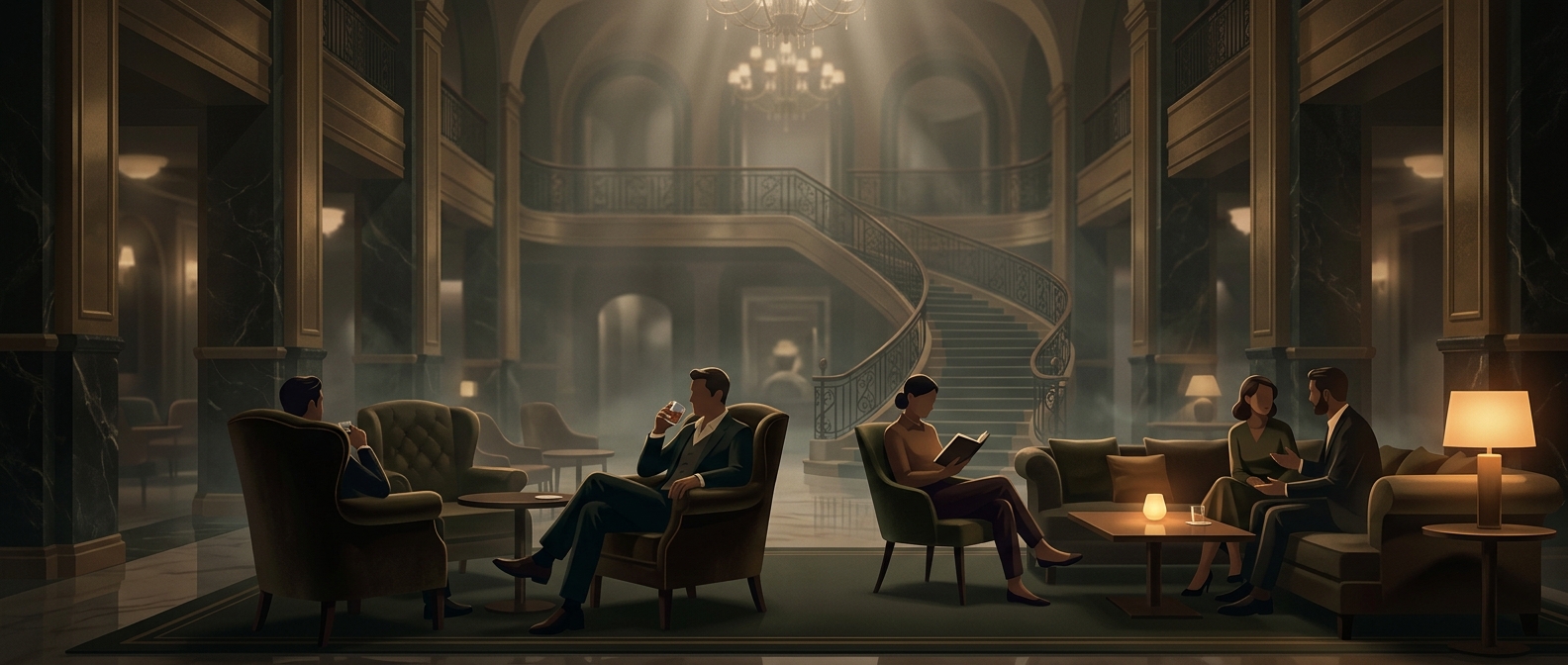
A hotel lobby has to do more than move guests from the front door to the elevators. It is also a public-facing room: people see it while arriving, waiting, meeting someone, or passing the entrance. Designers can make it feel like a place to stay rather than a corridor by arranging seating in small, approachable groupings and giving guests a reason to pause.
That choice can shape how the space appears from outside. A few people sitting, talking, or waiting make the lobby feel active and welcoming. In turn, passersby may be more likely to notice it as a destination rather than an empty passage. This is a form of social proof: people often take cues from what others are already doing.
A balance between comfort and circulation
The arrangement has to work for people with different purposes. Low tables and lounge chairs suit a conversation or a short wait, while clear routes let arriving guests reach the desk, elevators, and exits without weaving through a seating area. Too much furniture can obstruct those routes; too little can leave the lobby feeling exposed and unused.
The result is a room that serves both practical and atmospheric roles. A guest can settle in after checking in, while someone outside gets a glimpse of an active interior. The lobby’s apparent energy comes partly from its layout: it makes staying feel natural, then lets that activity be seen.