Why Hotel Windows Use Two Layers
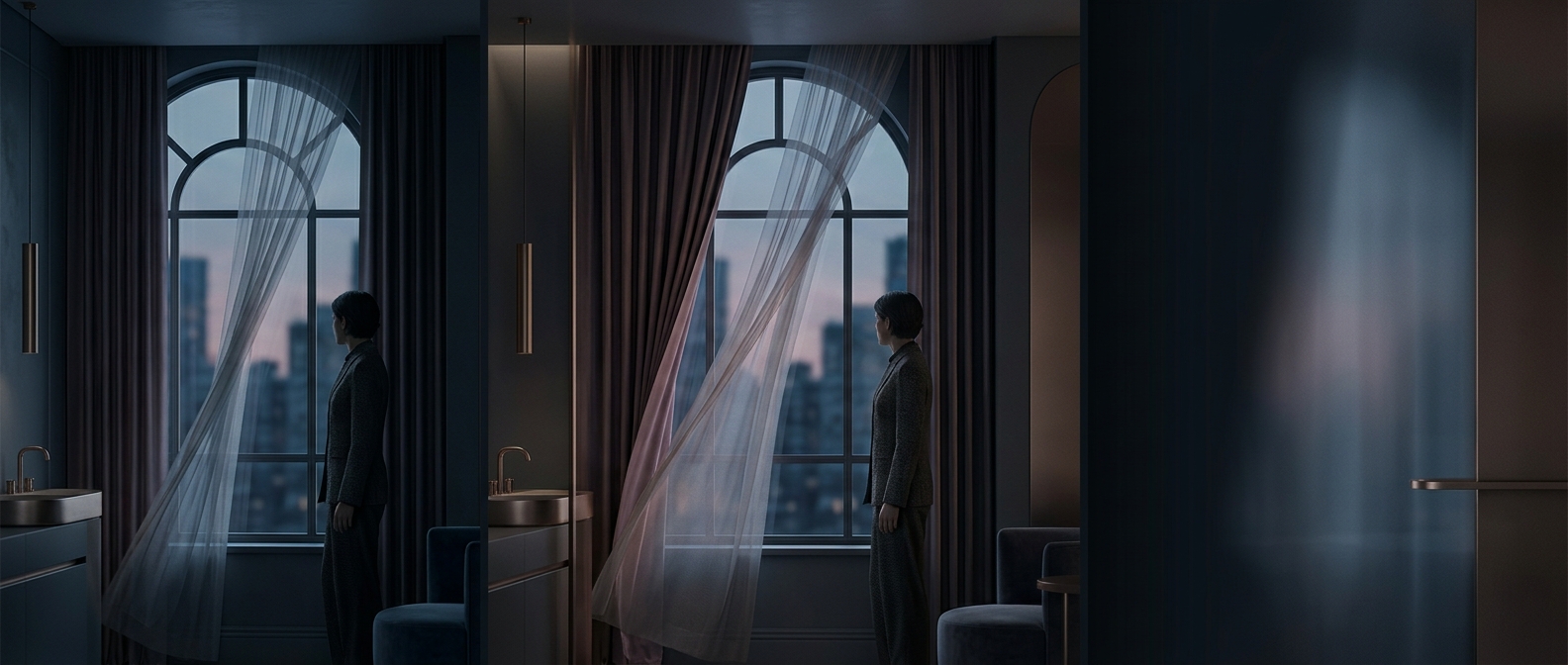
A hotel window has to serve different needs over the course of a day: guests may want a bright room in the morning, a softer view during the afternoon, or darkness and privacy at night. A sheer net provides an in-between setting, so the choices are not limited to leaving the glass bare or drawing thick drapes across it.
The net works by scattering light. Its fine weave breaks up clear sight lines, making shapes and details harder to distinguish from outside while still allowing much of the daylight through. The effect is strongest when it is brighter outdoors than indoors. After dark, with lamps on inside, the balance can reverse: people outside may be able to see into the room more clearly, so the sheer layer alone should not be treated as dependable nighttime privacy.
A Small Control for an Unfamiliar Room
That extra layer gives guests a quick way to adjust the room without changing the main curtains. They can soften direct sun or screen the window while keeping the room open and naturally lit; when they need more darkness or seclusion, they can close the heavier drapes as well.
For hotels, the arrangement also suits rooms with different views, sun exposure, and neighboring buildings. The same window treatment can offer a light-filtering option in the daytime and a more complete barrier when conditions call for it. A practical detail to remember: if the room is lit at night, close the heavy drapes before changing clothes or settling in.