The castle uses a miniature-making trick at full scale
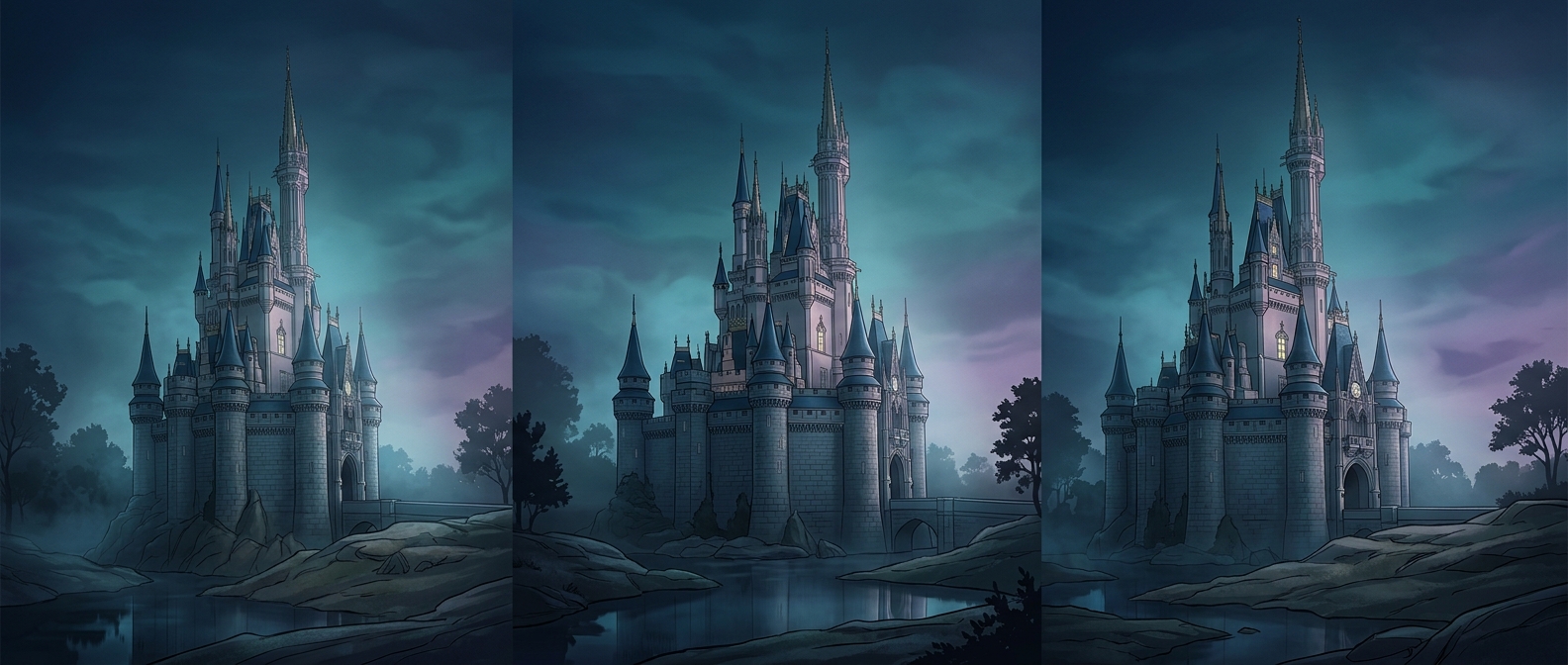
Cinderella Castle’s upper facade is built with progressively smaller architectural details. Bricks, windows, and other features shrink as they rise, rather than keeping the same scale from bottom to top. That change is subtle enough to read as part of the design, but it gives the eye a misleading clue about the building’s height.
The technique is called forced perspective: designers alter the apparent scale of parts of a scene so viewers perceive more depth or distance than is really there. In a miniature model, a maker might use smaller pieces near the back to make a short street seem long. On the castle, the same principle runs upward. The reduced details make the upper sections seem farther away, as if they extend higher into the distance.
Why the illusion holds from the ground
People judge size partly by comparing familiar objects. If two windows seem to be the same size, but one looks smaller, the brain often interprets the smaller one as more distant. The castle’s shrinking details quietly encourage that interpretation. Seen from below, the upper levels appear to recede instead of simply ending at the building’s actual top.
The illusion depends on the intended viewpoint. A visitor looking up from the surrounding area sees the facade as a single composition, with its details guiding the eye toward the spires. Up close, or from an unusual angle, the changes in scale are easier to notice—and the building can look less like a uniformly scaled structure. The design’s cleverness lies in making those mismatched proportions feel natural from where most guests encounter the castle.