A copy-protection check became an enemy
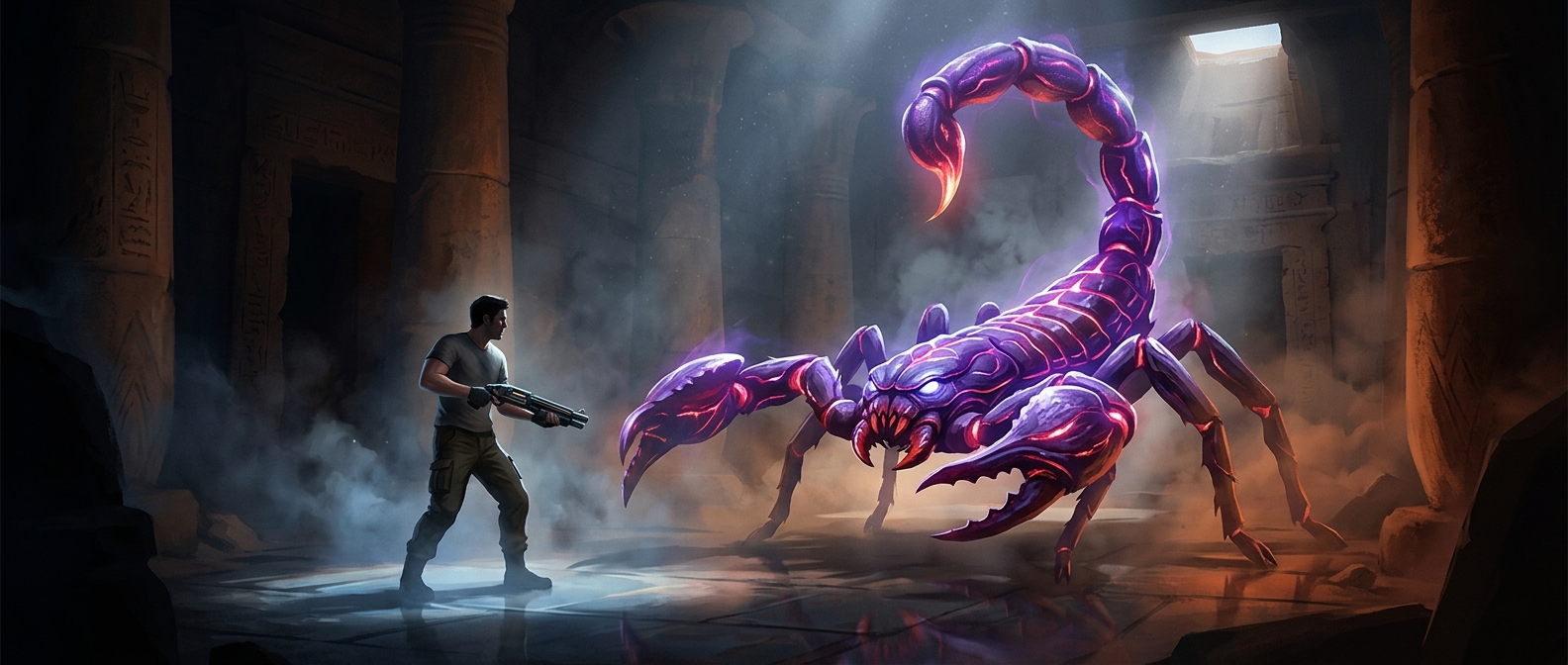
In Serious Sam 3: BFE, some pirated copies did not simply refuse to launch. Instead, the game introduced a pink scorpion that could not be killed and kept pursuing the player. The result was copy protection built into the action itself: the game still ran, but the chase made ordinary progress increasingly difficult.
Why the scorpion changed the experience
The game is built around fighting enemies while moving through large areas. A normal monster can be defeated or escaped; an invincible pursuer removes both options. Players could shoot at it, but attacks did not solve the problem. They had to keep moving while managing the rest of the game, turning a routine encounter into a persistent distraction.
That made the measure more noticeable than a quiet error message. It also made the game’s own mechanics deliver the consequence: the player could still play, but not on the same terms as someone with a legitimate copy.
Copy protection as a gameplay twist
The scorpion worked because it exploited what the game already asked players to do—fight and survive—rather than stopping the software at startup. Its distinctive appearance made the interference easy to recognize, while its resilience ensured it could not be handled like an ordinary enemy.
The memorable part is the mismatch: a game about overcoming waves of threats gave some players one threat they could never overcome. Their run became a chase, and the only practical way to end it was to quit.