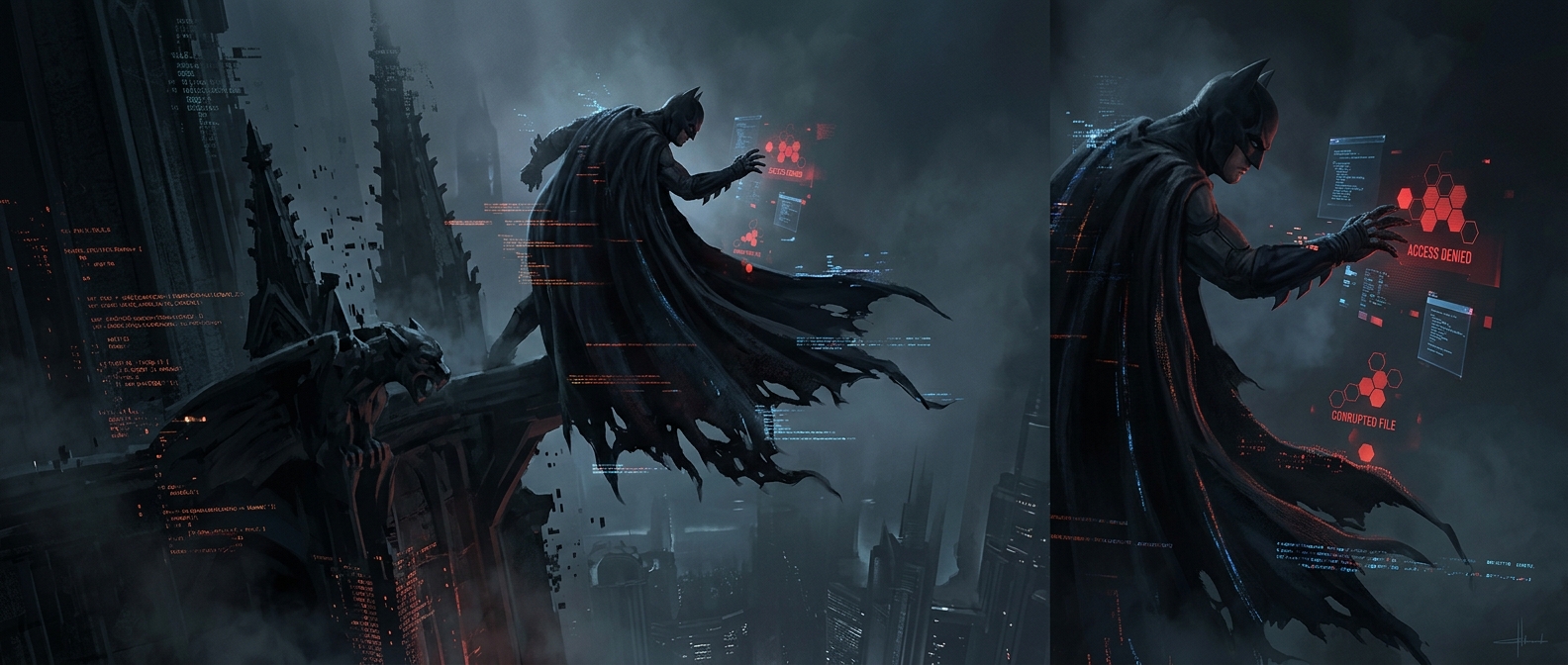
A missing glide turned piracy into a dead end
In Batman: Arkham Asylum, gliding is more than a flashy way to cross a room. Batman spreads his cape to stay aloft, steer, and reach places ordinary jumps cannot. In unauthorized copies, an anti-piracy measure interfered with that ability: when players tried to glide, Batman flapped his arms and dropped instead.
That failure was designed to look like a gameplay problem, not a conventional lockout. The game could still start, and Batman could still move around, so a player might initially assume the controls or timing were at fault. But the caped hero’s inability to stay airborne made the game’s traversal challenges—and eventually its progress—much harder or impossible.
Why break one ability instead of blocking the game?
A standard restriction announces itself: the software refuses to launch or asks for a valid license. A hidden gameplay penalty takes a different route. It lets the unauthorized copy run, then sabotages a mechanic the player depends on. The consequence is immediate and unmistakable: Batman cannot do the thing that makes him Batman in the air.
The trick also turns the game’s own design into the enforcement mechanism. Instead of placing a barrier in front of the player, it makes the world stop cooperating. A leap that should become a glide becomes a fall, exposing the missing ability through play itself. It is a memorable example of copy protection aimed not at the menu or the installer, but at the central fantasy of the game.