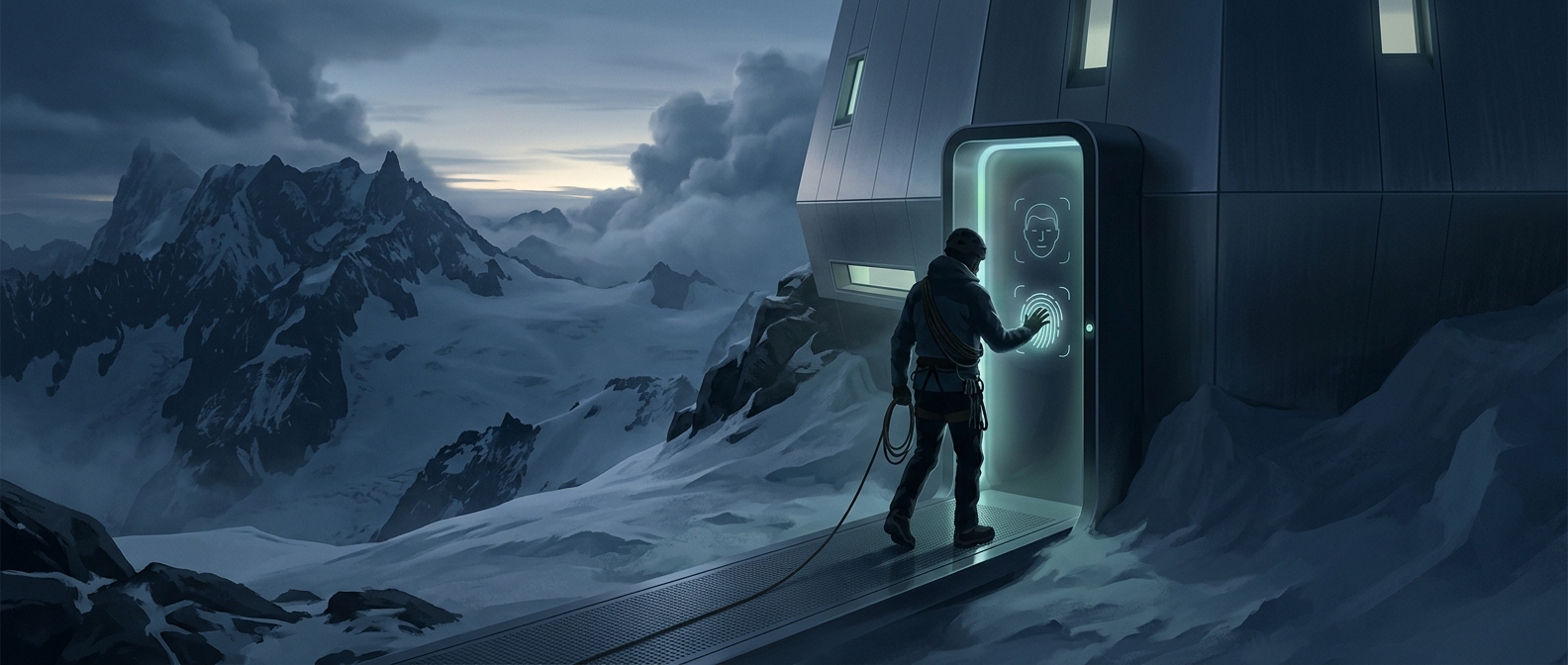
Why identity checks matter at the Goûter refuge
High on the route to Mont Blanc, a mountain refuge is more than a place to eat: it is a tightly managed stop where space, supplies, and safe overnight arrangements are limited. If climbers without a reservation enter and settle in the dining room, they can crowd out people the hut is prepared to host and make it harder for staff to manage the space.
How biometrics connect a climber to a booking
A biometric check identifies someone through a bodily characteristic, then compares that identity with the refuge’s records. In practical terms, the aim is to verify that the person arriving is the person authorized to use the hut—not simply that someone can show a booking reference. The specific biometric method is not established here, so it should not be assumed to involve fingerprints, facial recognition, or another particular technology.
That makes the check a form of access control, not a way to judge who is a capable climber. It helps staff distinguish authorized guests from people trying to use the refuge without permission, especially when a busy room could otherwise become an improvised place to sleep.
A small check with a high-altitude consequence
At a remote hut, managing entry matters because extra occupants cannot be absorbed as easily as in a city building: space and support are limited, and the refuge serves climbers moving through a demanding mountain route. Verifying access at the door can therefore help keep the dining room available for its intended use rather than letting it become overflow shelter.