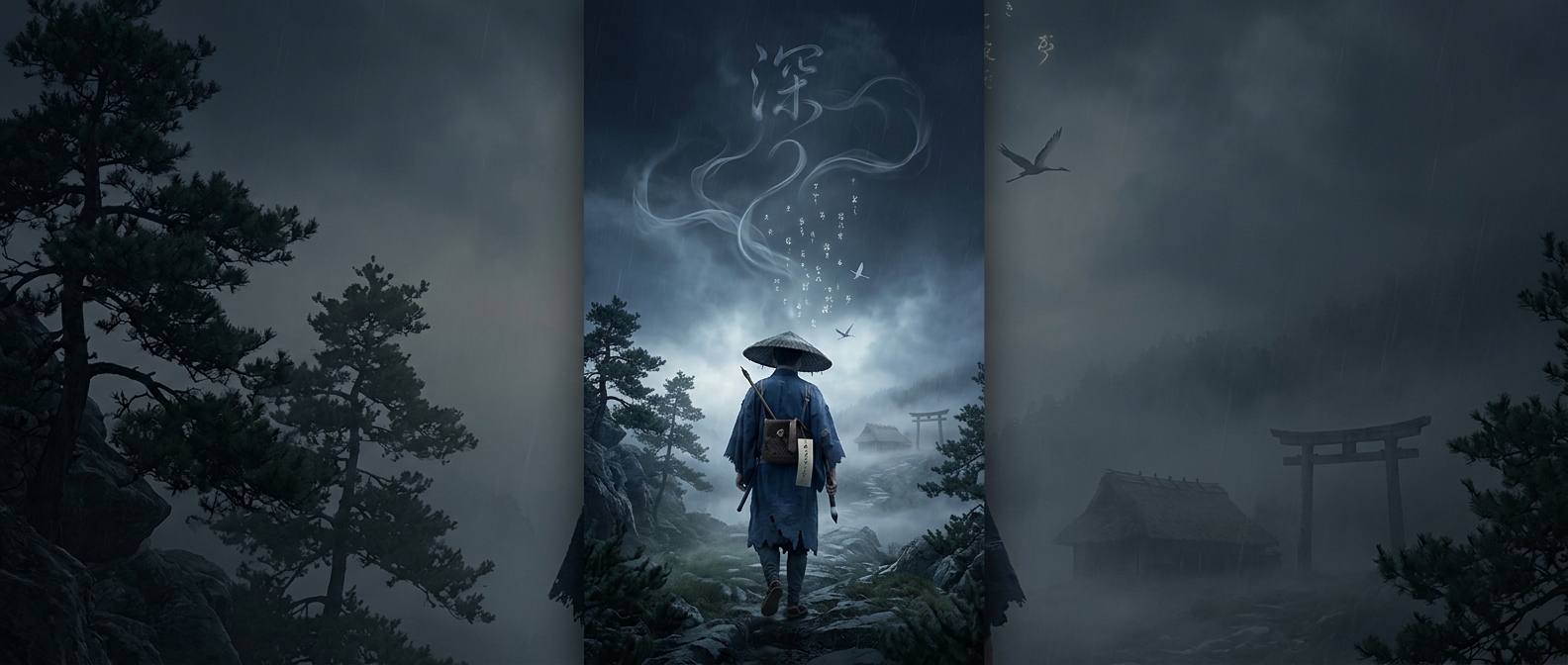
Bashō turned a northern trek into a literary road map
The journey’s lasting importance lies not simply in its distance, but in what Bashō made of the places along the way. Traveling from Edo, today’s Tokyo, into northern Honshu, he sought landscapes and landmarks already resonant in Japanese poetry and history. A ruined site or a stark stretch of coast could summon earlier poems and vanished lives; the present-day view became part of a much longer conversation.
The road shaped the writing
Bashō’s account, The Narrow Road to the Deep North, blends prose with haiku. It is not a straightforward day-by-day travel log: he shaped the experience into a carefully composed work, connecting physical places with memory, literature, and the passing seasons. A few lines could make an immense landscape feel intimate, while the prose supplied the journey’s movement between scenes.
The route also demanded practical flexibility. Travelers in seventeenth-century Japan faced difficult roads and changing conditions, so a long trip was not necessarily a continuous march on foot. The journey’s hardships mattered, but so did the pauses—at shrines, historic sites, and places whose names already carried poetic associations.
That combination helped make the book influential: readers could follow a real route while encountering it through Bashō’s attention to earlier writing and fleeting moments. The miles became more than distance; they became a way to see how a place can hold both its present appearance and the stories remembered there.