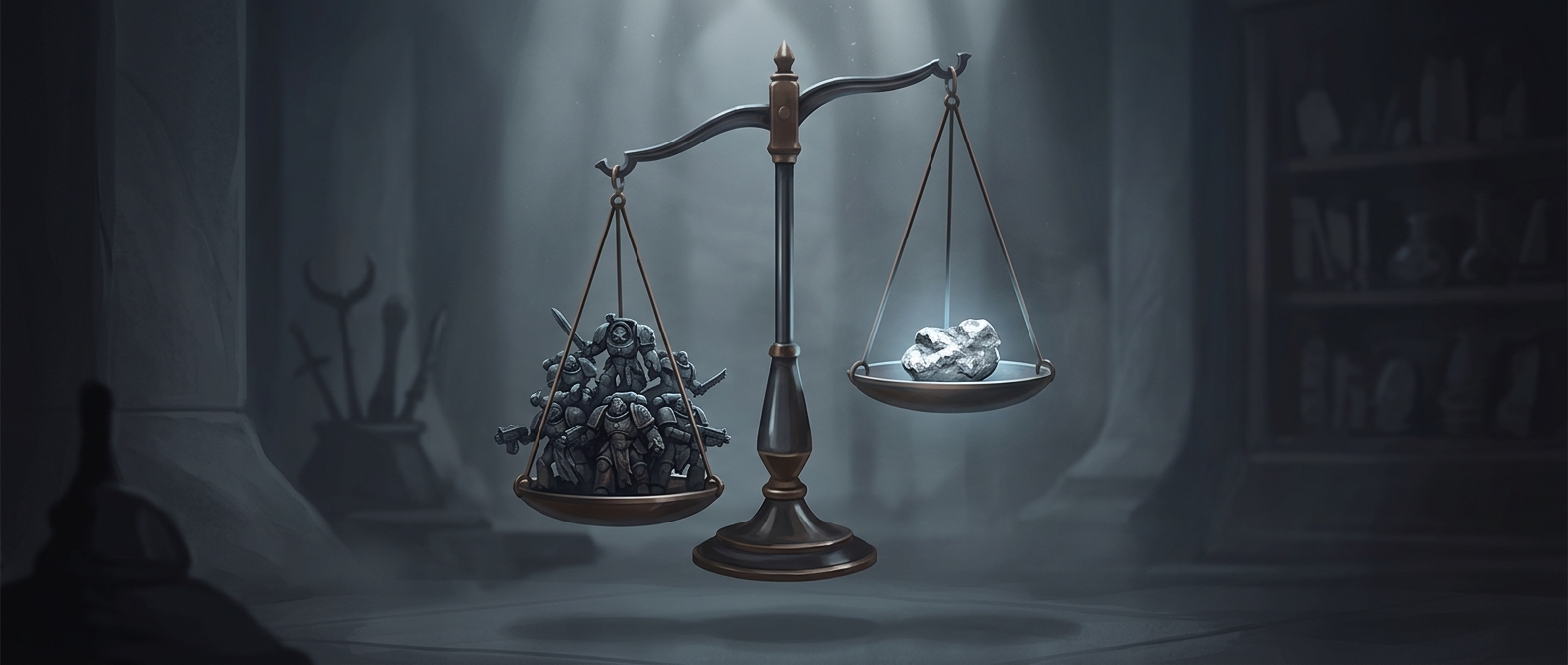
The price is in the design, not the plastic
A miniature’s tiny mass can make its price look startling when compared ounce for ounce with silver. But the figure is not priced like a lump of raw material. Its cost reflects the work and infrastructure behind turning a character into a detailed, repeatable model: sculpting the design, making precise molds, producing and packaging the parts, and getting them to hobby shops and customers.
That helps explain why adding models to an army can become expensive even when each one uses little plastic. Buyers are paying for a finished, specialized product, not for plastic by weight. The metal comparison highlights how little material there is beneath all that detail.
A weight comparison has limits
Silver is a traded commodity, and its market price changes. A miniature’s price, meanwhile, depends on the particular kit and how it is sold. So “more than silver by weight” is a striking way to compare material value, not a claim that every model always costs more than the same weight in silver under every set of prices.
There is also a second cost beyond the box: the models arrive unpainted. Painting supplies and tools can add to the hobby’s expense, while time and skill turn plain plastic into a personalized collection. The comparison is memorable precisely because the figures weigh so little—but the material is only one small part of what a buyer is paying for.