A sleep experiment took an unexpected turn
Robert Monroe began with a practical question: could sound help a person absorb information while asleep? As a radio executive, he was familiar with audio, and he experimented with frequencies and recordings intended to influence the sleeping mind. The results did not simply amount to learning by listening. Monroe said he began having vivid episodes in which he felt detached from his physical body and able to move elsewhere.
What “astral projection” means
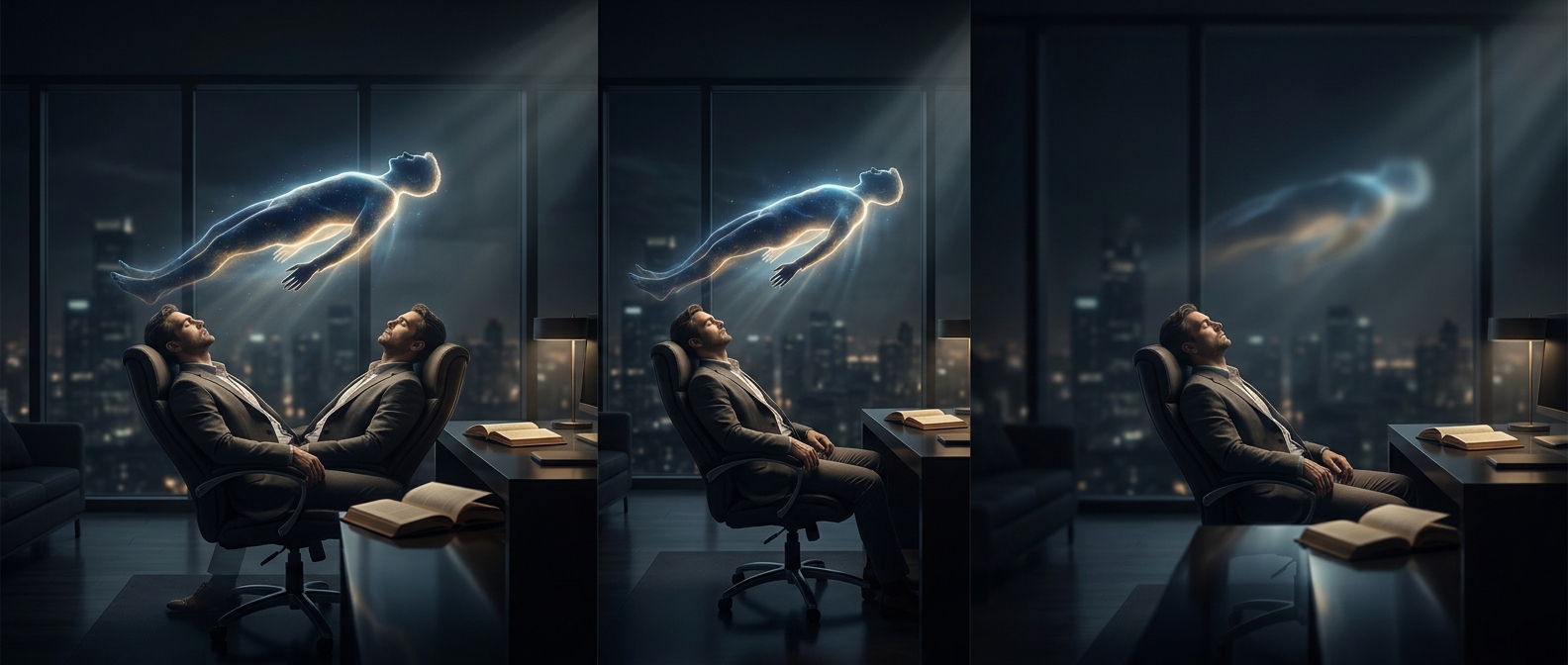
Monroe interpreted these episodes as out-of-body travel, a phenomenon often called astral projection: the idea that a person’s consciousness can leave the body and experience places beyond it. The term describes an interpretation of the experience, not a settled account of what physically happens. Monroe’s reports made the idea accessible to readers who might otherwise have encountered it mainly in spiritual traditions.
His writing stood out for its measured, observational style. Rather than presenting each episode only as mystical revelation, he described what he felt and perceived in a manner that suggested a person keeping notes on unusual experiences. That tone helped make his accounts compelling—and gave readers room to consider them as personal reports, even if they did not share his explanation.
From private reports to a popular subject
Monroe’s books carried his experiences beyond his original experiments and helped bring out-of-body travel into wider public discussion. The shift is part of what makes the story memorable: an effort to use audio for learning during sleep became a sustained inquiry into a striking kind of consciousness. For Monroe, the central question was no longer whether a recording could teach someone overnight, but what it meant to feel awake and elsewhere while the body remained in bed.