The Hole Is a Route, Not Just a Target
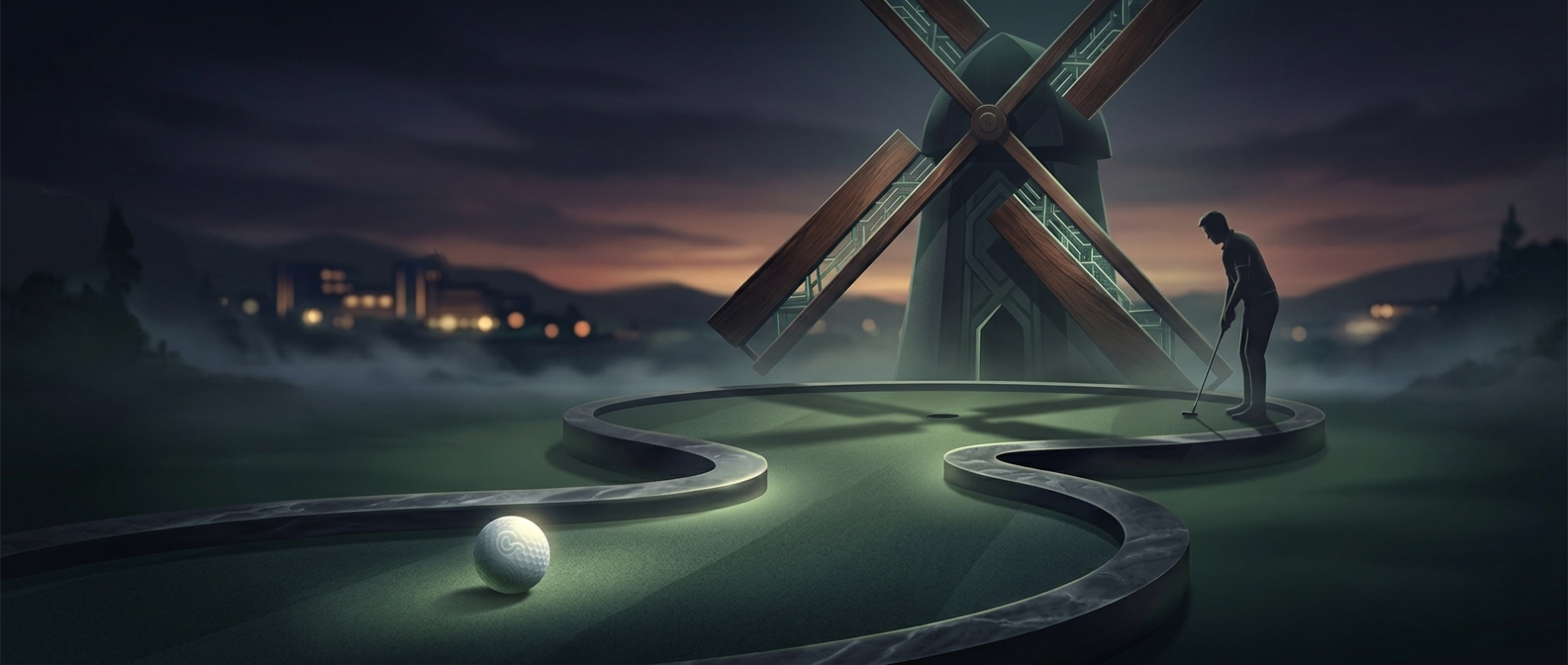
On an ordinary putting green, the main challenge is judging how hard and in what direction to strike the ball. Mini golf adds another question: which route through the hole gives the ball a chance to reach the cup? A wall may block a direct shot, a ramp may carry the ball toward a new angle, and a narrow opening can demand careful aim. The player is still putting, but each obstacle changes the useful line of travel.
That makes the course a series of small problems in geometry and speed. A shot that hits a barrier too firmly may bounce away; a gentle one may stop short. Even a visible path can be deceptive if the ball must cross a slope or avoid a low spot where water collects.
Obstacles Make Each Hole Play Differently
Course designers use barriers and terrain to create choices rather than simply lengthening the distance to the cup. A straight shot may be risky, while a banked shot—aimed off a wall so the ball changes direction—may offer a better angle. The best route can depend on how the ball rebounds, not just where the cup sits.
The decorations help make those challenges legible and memorable: a clown’s mouth can serve as a target, while bright carpet and geometric shapes mark the playing surface and its boundaries. But the visual theme is only part of the design. Each object also affects where the ball can go. That is why a tiny putt can feel like navigating a course: the player is reading the whole landscape before choosing a stroke.