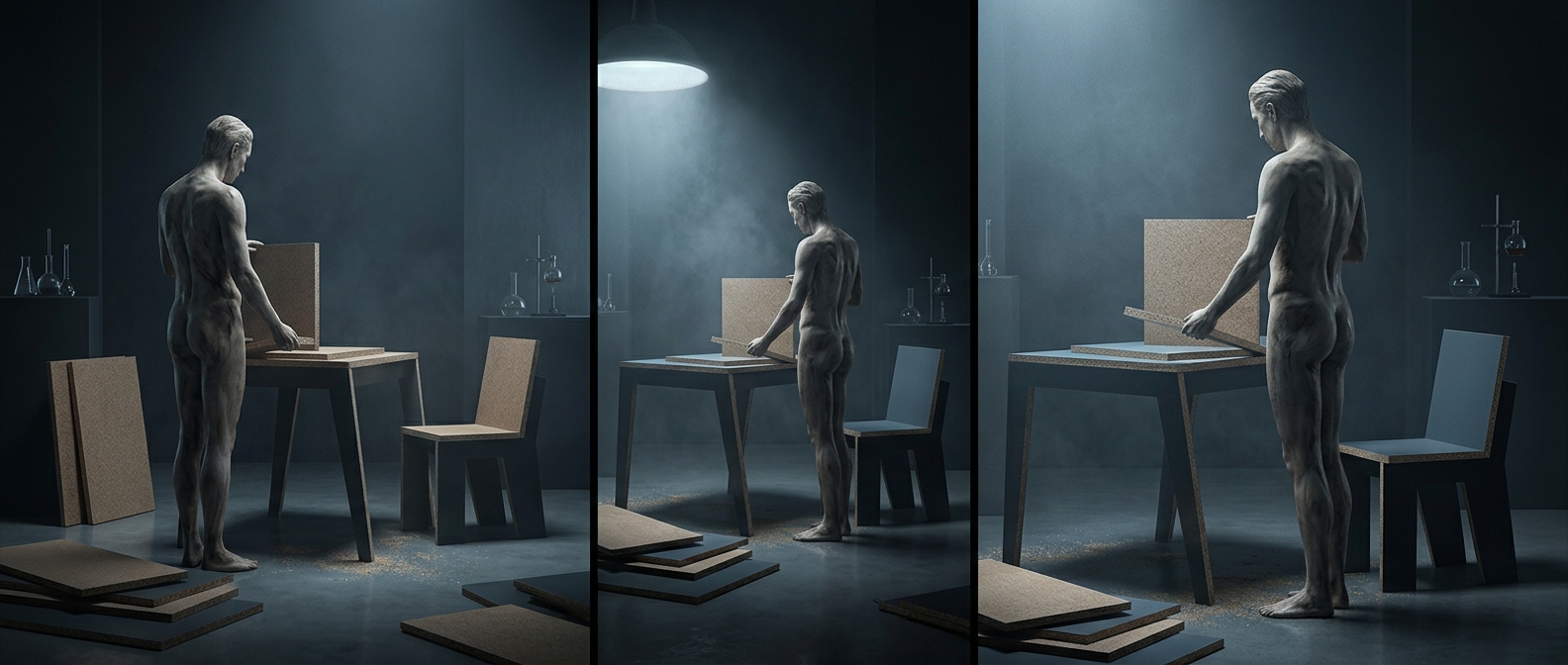
How a small molecule becomes a solid wood binder
In many particleboard adhesives, formaldehyde reacts with compounds such as urea to make a thermosetting resin: a material that hardens into a durable network when heated. During manufacture, the resin coats wood particles; heat and pressure help it cure, locking the particles together as the board takes shape.
The formaldehyde is a reactive ingredient in that chemistry, not a coating spread over the finished furniture. Once the resin has cured, most of it is part of the binder. But curing does not necessarily capture every molecule: a little formaldehyde may remain unreacted, and moisture can gradually break some resin bonds, releasing more.
Why the board can affect indoor air
Released formaldehyde can move from the board’s surface into the surrounding air. Emissions are often greater from newer products and can also rise with warmth and humidity, which can speed chemical release. The amount depends on the product and its materials, so particleboard furniture is not all alike.
This is why the same compound can have very different roles: in embalming, it helps preserve tissue; in a board, its reactivity helps form a hardened adhesive. The connection is the molecule’s ability to link other substances—not any embalming fluid in the furniture.