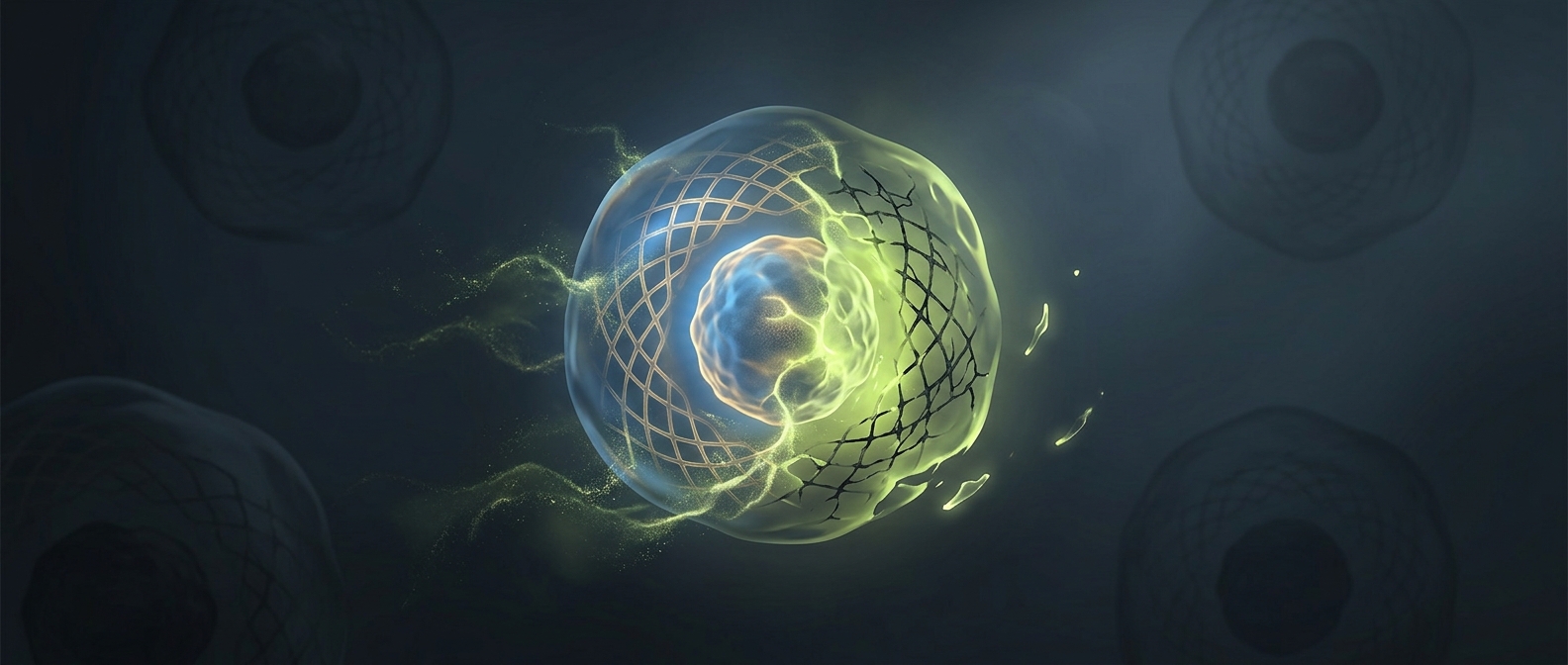
How venom breaks down tissue
In some snakes, venom contains proteolytic enzymes—molecules that cut proteins into smaller pieces. After a bite, these enzymes can attack proteins in the material that supports cells and holds tissue together. The result is local damage: cells are injured, tissue may swell or bleed, and the normal structure around the bite begins to break down.
This is not digestion in the stomach-like sense. The enzymes act on exposed proteins where the venom is delivered; they do not selectively dissolve a whole limb from the inside. The extent and pattern of damage depend on the venom’s mixture and how much enters the tissue.
Damage can help venom move
Tissue is more than a collection of cells. Its protein framework and tiny blood vessels help keep substances in place. When venom enzymes disrupt that framework—and, in some venoms, damage vessel walls—the area can become more permeable. Other venom components may then spread through nearby tissue or enter the circulation more readily.
That makes certain enzymes useful in two ways: they injure the bite area and can help other toxins reach new targets. The bite is therefore not always just a puncture followed by a fixed dose. In some snakes, the venom itself alters the tissue landscape, helping turn a small entry point into a wider route for its effects.