Why a Thin Strand Can Take So Much Energy
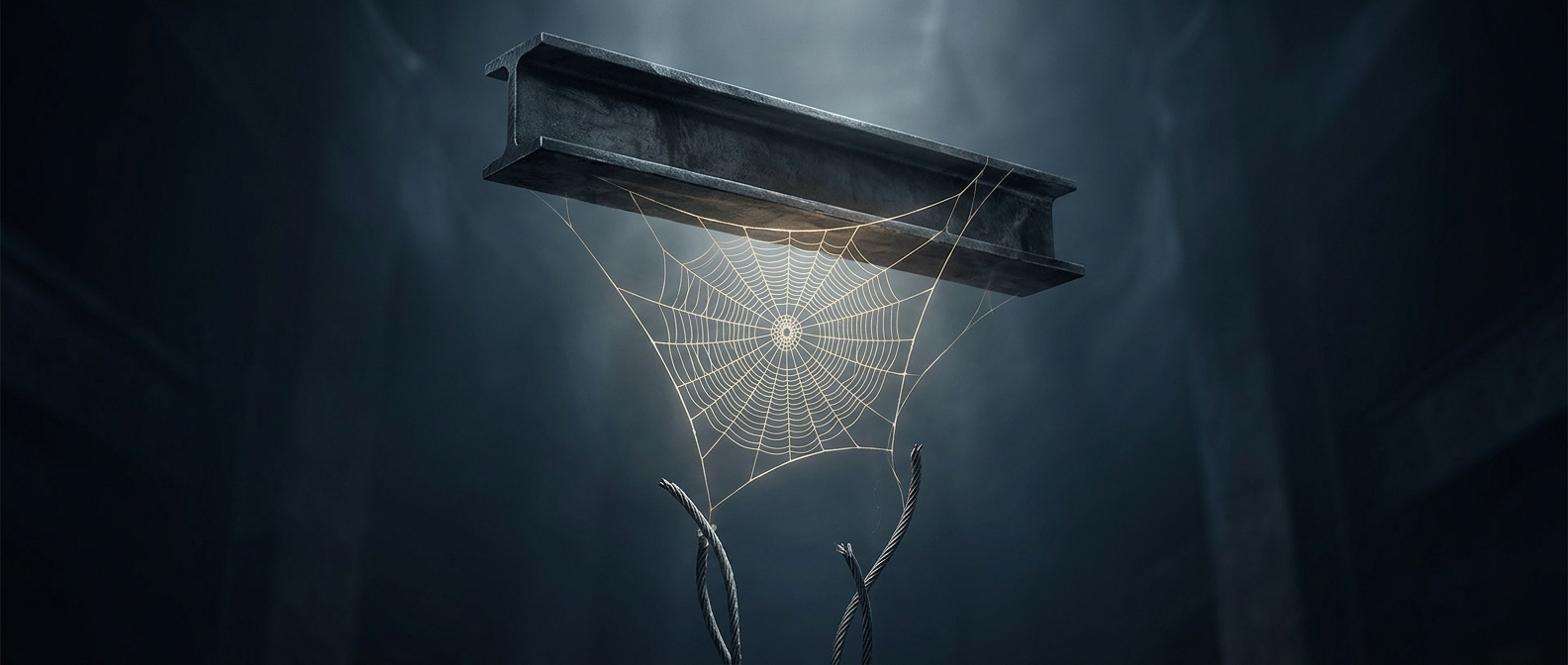
“Stronger” can mean different things. Steel can withstand a greater straight pull before breaking, but a strand’s toughness is how much energy it absorbs before it snaps. Spider silk is notable because it combines substantial strength with the ability to stretch, making it exceptionally tough for its weight.
The trick lies in its protein structure. Silk contains tiny, tightly ordered regions that act like reinforcing anchors, set within more flexible chains. Under tension, the flexible parts can straighten and extend while the ordered regions help keep the strand from coming apart. The result is not simply a rigid fiber that resists movement; it is a fiber that can give under a sudden load without immediately failing.
A Web Works by Giving
That behavior matters when an insect hits a web. If the strands stopped it abruptly, the impact would be concentrated in a small area and could tear the web or break a line. Stretching lets the silk absorb energy over the brief collision, while the web’s connected strands spread the load across a larger structure.
Different web silks have different jobs: some form supporting lines, while others make the capture spiral. Their properties suit those roles. The broader engineering lesson is that a material need not be the hardest or strongest in a simple tug test to perform remarkably well. A strand that can stretch, carry a load, and stay intact can protect a web better than one that only resists being pulled.