“DS” began as a promise to game makers
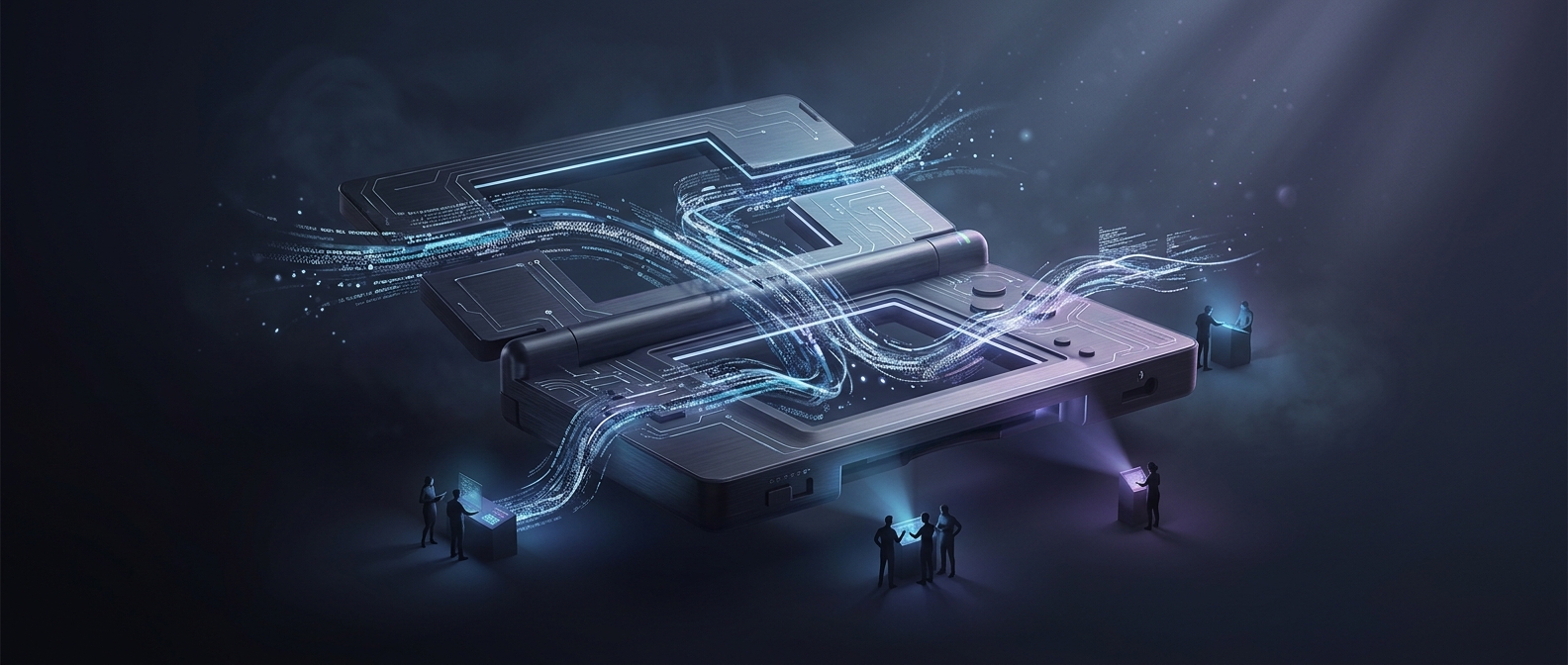
Before the Nintendo DS reached players, Nintendo used “Developer’s System” to describe the idea behind it: a handheld that gave game designers new ways to build games, rather than simply more powerful hardware for familiar ones. The initials also became an easy public shorthand for the machine’s most visible feature, its two screens.
That distinction matters. “Dual Screen” describes the layout; “Developer’s System” points to the design challenge Nintendo was setting for creators: make the extra ways of interacting feel useful, not ornamental.
Two screens changed what a game could show
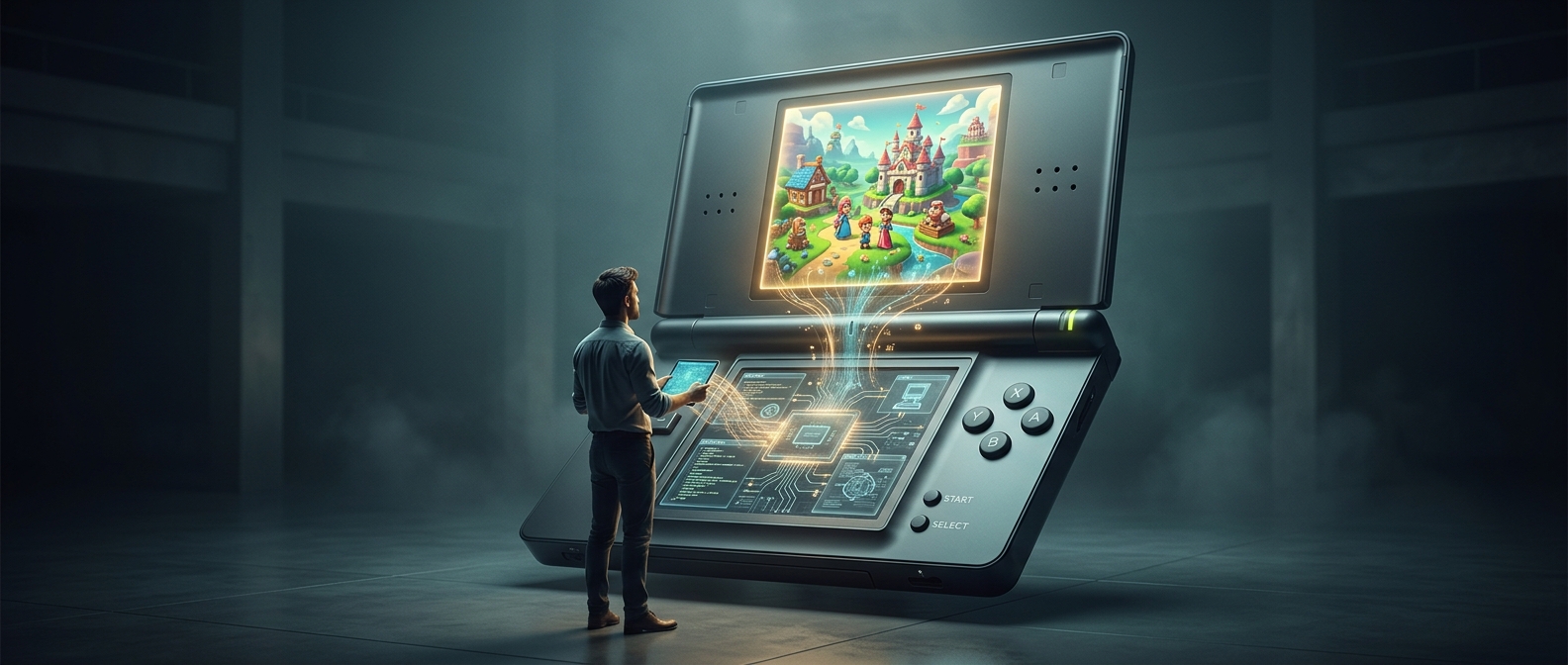
The DS stacked two displays in a clamshell. In many games, one could show the main action while the other held a map, inventory, or status information. That let players check useful details without repeatedly opening menus over the action. Designers could also treat the screens as one larger play space or use them for different views of the same game.
The lower display added another tool: a touch-sensitive surface operated with a stylus or a finger. Instead of translating every action into button presses, a game could ask the player to draw, tap, trace, or drag directly on the screen. A microphone offered another possible input. These features gave developers options, but also made them responsible for teaching players unfamiliar controls clearly.
The hardware invited different kinds of play
Nintendo’s wager was that a new interface could make games feel accessible to people who did not already know a controller’s buttons. Touching a map or tracing a shape could be more immediately understandable than memorizing a sequence of inputs. At the same time, the DS still had conventional controls, so designers could mix new interactions with familiar ones.
That is the deeper point behind the name: the second screen was not just extra display space. It gave developers a reason to rethink where information belongs and how a player gives instructions—sometimes turning a menu into a surface the player could simply touch.