A name aimed at game makers
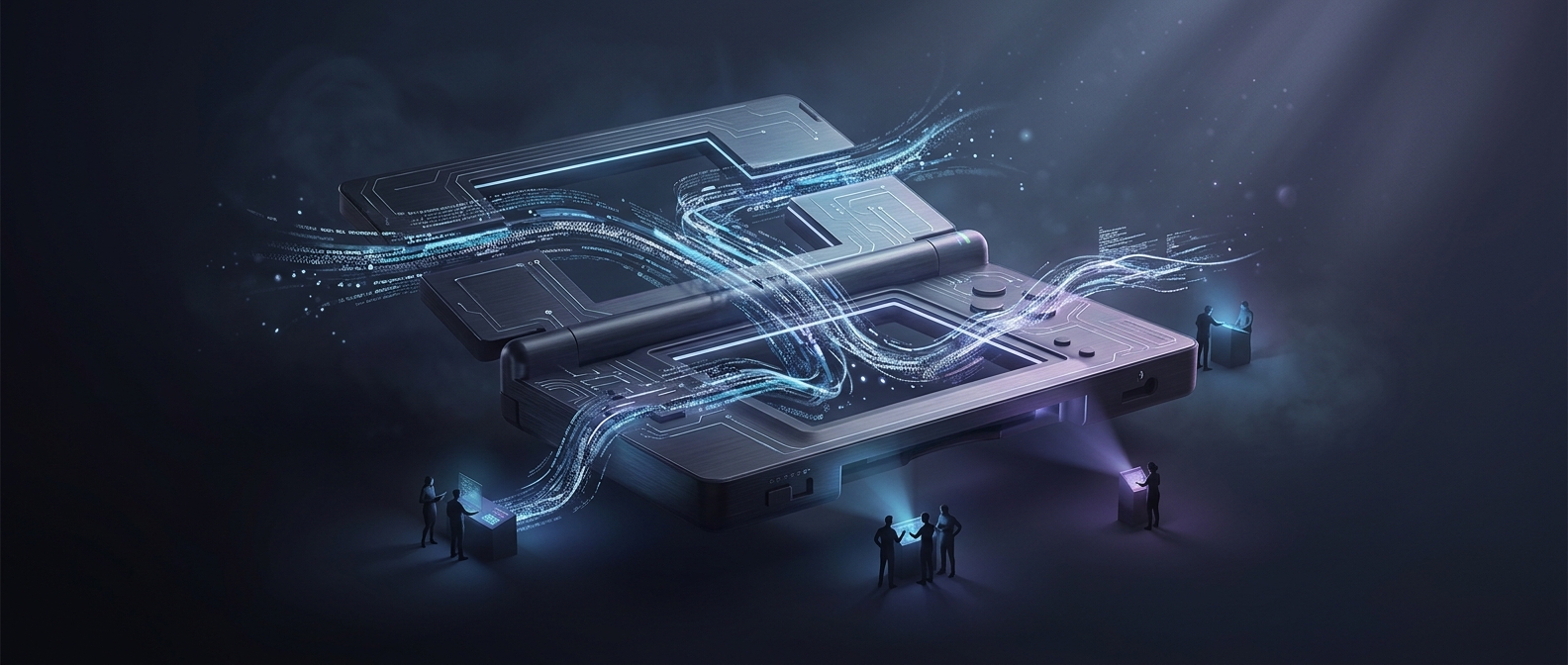
“DS” was meant to signal a new system for developers to build for, not to describe the hardware’s two displays. The distinction mattered: a name focused on screens would have presented the handheld mainly as a piece of equipment. “Developer’s System” instead pointed toward the games and interactions its unusual features might make possible.
The hardware was an invitation, not a formula
The two screens were only part of the design. The lower screen could respond to touch, while a microphone and wireless connections offered other ways for games to receive input or connect players. Those features gave developers more options than simply adapting familiar button-controlled games to a new screen layout.
But options are not instructions. A developer could make touch central to a game, use it for a small supporting task, or largely ignore it. That flexibility was important to the name’s message: Nintendo was presenting the DS as a platform to experiment with, rather than insisting that every game use its hardware in the same way. The two screens became the most visible shorthand for the console, but they were not the idea the name was meant to convey.