A childhood story inside a cosmic adventure
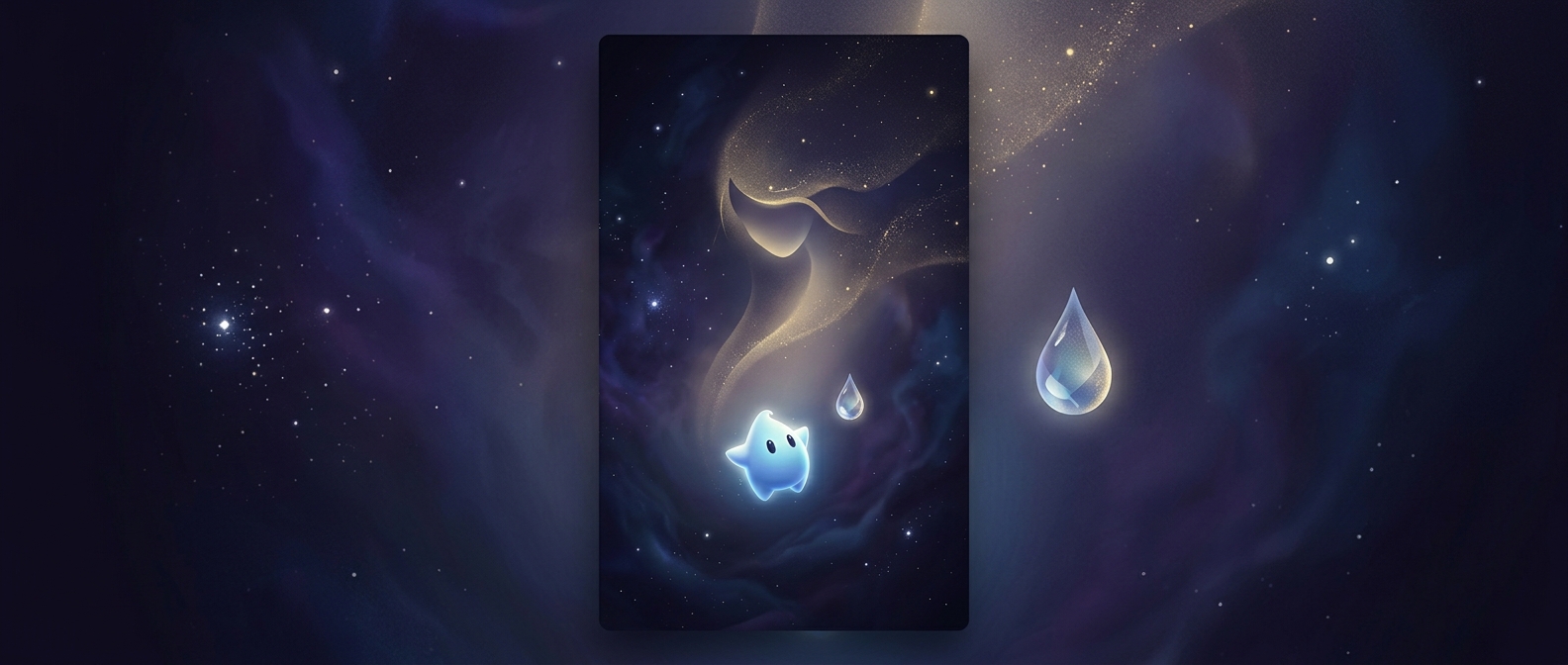
Super Mario Galaxy gives Rosalina’s past a different pace from its star-hopping levels. At the Comet Observatory, she reads from a picture book, and new chapters appear as the player progresses. The short, illustrated scenes follow her as a lonely child searching for her mother, then trace how she comes to care for the star-shaped Lumas.
That format matters: the story is not delivered as a long interruption or a dramatic cutscene. Players encounter it in pieces, between bouts of exploration, and can pause over the quiet images. The contrast makes Rosalina’s enormous, otherworldly home feel rooted in something intimate: a child who has lost the person she hoped to find.
The loss that shapes Rosalina’s journey
The search does not end in reunion. Rosalina learns that her mother is gone and, in the storybook’s most painful detail, is buried beneath a tree. The image turns a familiar fairytale setting into a marker of permanent absence. Rosalina cannot go back and recover the life she left behind; instead, she builds a new kind of family among the Lumas.
That history gives her role in the game an emotional logic. She is not simply a mysterious guide stationed among the stars. She is someone who knows what it means to be alone and chooses to look after small, vulnerable beings. Her care for the Lumas grows from the same loss that made her leave home.
Why the quiet chapters linger
The storybook asks players to supply much of the emotion themselves. Its simple pictures and brief narration leave room for the silence around the missing mother, rather than explaining grief in detail. And because the chapters sit inside a bright game about gravity, galaxies, and playful little stars, the loss can catch players off guard.
Rosalina’s cosmic family begins with a child who cannot return to her own.