Why the Game Boy Camera made faces look spectral
The camera squeezed a real image into a tiny grid of black, white, and two shades of gray. At just 128 by 112 pixels, it had little room to preserve the small differences that make a face look familiar: the curve of a cheek, the edge of an eye, the soft transition from light to shadow. Those details became chunky blocks instead.
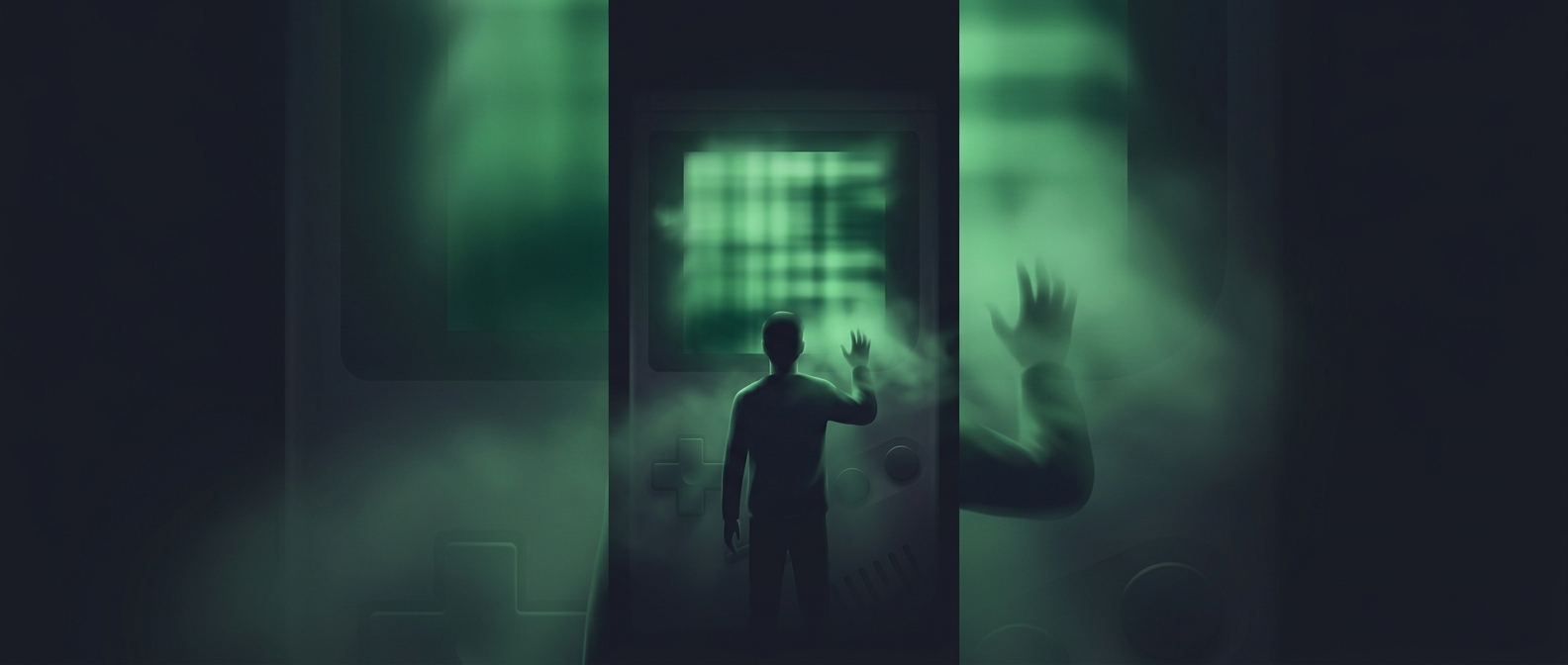
Its four-tone palette flattened skin and background into stark patches. In dim or uneven light, a shadow could swallow facial features while a bright forehead or cheek remained pale. The result could feel less like a conventional portrait and more like a flickering apparition.
A camera designed around a Game Boy
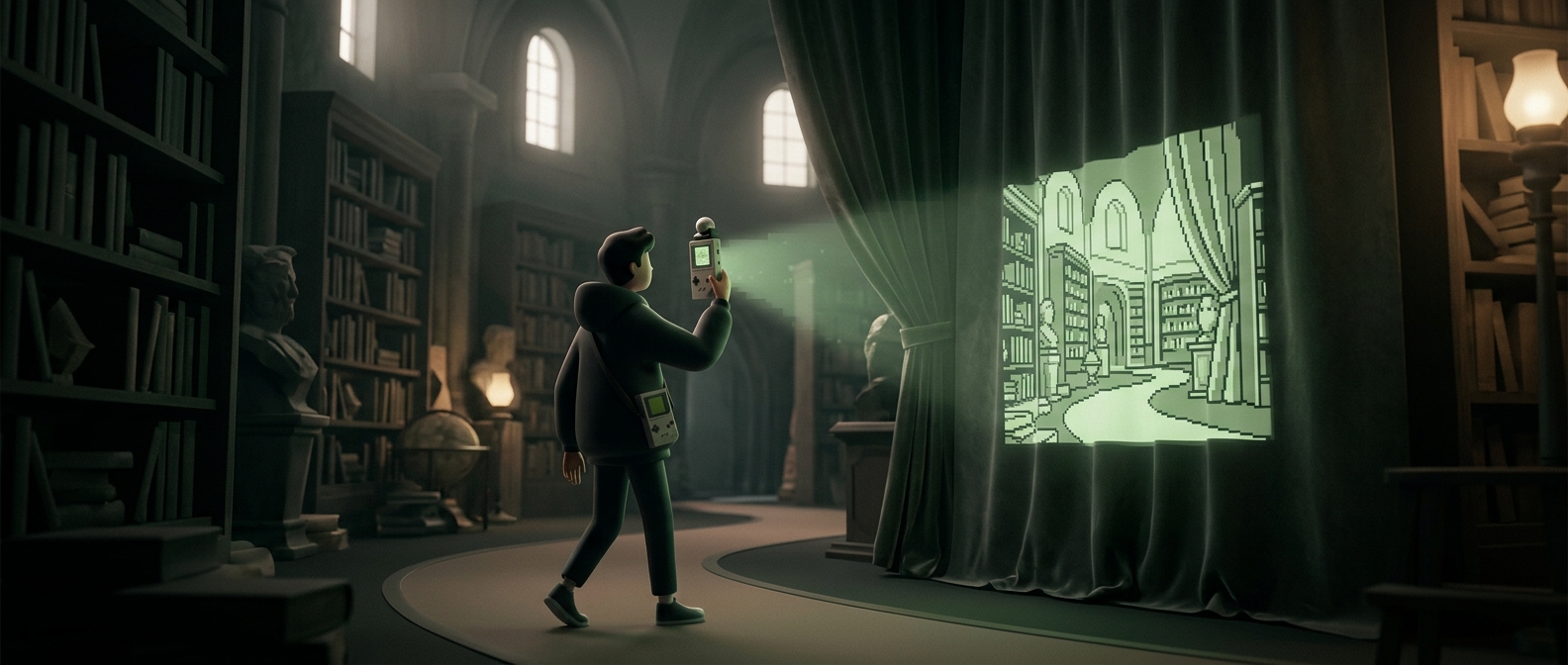
The Camera was an accessory for the original Game Boy, not a pocket camera built to produce polished prints. Its image had to fit the handheld’s modest screen and the cartridge’s limited storage. That constraint shaped the whole experience: taking a picture meant accepting a small, monochrome image, then treating it as material to play with.
The software let users alter pictures with simple effects and use them in activities, including games. The roughness was therefore part of the creative format. A face reduced to a handful of gray pixels could be made stranger, funnier, or more expressive precisely because it no longer looked like an ordinary photograph.
The blur became a style
A low-resolution image cannot record fine detail, and movement during a shot can make an already crude outline harder to read. When eyes, hair, and edges dissolve into a few uneven tones, viewers supply the missing information—and often read the result as eerie. The Game Boy Camera turned technical limits into a distinctive look: portraits that seemed to hover somewhere between a snapshot and a ghost.