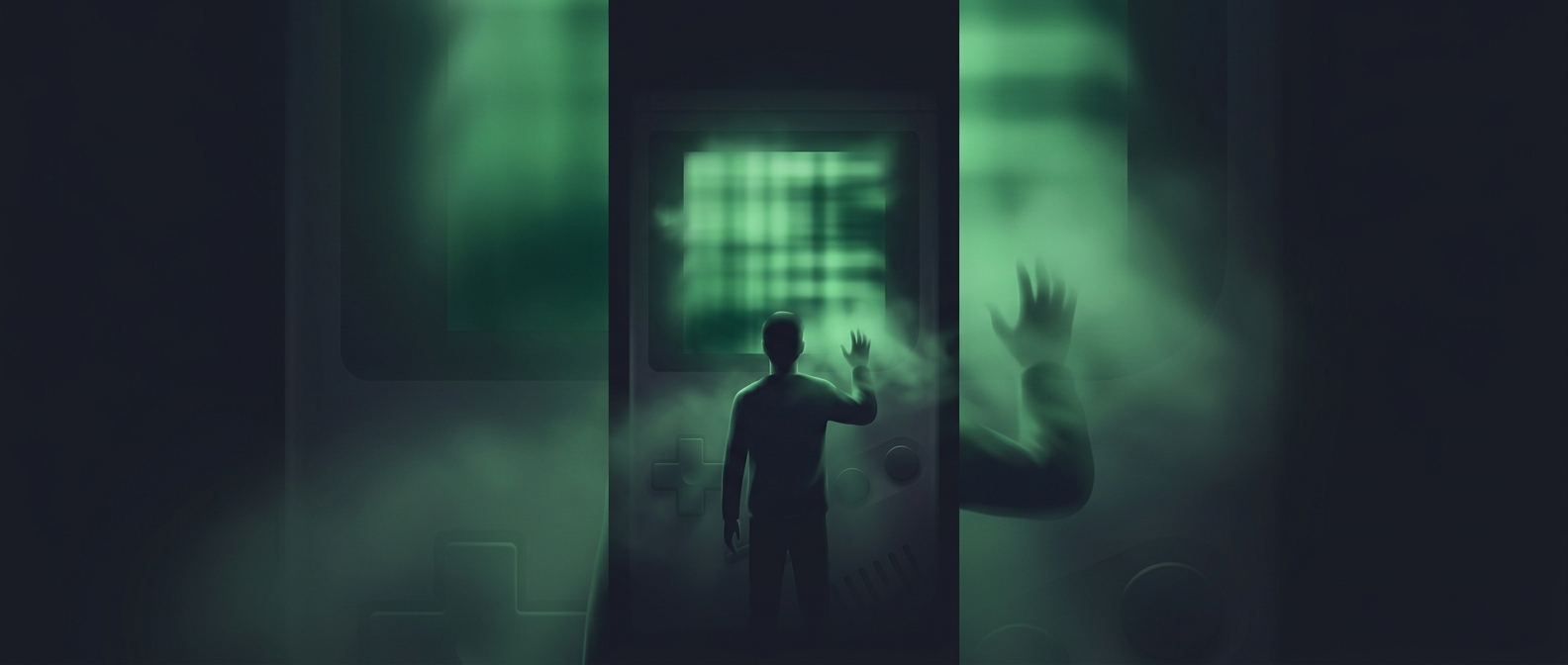
A screen that borrowed its light
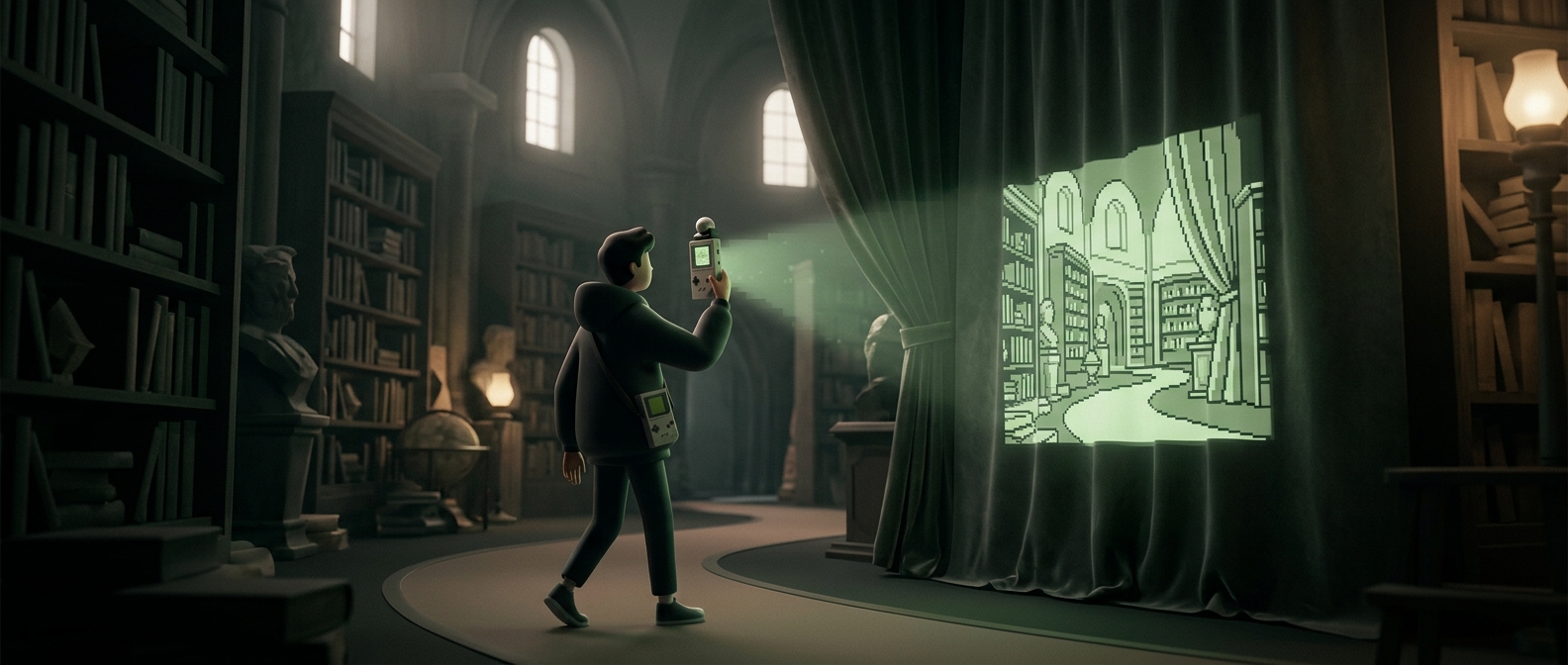
The original Game Boy used a reflective LCD: instead of shining light through the display from behind, it relied on light from the room to illuminate the image. That kept the handheld simpler and helped conserve battery power, but it also made visibility depend on where the player was. In a dim room, there was little light for the screen to reflect, and there was no backlight to compensate.
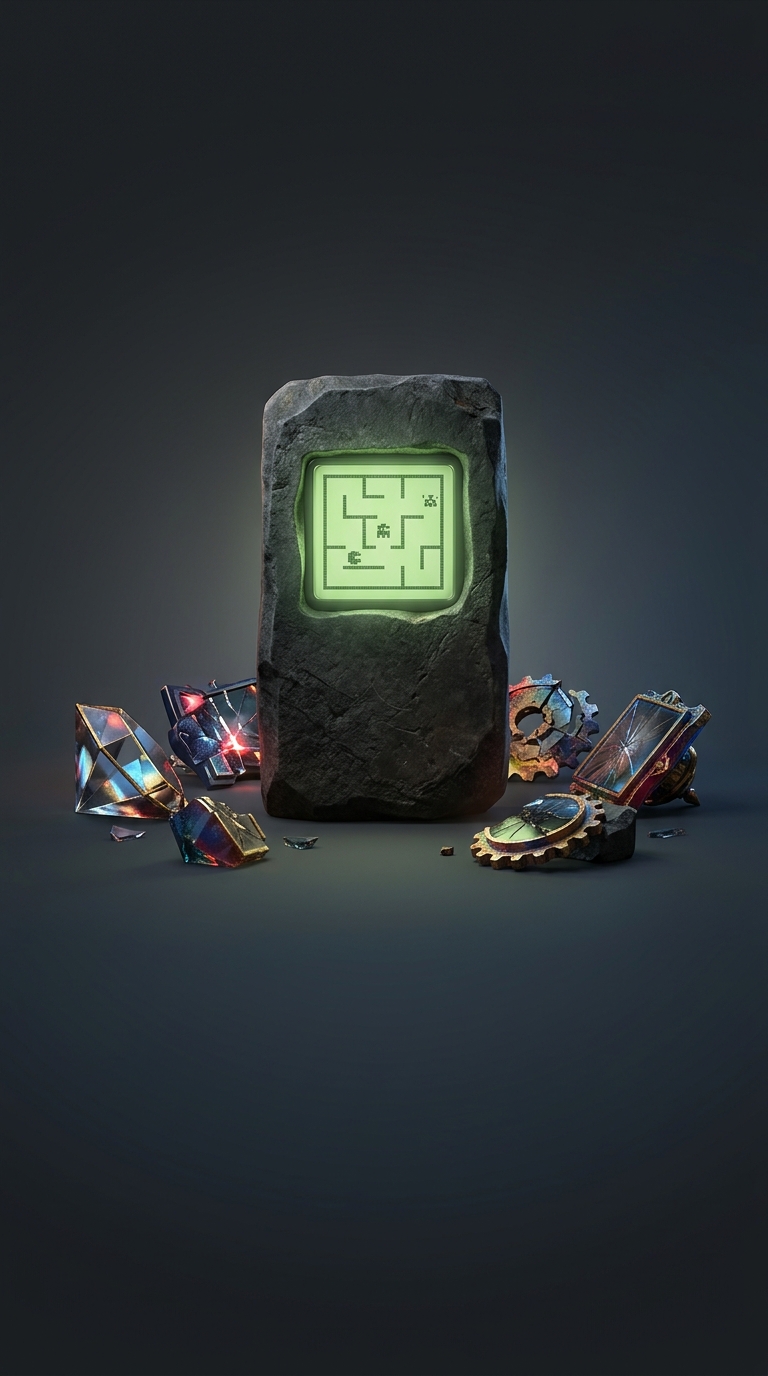
Its pale green appearance came from the display’s tinted surface and limited grayscale. The picture was not a miniature television image so much as a pattern of dark pixels set against a muted background.
Why motion turned to smears
The screen also updated slowly. Each pixel in a liquid-crystal display changes appearance as electrical signals alter how it controls light. On the Game Boy, those changes could lag behind the game’s action. When a character or object moved quickly, pixels from its previous position remained visible briefly, creating a trailing blur—an effect often called ghosting.
That blur could make fast movement harder to follow, but it was a consequence of the display technology, not a special visual effect chosen by game designers. The tradeoff was tangible: a compact screen that used little power could stay on the go for long stretches, but it worked best under decent light and rendered motion less sharply than a modern display. Players sometimes changed position—not the game—to find a brighter view.