A character built for repeated drawings
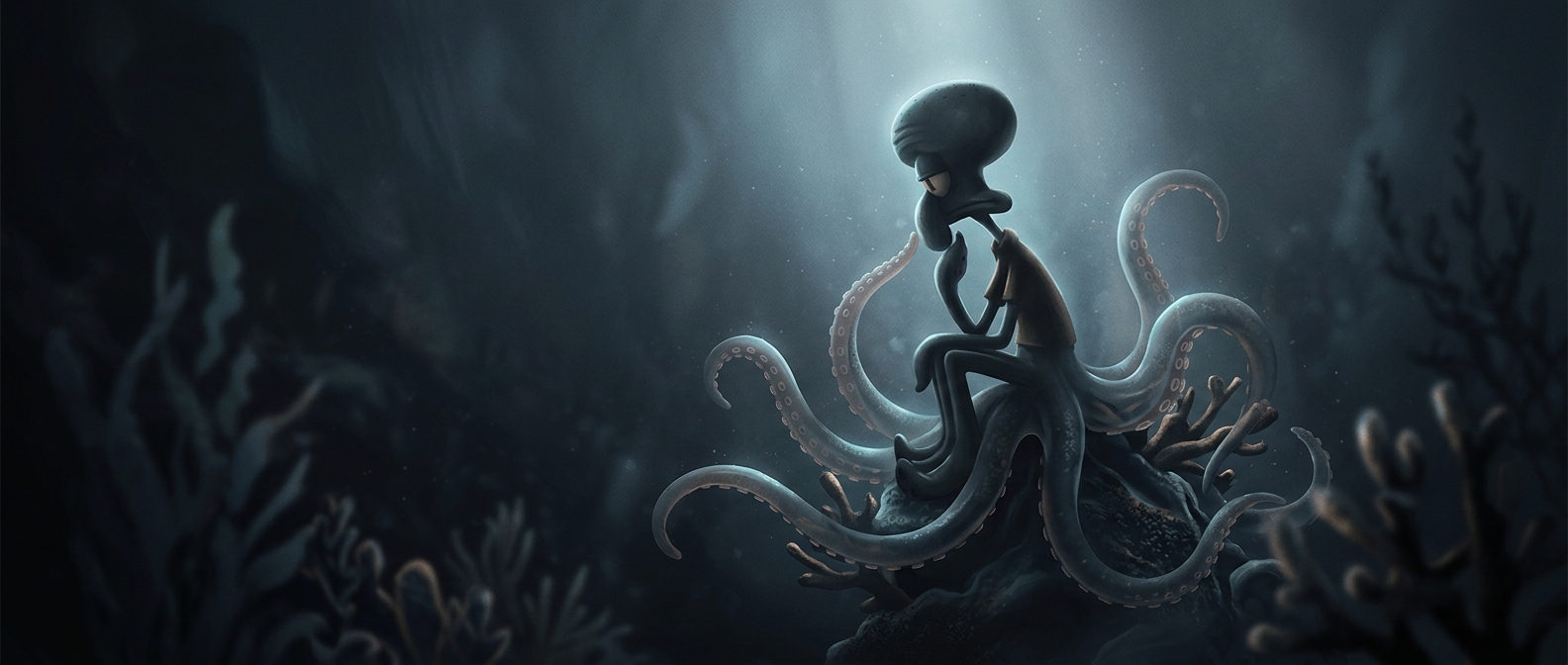
An octopus has eight arms, but drawing all eight clearly in every pose would make a small animated character harder to read. Arms can overlap, cross in front of the body, or disappear behind it; with eight moving limbs, a simple gesture could become a tangle of lines. Squidward’s six-limbed design reduces that visual traffic while still suggesting an octopus-like character.
That matters in television animation, where a character is redrawn in pose after pose. Each scene has to communicate movement and expression quickly, often with the face and hands doing the most important work. Fewer limbs give artists less to keep track of and give viewers fewer shapes to sort through.
Simplicity is part of the design
The change is not meant as a biological claim. It is a practical piece of character design: preserve enough of the animal’s recognizable look, but simplify the anatomy to suit the medium. Squidward’s name points toward a squid, while his design draws on an octopus; the six limbs are a visual compromise rather than a precise portrait of either animal.
That compromise also helps keep his gestures legible. A raised arm, a slouch, or a broad movement can register at a glance instead of getting lost among extra appendages. In animation, what a character leaves out can be just as important as what the character keeps.