Growth turns the world into a progression system
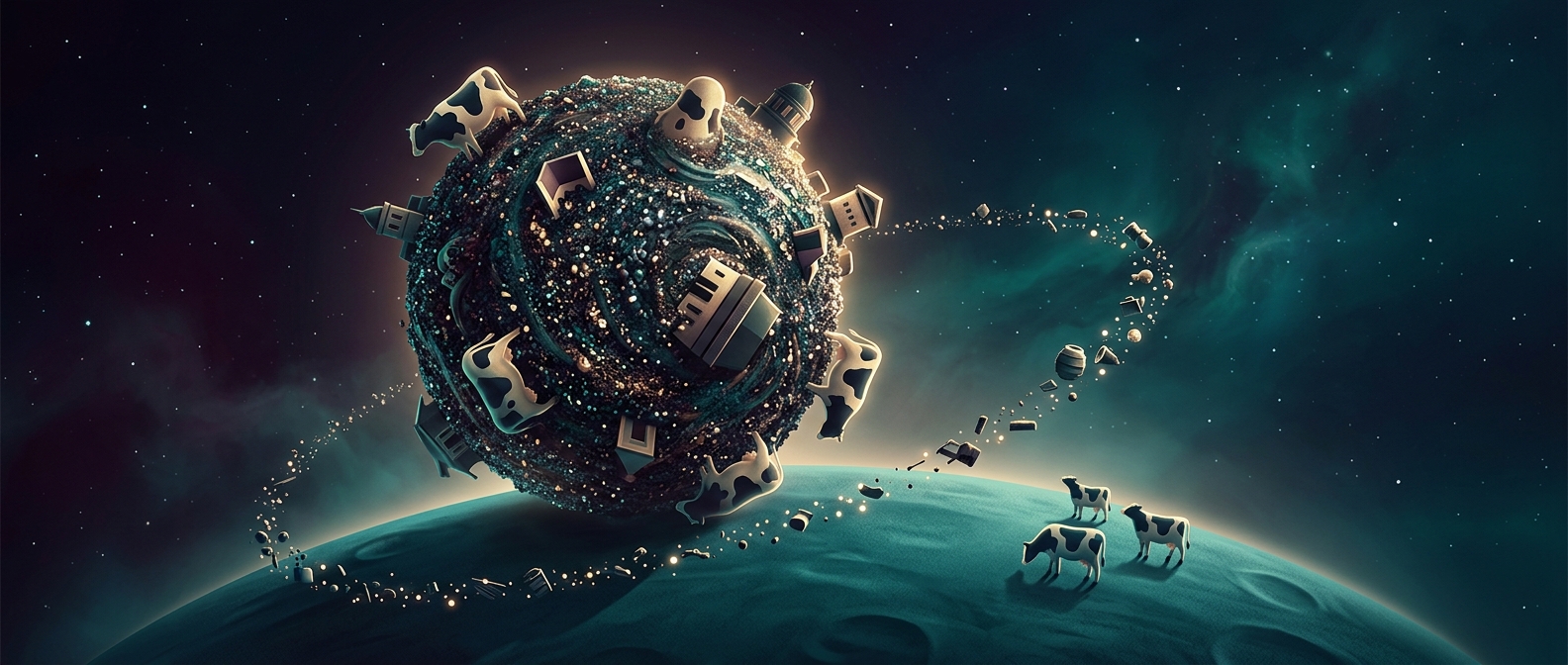
In Katamari Damacy, size is more than a score: it determines what the ball can pick up. A tiny katamari can gather small objects, but larger targets remain out of reach until the ball has grown enough. That rule gives each object a practical role. The coins and other little things scattered nearby are not just clutter; they are the first steps toward collecting objects that once seemed enormous.
As the ball rolls, attached objects become part of its changing shape. The player can watch that growth directly, then use the new size to reach a different scale of targets. The game’s central pleasure comes from this visible chain of cause and effect: collecting makes the ball bigger, and being bigger makes more of the world collectible.
A familiar landscape becomes a moving size test
The same object can feel like a prize early on and a trivial pickup later. That shift makes the environment do the work of explaining progress. Instead of relying only on a meter or a list of upgrades, the game lets players judge their capabilities against recognizable things around them. A target that used to block the route may eventually roll up onto the ball.
This creates a playful kind of escalation. The player begins by navigating among small obstacles; with enough growth, the obstacles themselves become the reward. By the time the katamari can take in objects as large as buildings, the scale of the task has changed dramatically—but the basic action is still the same: keep rolling, and let each new size open up the next layer of the world.