Why the walls feel lived in
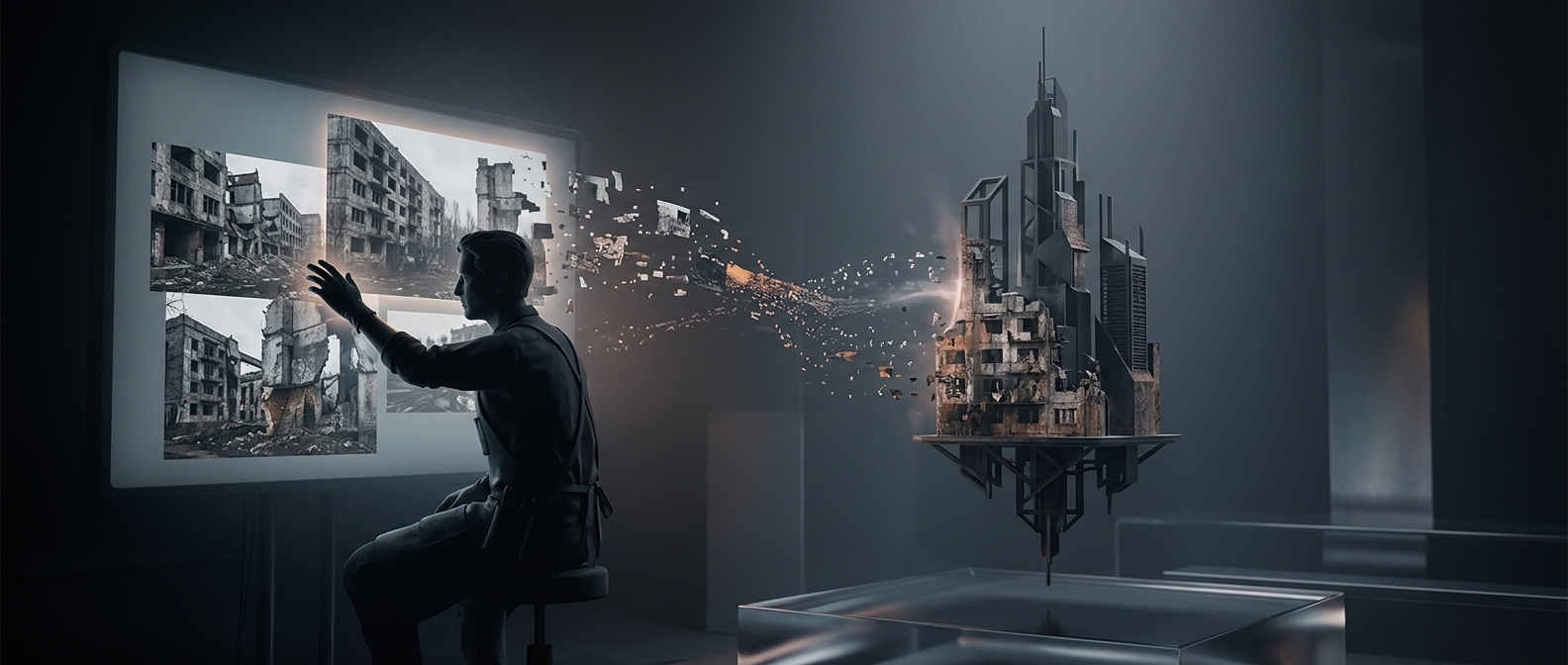
A photograph carries more than the outline of a cracked wall. It records small, irregular details—peeling paint, water stains, patched masonry, grime gathered around an edge—that are difficult to make look accidental when drawing a surface from scratch. In Half-Life 2, developers used photographs of real urban decay as textures: flat images applied to the 3D surfaces of buildings and walls.
That distinction matters. A texture supplies the visible surface detail, while the game’s 3D geometry gives a wall its shape and position in the scene. The photo does not turn a building into a photograph; it gives a modeled building the uneven traces that suggest it has weathered, been neglected, or repaired.
From reference to fictional city
A real photograph cannot simply be pasted onto every wall unchanged. Its perspective, lighting, and composition may not fit the surface, so artists have to adapt it to work as a repeating or fitted image in the game. The goal is not to reproduce a particular street exactly, but to borrow believable material evidence and place it in a designed environment.
That let the fictional city feel less like a collection of clean game surfaces and more like a place with a past. Players may not consciously identify a stain or a broken patch, but those details make the buildings seem to have endured ordinary wear. The unsettling effect comes partly from that mismatch: the city is invented, yet its decay looks as though it could have been photographed around the corner.